The people most exposed right now are mid-level white-collar workers in consulting, recruiting, and other “knowledge” jobs that can be standardized, automated, or simply deferred when companies pull back.
Labor Market Splits Hit White-Collar Jobs
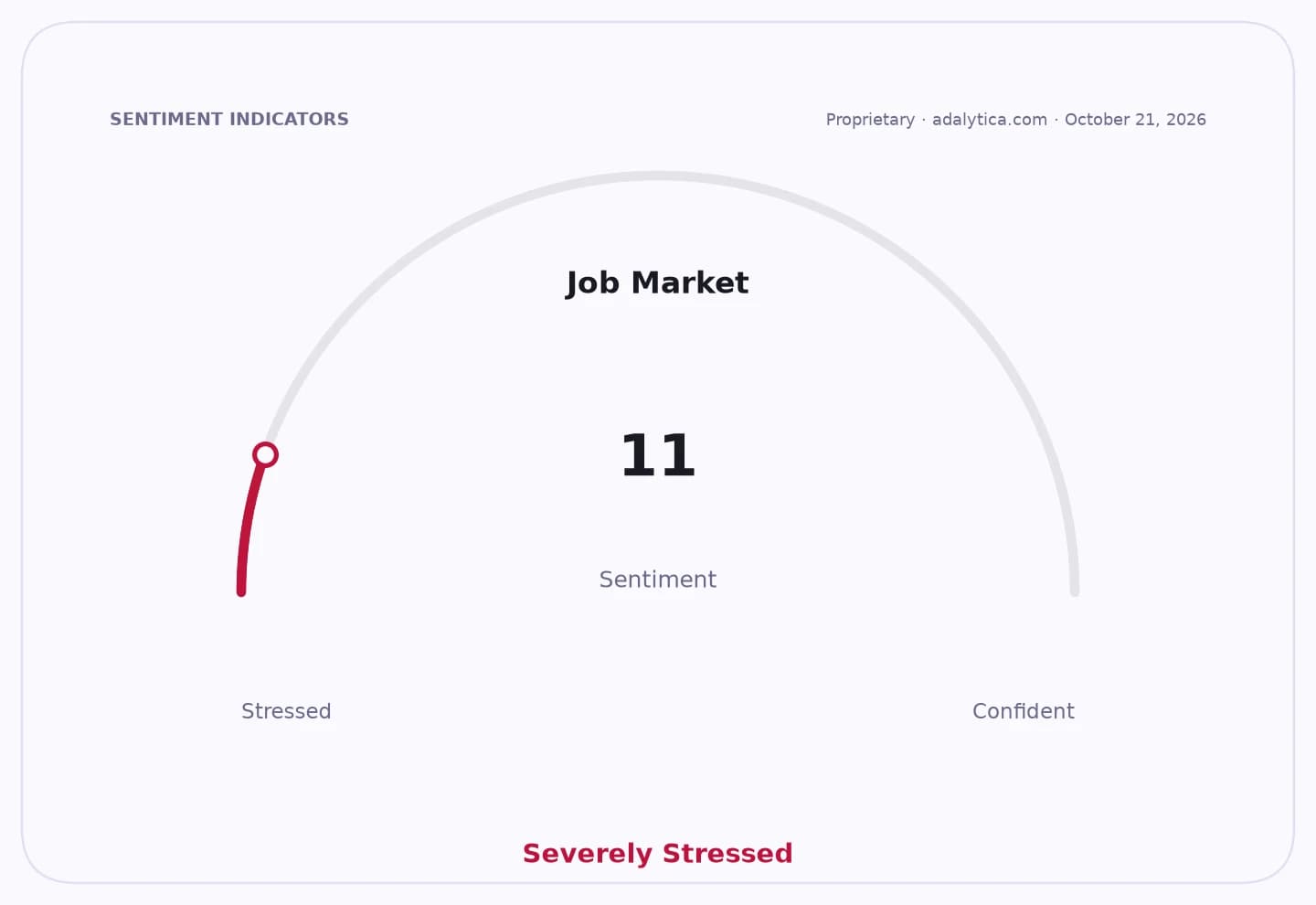
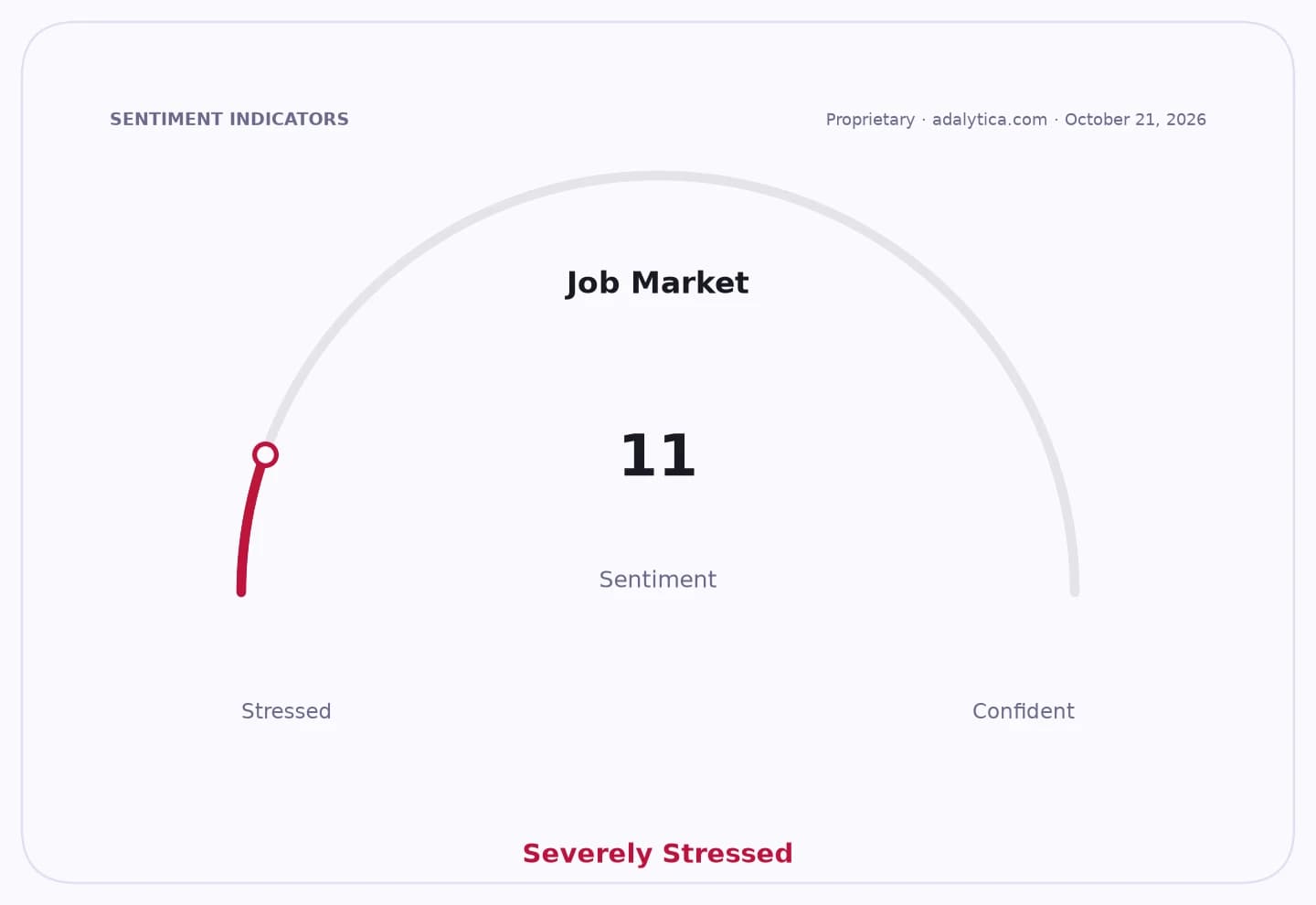
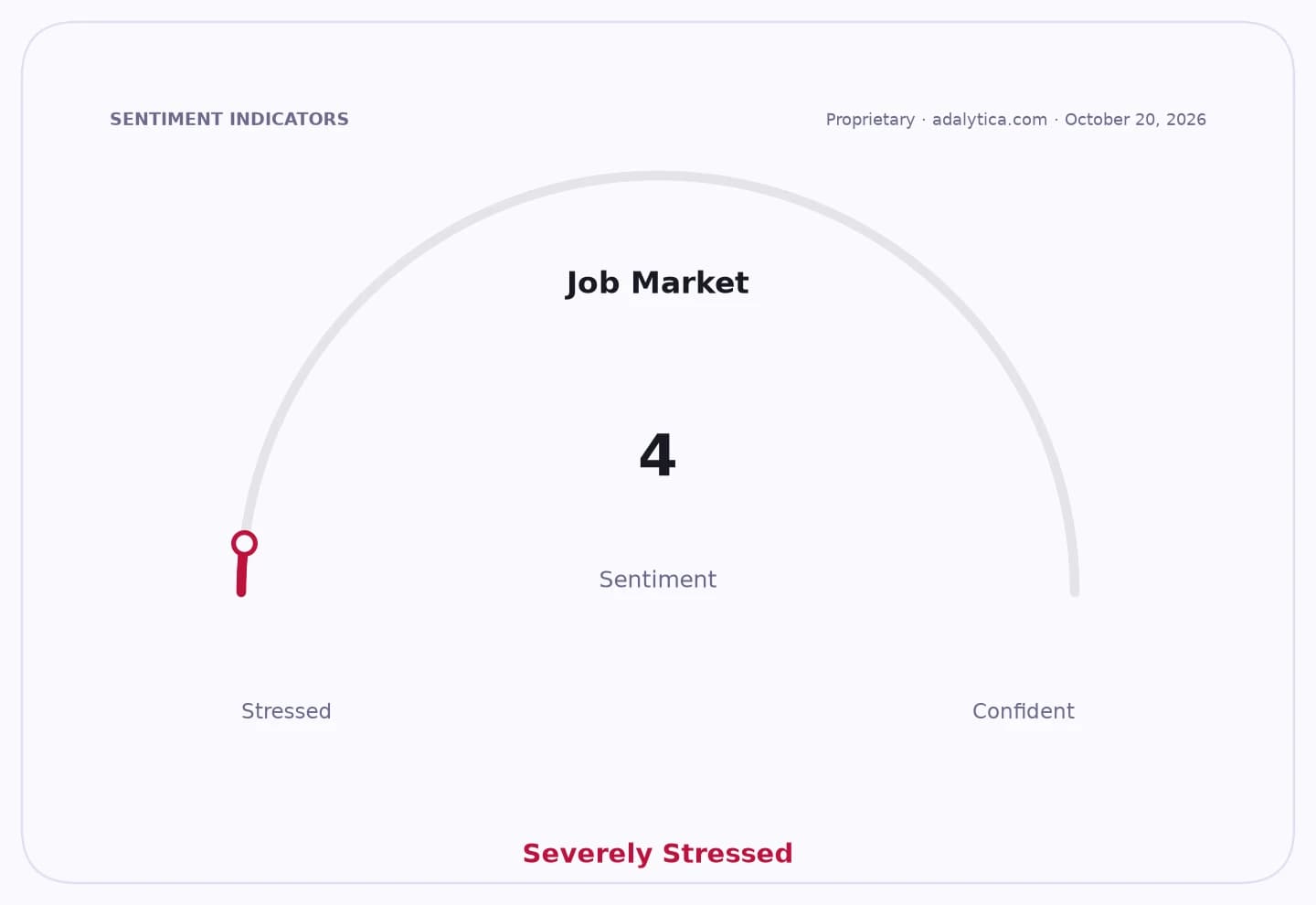
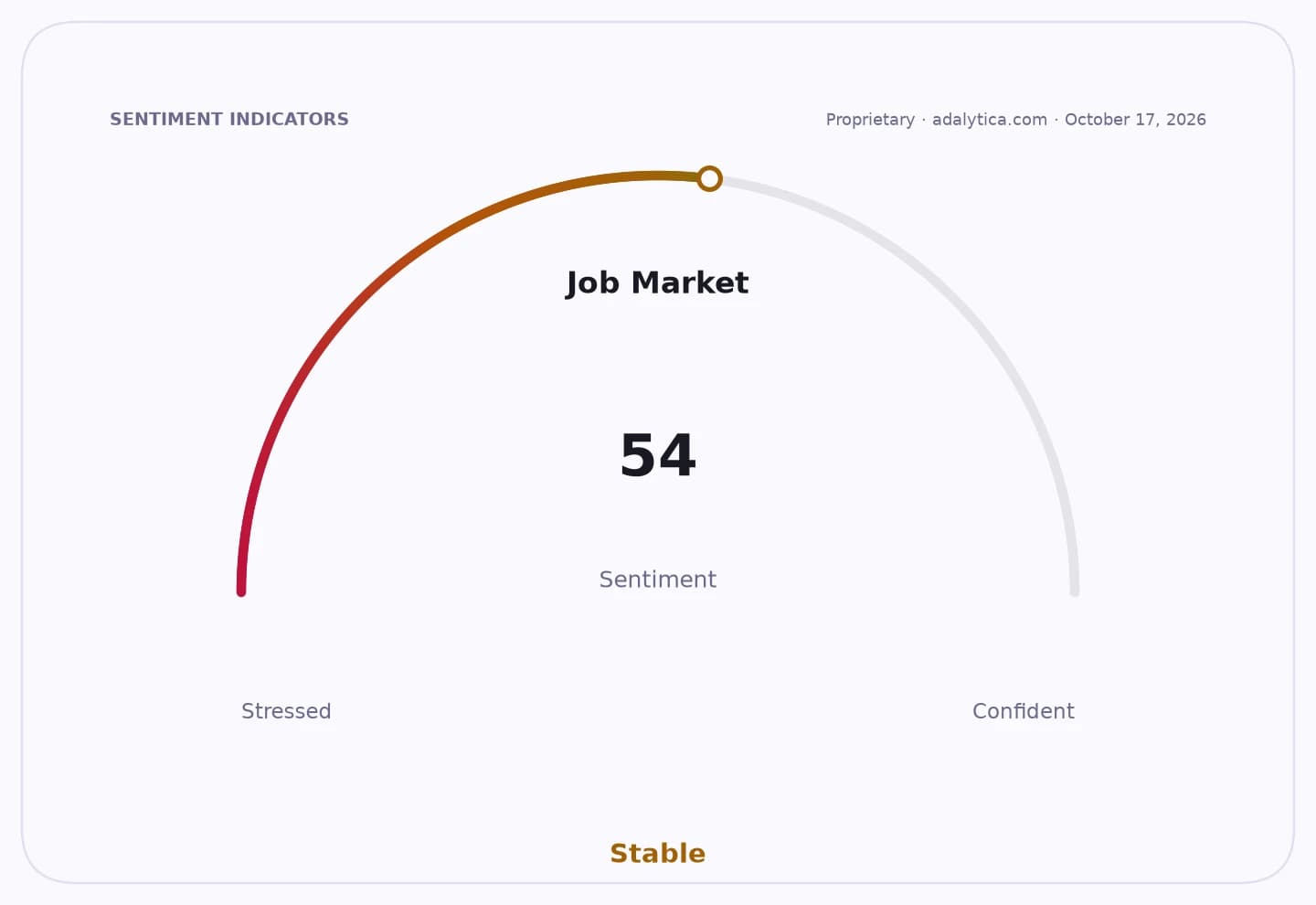
That is the clearest message from a labor market that looks stable on the surface but is turning sharply more selective underneath. Adalytica’s job-market gauge is in “Extreme Fear,” and recent company disclosures point to the same pressure: Deloitte has cut nearly 200 consultant roles in Australia amid AI disruption and reputational fallout, while industrial stress in Germany is pushing more job losses into the open. The market is not seeing a broad collapse in employment. It is seeing a split market, where skilled hiring remains intact in a few areas and gets much harder everywhere else.
Sentiment IndicatorsⓘProprietary · adalytica.com · October 21, 2026
This is a snapshot — live sentiment, awareness and momentum for 130+ markets update continuously in the dashboard.Open AlphaPulse
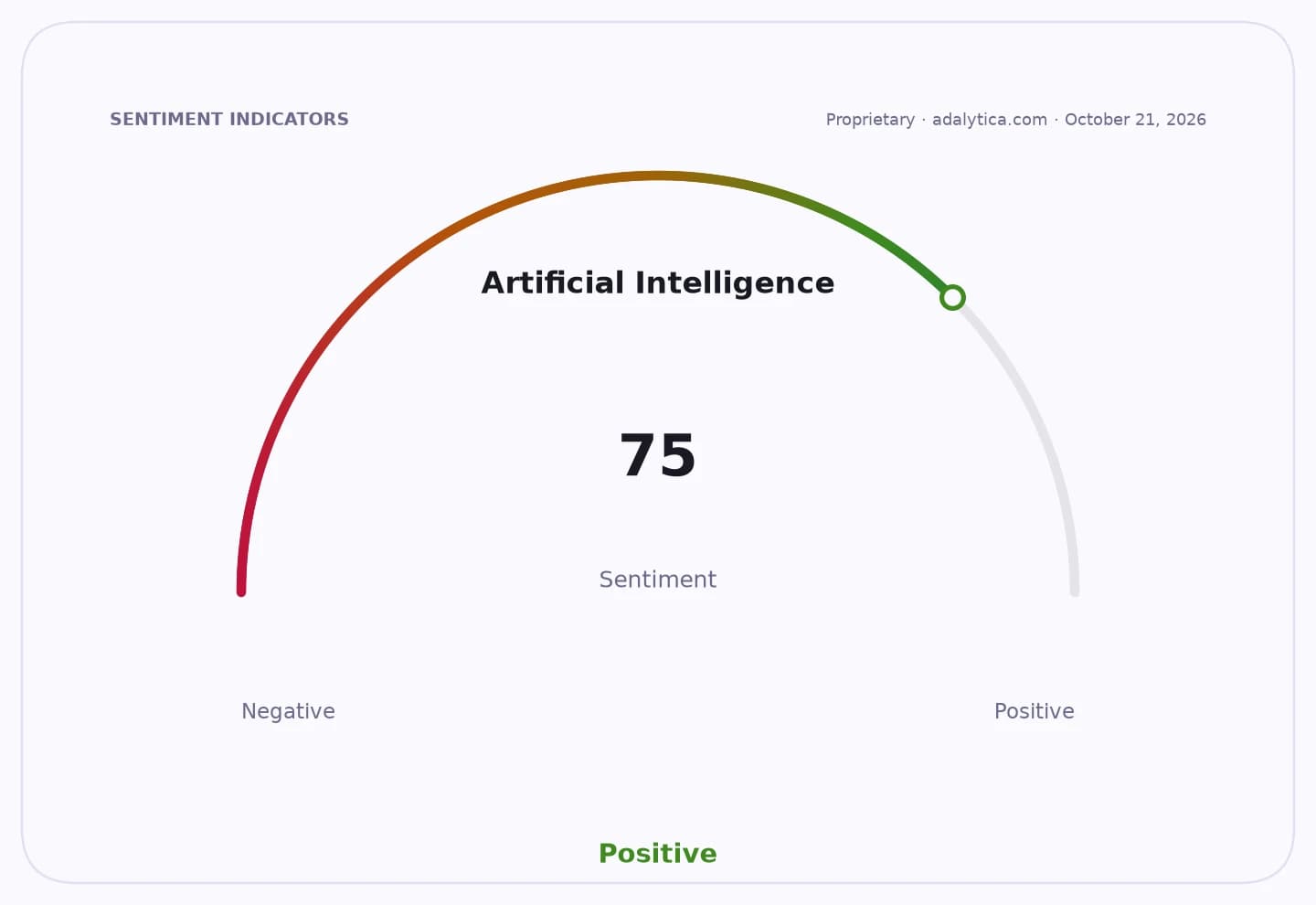
That matters economically because labor is usually the last variable to crack in a slowdown. When firms start trimming consultants, recruiters and other service workers, it often means management is preparing for slower revenue, tighter margins or both. It also tells you the next round of productivity gains may come at the expense of headcount. Generative AI is no longer just a future efficiency story; it is starting to reshape the mix of jobs companies need, and that is especially painful for roles built around process, screening and repetitive analysis.
The evidence in the market supports that read. ManpowerGroup’s stock has been violently repriced this year, with the shares having surged and then collapsed, now trading near $44 after peaking above $60 in September. The technical picture is weak: the stock is below its 50-day and 200-day moving averages, and the RSI has sunk into oversold territory. That kind of move is what you see when investors start pricing in a tougher hiring cycle and less demand for staffing intermediation. Robert Half’s shares tell a similar story, slipping to around $34 after trading above $41 in August, while Korn Ferry has also rolled over from the mid-$70s to the low $70s after a prior breakout. These are not isolated chart patterns. They are the equity market’s way of saying the labor market is becoming more stratified.
The sharpest risk is not to the unemployment rate itself, but to the white-collar pipeline. Recent filings from Robert Half note that unemployment for college-educated professionals is still only 2.7%, but that is exactly why the market problem is so concentrated: employers are preserving scarce specialized talent while becoming far less forgiving toward roles that can be replaced, outsourced or automated. That leaves job seekers in the broad middle—generalist consultants, back-office professionals, and candidates flooding the market with AI-generated applications—facing more competition and longer placement times.
For investors, that creates a clear second-order opportunity. The market is still treating staffing and recruiting as a simple cyclical trade, but the bigger story is structural. If AI keeps compressing the need for routine white-collar labor, then the winners are not just the obvious software platforms. The hidden beneficiaries are the companies that help enterprises sort talent, manage workforce complexity and place scarce specialized workers faster. At the same time, the losers are the labor intermediaries most exposed to commoditized hiring volume and price pressure.
That is why the current selloff in staffing names may be an inflection point, not just a warning. If the labor market keeps bifurcating, firms with strong enterprise relationships, specialized recruiting franchises and tech-enabled matching tools should take share from more generic peers. But if the slowdown broadens, even the better operators will feel margin pressure from lower placement volumes and weaker client demand.
The trade from here is to avoid assuming “jobs are fine” just because the headline unemployment rate is low. The real problem is already visible: the labor market is becoming more selective, and that is exactly where AI disruption and corporate caution hit first. Investors should focus on the companies that profit from labor scarcity and workforce complexity, not the ones still priced as if broad-based hiring is coming back quickly.
| Entity | Gains | Losses |
|---|---|---|
| Specialized recruiters | ▲Higher demand for niche placement | ▼Broader hiring slowdown |
| Staffing firms with enterprise tech | ▲Share gains from faster matching | ▼Lower overall placement volume |
| Mid-level consultants | ▲Limited upside in select sectors | ▼AI automation and budget cuts |
| Generalist white-collar job seekers | ▲Some mobility into scarce roles | ▼Longer searches, weaker bargaining power |