AI hiring and talent-assessment tools are moving from concept to commercial necessity as companies try to measure workers’ abilities in a labor market increasingly shaped by automation and faster-changing skill requirements.
Microsoft, ADP in AI hiring and HR software shift
That matters because the AI boom is no longer just about chips and software spending. It is also forcing employers to rethink how they recruit, evaluate and promote people as job descriptions shift faster than traditional human-resources systems can keep up.
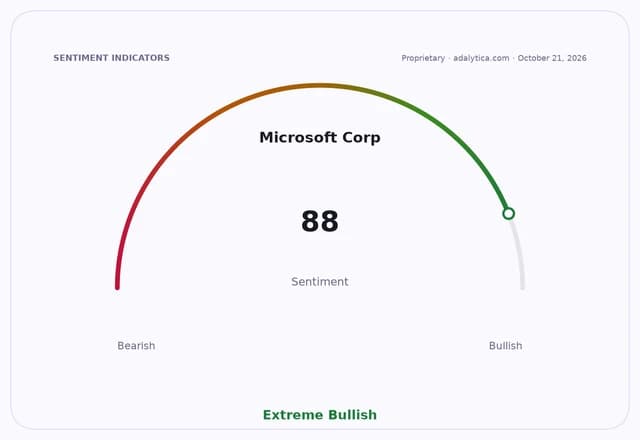
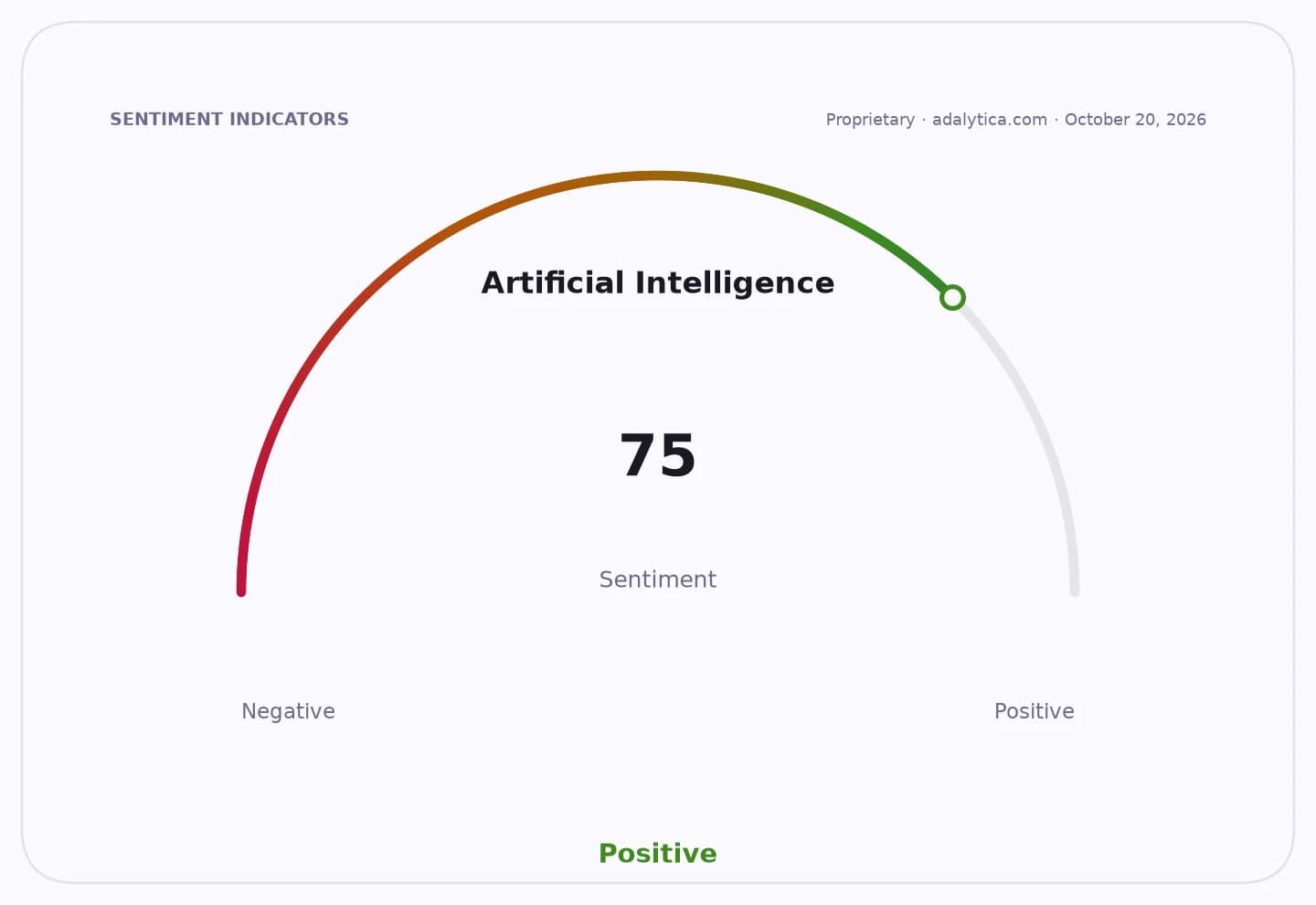
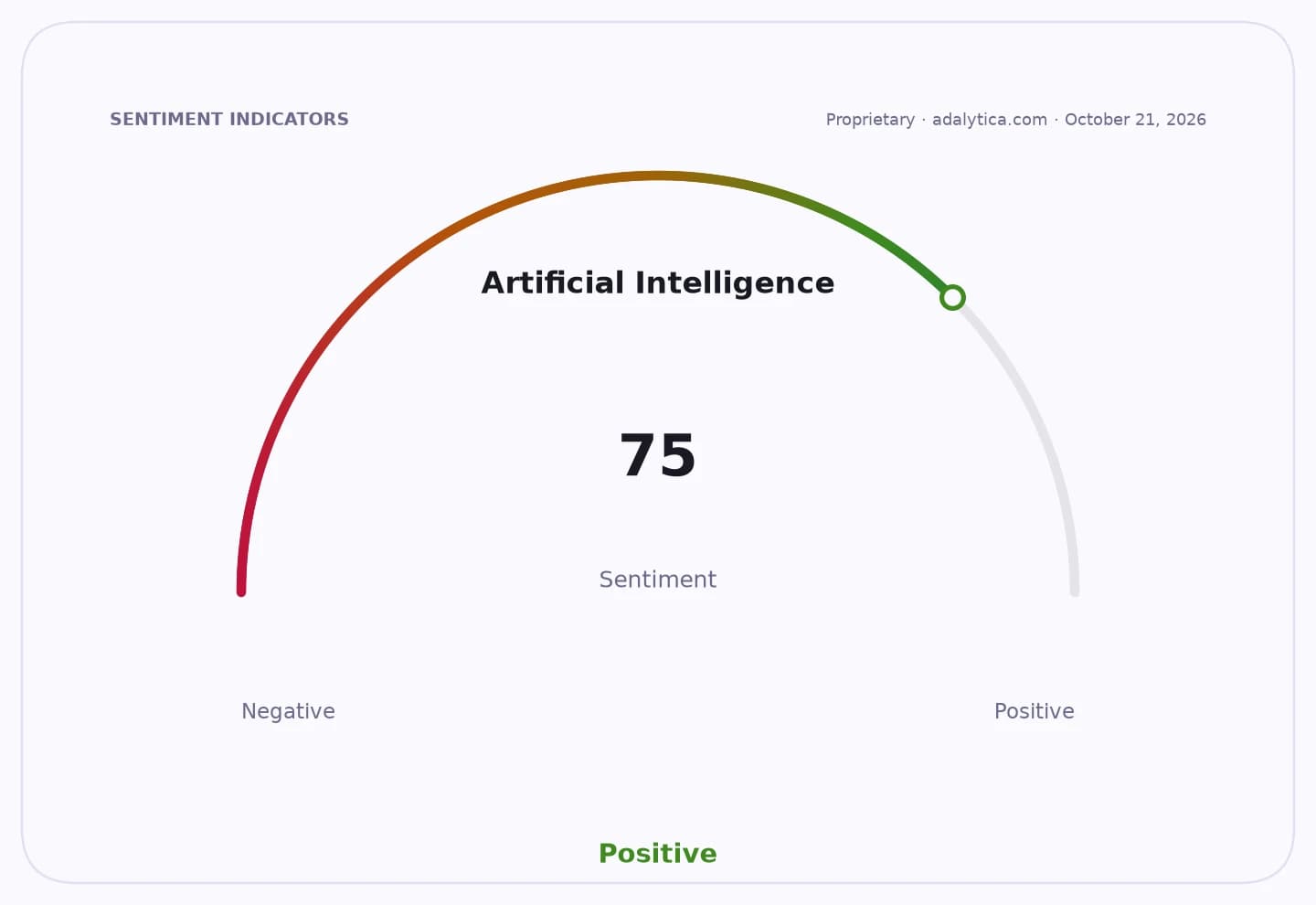
The backdrop is a market where AI enthusiasm remains high even as investors question how quickly the technology translates into durable productivity gains. Adalytica’s Microsoft earnings sentiment gauge sits at 88, or “Extreme Greed,” while its broader AI sentiment reading is 75, though awareness is still labeled “Extreme Fear,” underscoring the gap between investor appetite and real-world adoption concerns.
For Microsoft, which remains one of the market’s most closely watched AI beneficiaries, shares closed at $531.87 on Oct. 20, above both its 50-day moving average of $506.59 and 200-day moving average of $434.60. The stock’s RSI reading of 62.3 and positive MACD profile suggest the rally has held up, even as investors focus on whether AI spending can justify the valuation.
Artificial Intelligence — 30-day sentimentadalytica.com
Explore this data interactively — full history, time series and cross-market comparisons.Open AlphaPulse
ADP is a more direct read-through for the labor-market angle. The payroll and HR software provider closed at $292.75, near its 50-day moving average of $272.79 and just above its 200-day average of $236.36, with an RSI of 84.0 indicating the shares are extended after a sharp run. ADP has also been emphasizing AI in its own product strategy, including AI agents designed to improve HR workflows.
The commercial opportunity is clear: companies that can help employers screen candidates, map AI-capable skills and redesign workforce planning could benefit as firms move to more data-driven hiring. The risk is just as clear: if AI assessment systems are seen as opaque, biased or socially untrusted, adoption could slow and trigger regulatory scrutiny.
For investors, that makes workforce software, HR platforms and enterprise AI applications an increasingly important second-order trade on the AI cycle. The next catalyst will be whether large employers turn AI talent tools into a spending category of their own, or whether concerns about trust and job displacement keep the market narrative ahead of the revenue curve.
| Entity | Gains | Losses |
|---|---|---|
| Microsoft | ▲AI platform demand | ▼Higher scrutiny on ROI |
| ADP | ▲HR tech adoption | ▼Slower enterprise buying |
| Employers using AI tools | ▲Faster talent screening | ▼Bias and trust risks |
| Job seekers | ▲Better matching tools | ▼Less human-led hiring |