Businesses are making the case that artificial intelligence could be one of the few levers capable of lifting Australia’s weak productivity growth, but the economic payoff will depend on whether firms can turn faster software adoption into measurable output gains rather than just higher spending.
Australia AI Productivity Gains and Market Selectivity
That matters because Australia’s long-running productivity problem has become a drag on wages, margins and living standards. If AI tools can automate routine tasks, speed up decision-making and improve use of scarce skilled labor, the economy could get a needed boost without relying only on more workers or higher capital intensity.
Sentiment IndicatorsⓘProprietary · adalytica.com · October 20, 2026
This is a snapshot — live sentiment, awareness and momentum for 130+ markets update continuously in the dashboard.Open AlphaPulse
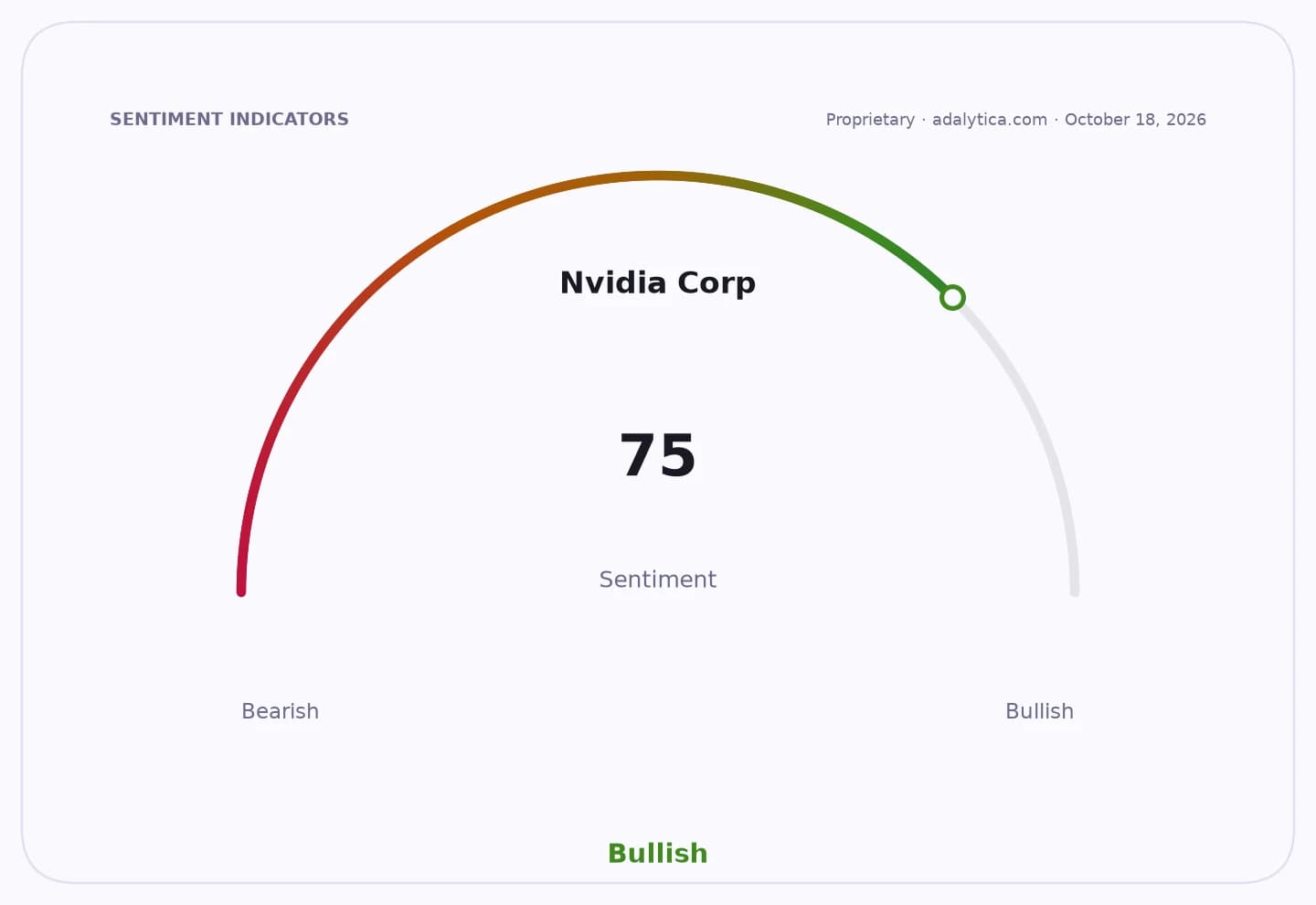
The argument is increasingly being backed by real corporate behavior. Global technology spending tied to AI remains elevated, with investor appetite still strong for the infrastructure layer that supports model training and deployment. Nvidia shares were last at $217.09, above the 200-day moving average of $202.81, while Microsoft closed at $533.52, also comfortably above its 200-day average of $434.29, underscoring how capital is still flowing toward firms exposed to AI demand.
Oracle, meanwhile, remains deeply tied to enterprise AI and cloud spending even after a sharp stock reset. Its shares closed at $129.59, below both its 50-day average of $144.30 and 200-day average of $158.72, reflecting the market’s continued scrutiny of how quickly AI investment turns into durable revenue.
For investors, the key question is not whether AI is fashionable, but whether it raises productivity enough to offset labor shortages, wage pressure and soft economic growth. If businesses in Australia use AI to do more with the same workforce, that could improve corporate margins and help justify investment in software, cloud services and chips. If adoption stalls, the economy risks more spending without the output gains policymakers and executives are hoping for.
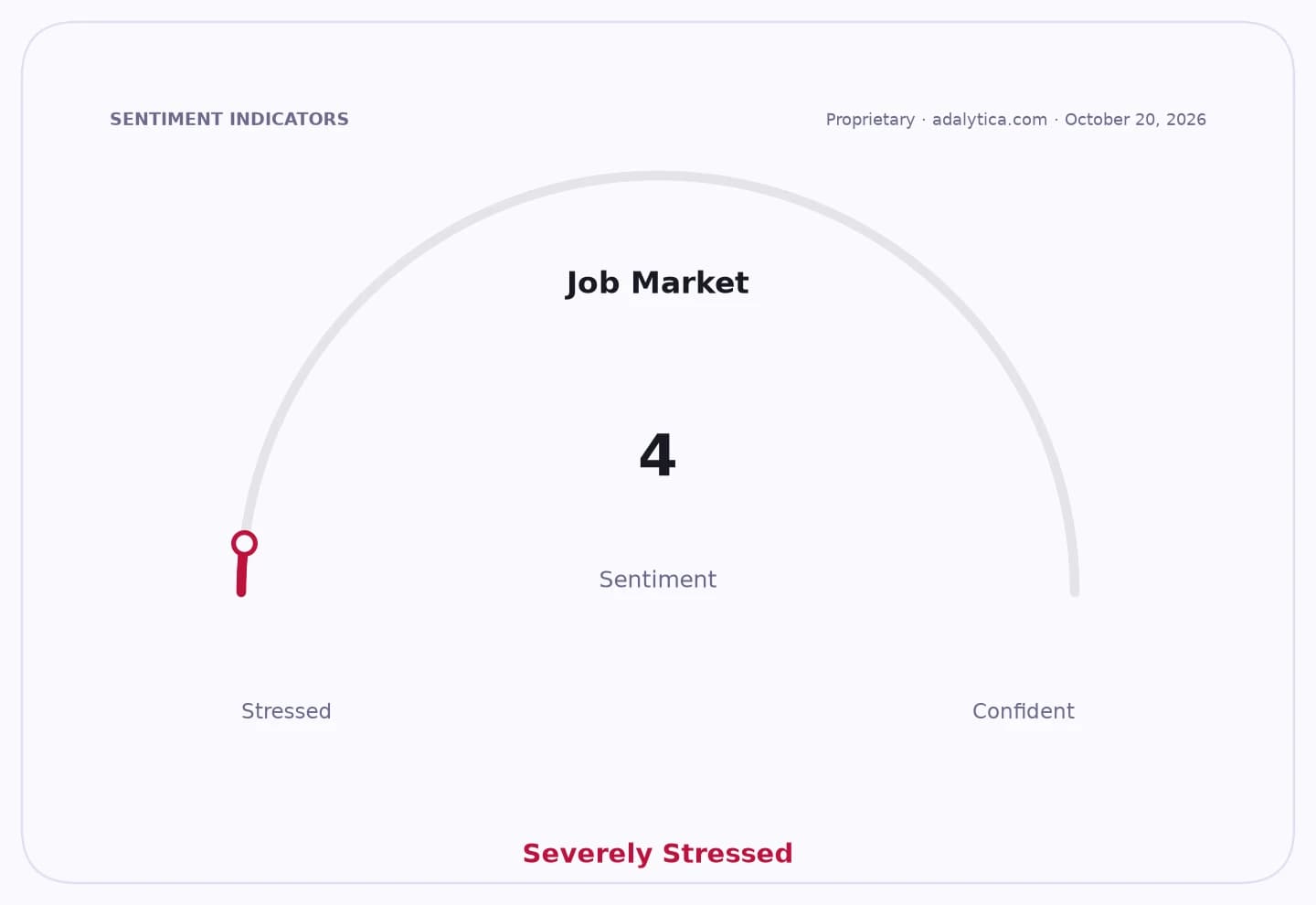
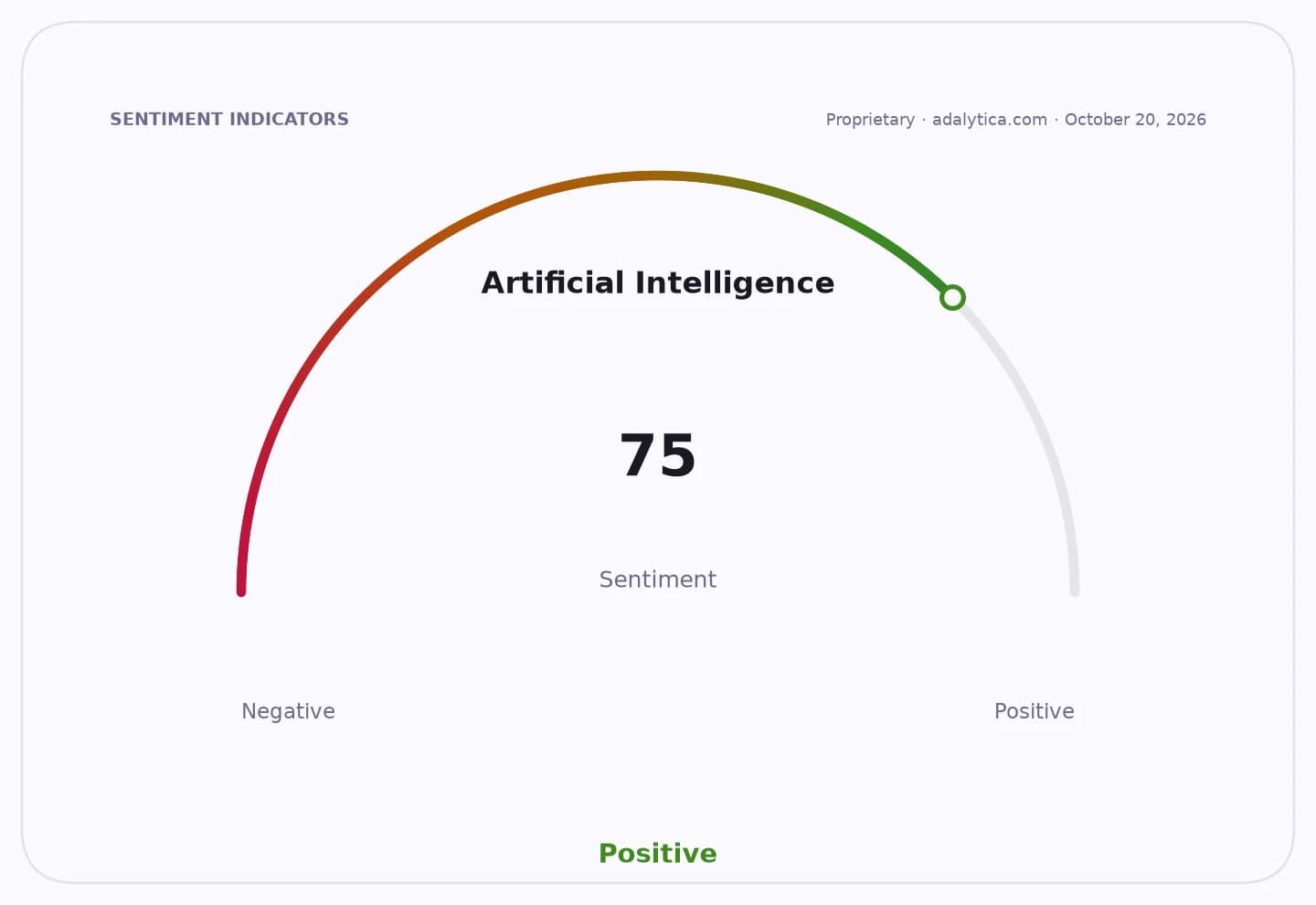
The broader setup still favors AI infrastructure names, but the market is more selective. Adalytica’s AI sentiment snapshot shows “Greed” at 75, with awareness at an “Extreme Fear” reading of 4, a combination that suggests strong enthusiasm but limited breadth of informed conviction.
That leaves Australia’s AI productivity story at an early but important stage: executives see a route to higher efficiency, investors see a potential new demand cycle, and policymakers see a possible answer to stagnant output. The next test will be whether companies can prove AI lifts measured productivity, not just IT budgets.
| Entity | Gains | Losses |
|---|---|---|
| Australian businesses | ▲Higher efficiency | ▼Higher software spend |
| Workers | ▲Less routine work | ▼Job redesign pressure |
| AI vendors | ▲New enterprise demand | ▼Slower adoption risks |
| Policymakers | ▲Productivity support | ▼Fewer quick fixes |