Human judgment, not just computing power, is emerging as the real bottleneck in corporate AI adoption — and that matters because the businesses that redesign jobs, workflows and trust first will capture the productivity gains while laggards pay for the same technology without getting the return.
AI Adoption Hinges on Human Workflow Changes

That was the clear message from the first AI.DEA forum at Varignana, where executives from Dompé Farmaceutici, Cirfood and Dallara argued that artificial intelligence must be deployed as a strategic tool, not a technology trophy. Their point lands at a critical moment for investors: AI spending is accelerating across industries, but the market is starting to separate companies that can turn models into measurable output from those still treating AI as a software purchase.
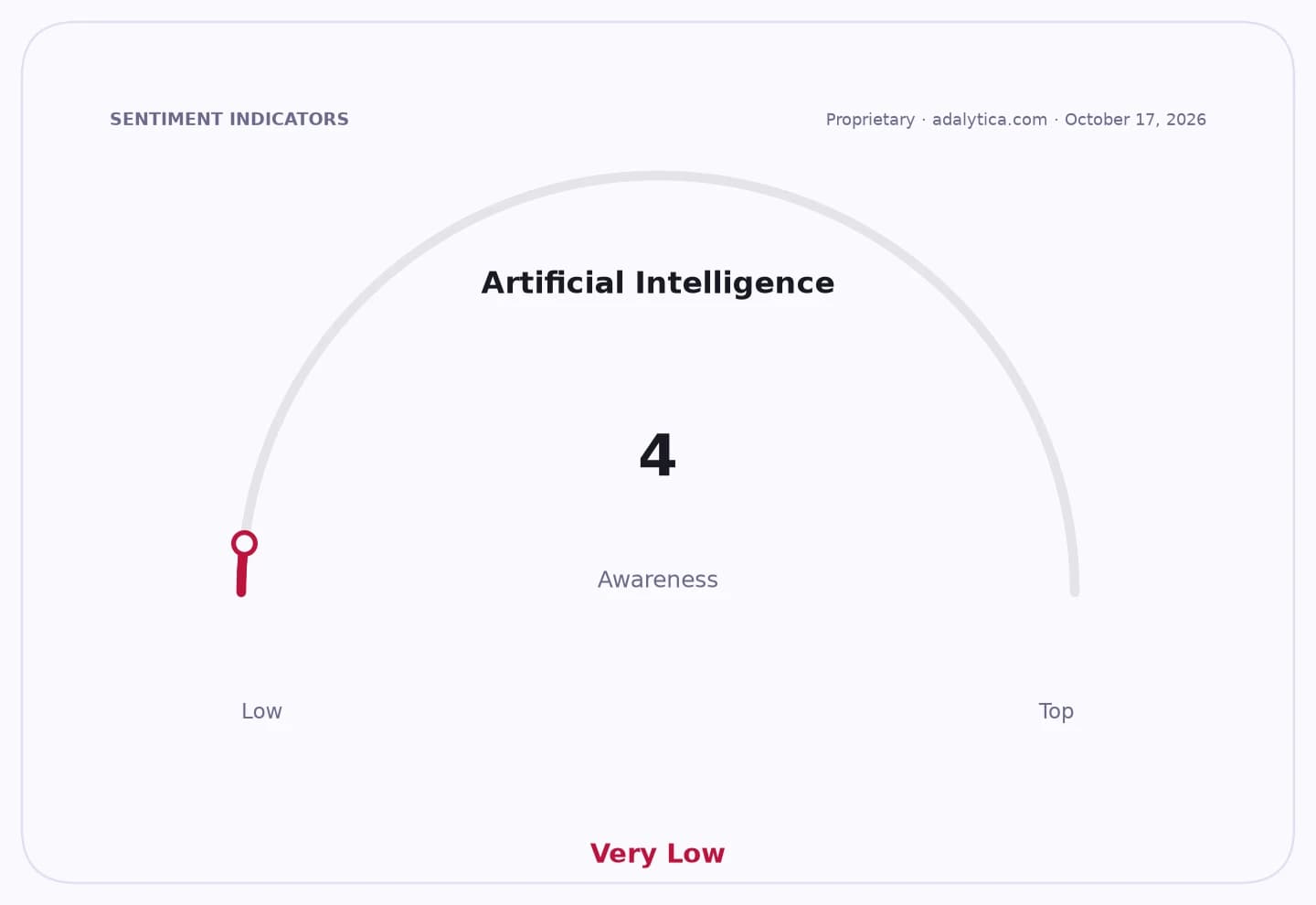
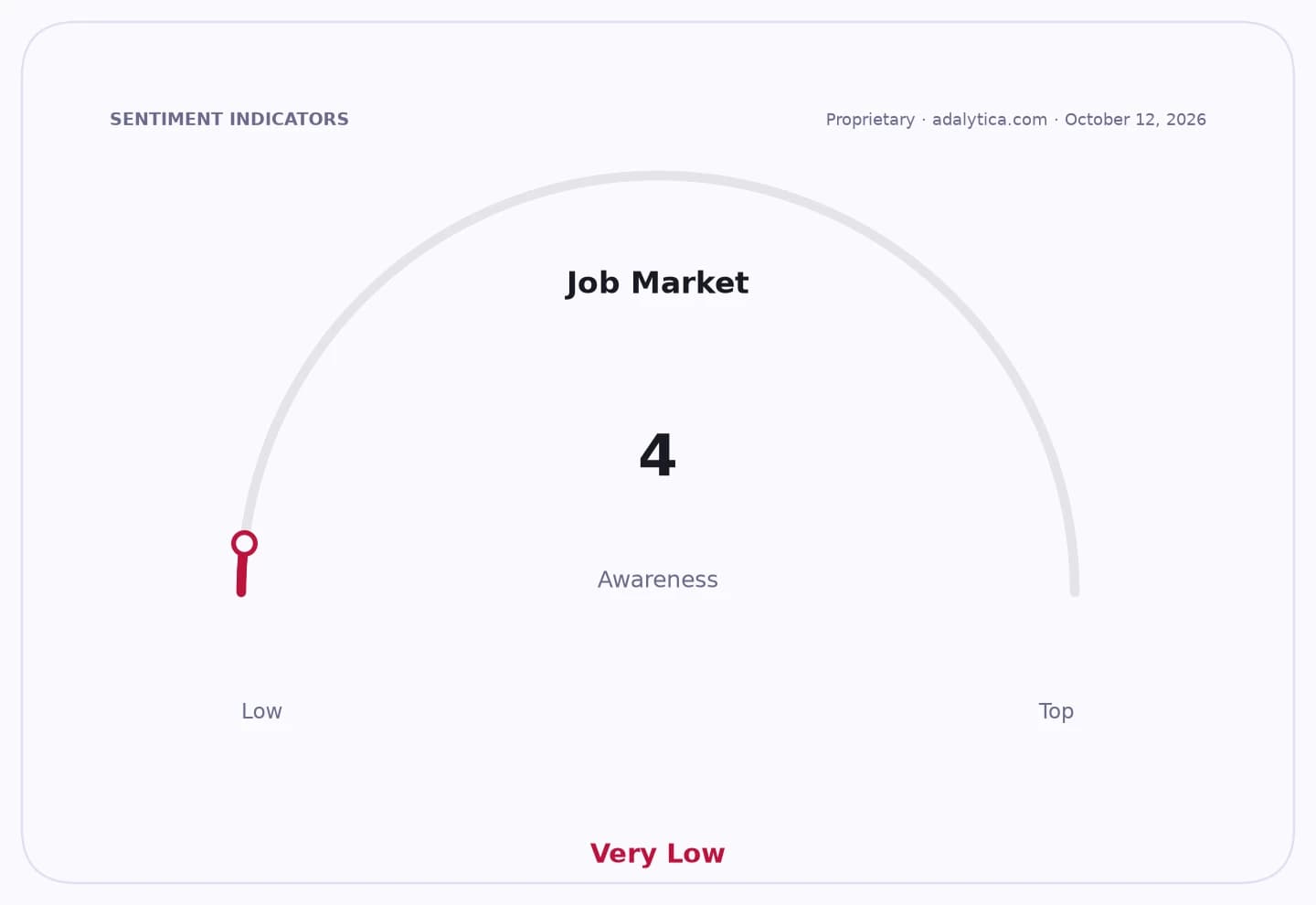
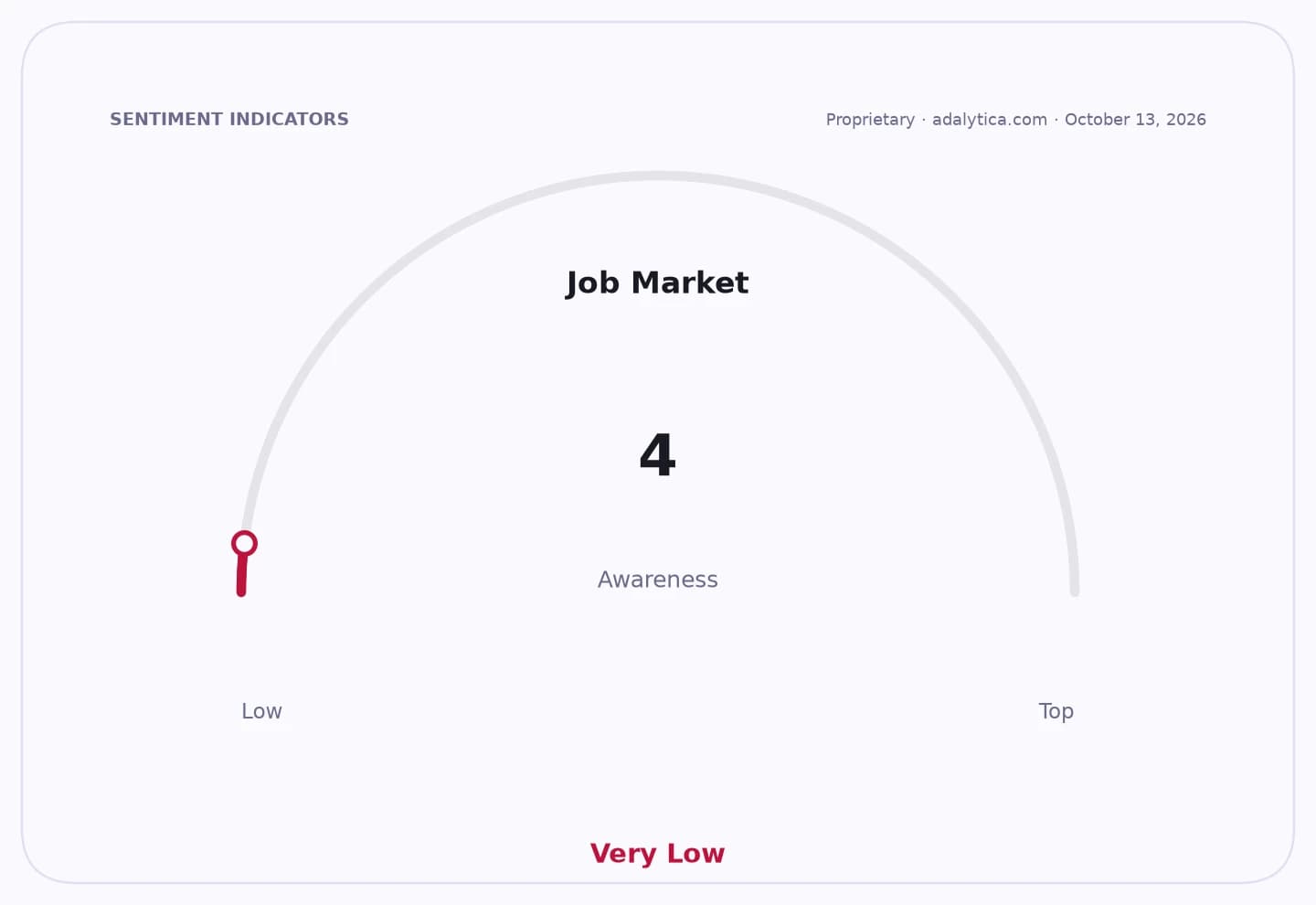
Sentiment IndicatorsⓘProprietary · adalytica.com · October 19, 2026
This is a snapshot — live sentiment, awareness and momentum for 130+ markets update continuously in the dashboard.Open AlphaPulse
Sergio Dompé said life sciences are among the biggest potential beneficiaries because they live on data, experimentation and speed — exactly the areas where AI can compress timelines and improve outcomes. Chiara Nasi went further, saying the “real challenge is human before technological,” and that companies should define what they want to achieve before choosing the tools. That is a useful framework for capital allocation: the winners are not necessarily the biggest spenders, but the firms with the clearest operating redesign.
For investors, this is where the opportunity becomes more specific. Microsoft, Nvidia and Alphabet remain central to the AI buildout, but the next leg of value creation will likely move toward companies that can convert infrastructure into workflow advantage. Microsoft’s shares are still trading around $534, well above the 200-day moving average of about $434, while Nvidia sits near $218 versus a 200-day average around $203 and Alphabet around $346 versus roughly $341. Those levels show the market still believes the AI platform trade remains intact, even as the conversation shifts from model capability to enterprise execution.
That is why the workforce angle matters. Oyster’s latest AI talent report says AI skills are advancing faster than current job definitions, underscoring a widening gap between what employees can do and how companies organize work. In practical terms, this creates a second-order investing theme: consultants, training providers, workflow software vendors and industrial technology firms that help enterprises redesign processes may benefit as much as the chipmakers that power the models.
The corporate risk is obvious. Microsoft has already flagged in regulatory filings that AI can produce unintended consequences and that it must keep training employees and customers to extract measurable business outcomes. Alphabet and Salesforce have made similar disclosures about the cost, competition and execution risk tied to AI investment. The market underestimates how much of the AI cycle will be won or lost inside the enterprise, not in the lab.
Pontremoli’s warning that firms can end up “governed by the machine” if they cut out human relationships points to the same conclusion. The most durable AI winners will not be the companies that automate the fastest, but the ones that use automation to deepen trust, improve service and lift productivity without breaking the social fabric of the business.
For investors, the takeaway is straightforward: stay long the AI infrastructure leaders, but start looking harder at the human-enablement layer — the software, services and industrial names that help companies redesign work, not just buy compute.
| Entity | Gains | Losses |
|---|---|---|
| Microsoft, Nvidia, Alphabet | ▲AI platform demand | ▼Complacent adopters |
| Enterprises that redesign workflows | ▲Productivity gains | ▼Legacy operating models |
| Training, consulting, workflow software | ▲New spending cycle | ▼Pure hardware-only bets |
| Workers and customers | ▲Better tools and service | ▼Rigid job frameworks |