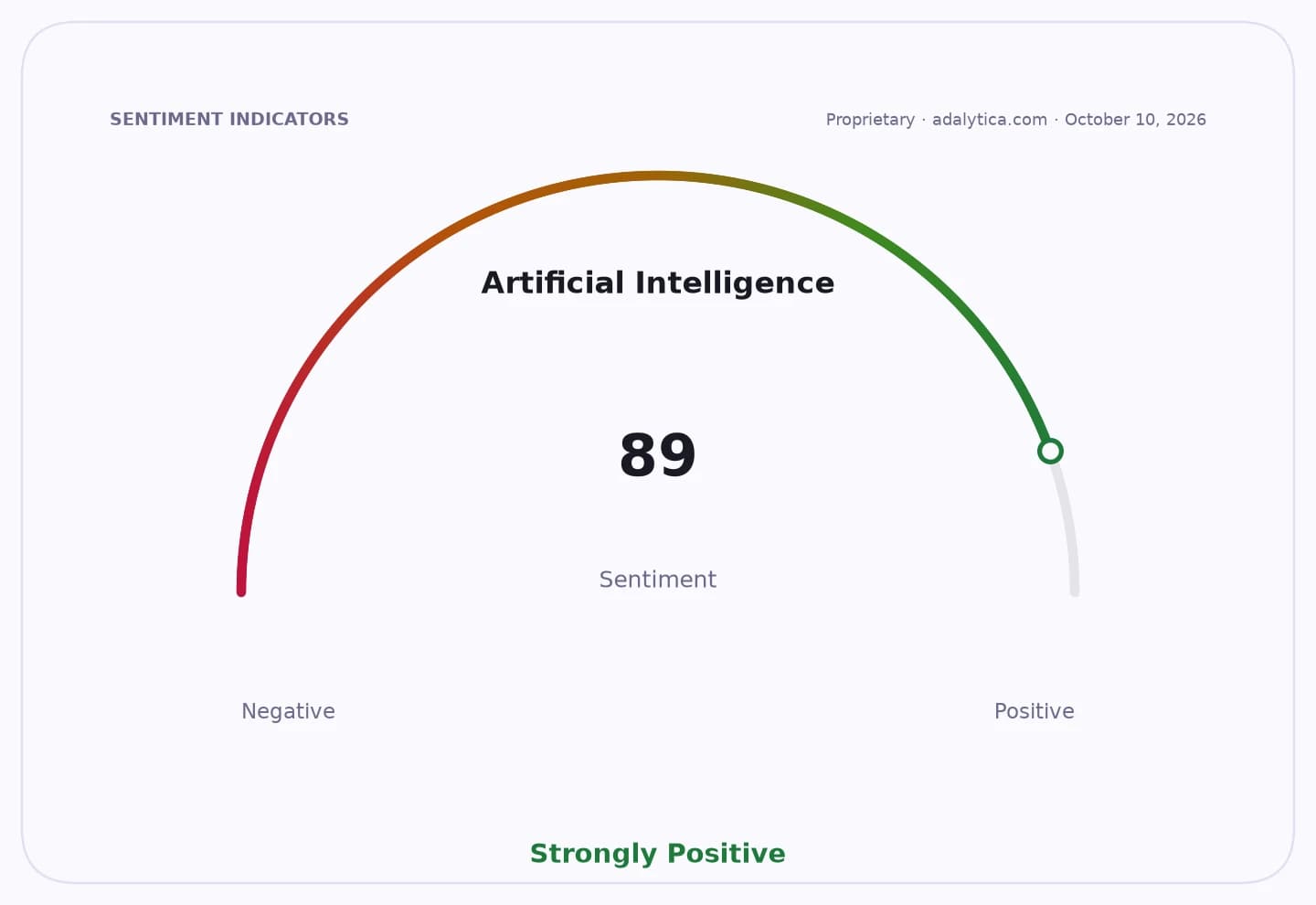
AI is most likely to hit routine white-collar work first, and that means accountants, marketers, insurance staff and junior office workers should be paying close attention.
AI to hit routine office jobs first, experts say
The reason matters far beyond one job title. If companies can use software to do the work of five people with three, productivity rises — but wages do not automatically rise with it. Instead, AI is likely to widen the gap between workers who can use it to create measurable business value and those whose tasks are easy to automate.
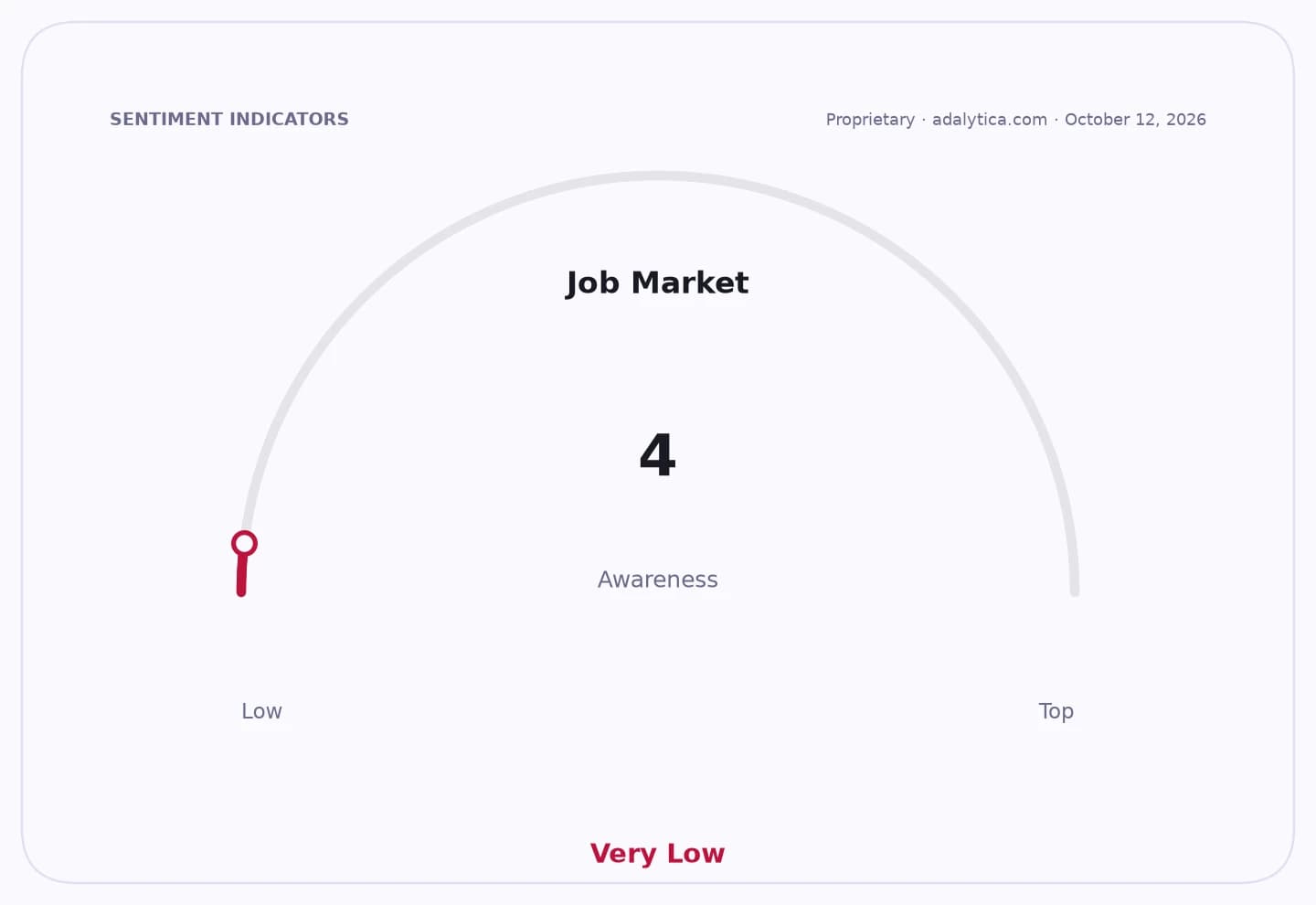
Sentiment IndicatorsⓘProprietary · adalytica.com · October 12, 2026
This is a snapshot — live sentiment, awareness and momentum for 130+ markets update continuously in the dashboard.Open AlphaPulse
That is the core message from economists and AI specialists in the Czech Republic, and it lines up with what investors are already seeing across the economy. The pressure is not on the “smart” jobs or the manual jobs first. It is on repetitive, computer-based tasks: copying data, checking forms, drafting standard text, reconciling records and handling customer requests. In other words, the kinds of work that fill offices, banks, insurers and call centers.
Accounting is one of the clearest examples. In one test cited by AI experts, software completed in 10 minutes a task that took an experienced accountant three hours. That kind of efficiency gain is why the winners in the AI economy will not simply be the companies cutting headcount. They will be the firms that use AI to sell more, launch products faster and shift employees toward higher-value work.
For investors, that changes how to think about labor costs and margins. Companies exposed to repetitive back-office work may eventually need fewer staff to produce the same output, which can support profits. But the bigger opportunity is probably not just cost cutting. It is scaling. If AI helps a business win more customers or deliver faster service, revenue can grow without adding labor at the old pace. That is a much more powerful compounding story.
The flip side is that not every worker benefits equally. The experts say the biggest threat is to juniors and employees whose careers have traditionally started with routine tasks. Those entry-level jobs are exactly the ones easiest to automate, which could make it harder for young workers to build experience the old way. Over time, that could reshape hiring, promotion and pay across entire industries.
That is why the best long-term strategy for workers — and for investors judging the labor market — is adaptation, not denial. The people most likely to earn more in an AI-heavy economy are the ones who can combine domain knowledge with technology, take responsibility, communicate well and turn AI output into something that actually helps a business make money.
For investors, the takeaway is simple: AI is not just a software story, it is a workforce story. The companies that embrace it early may become more productive and more profitable. The workers and firms that cling to repetitive processes may struggle. In a market where AI is becoming a permanent part of operations, that difference could compound for years.
| Entity | Gains | Losses |
|---|---|---|
| AI-savvy workers | ▲Higher pay, more leverage | ▼Less exposure to routine work |
| Employers using AI | ▲Lower costs, higher productivity | ▼Need to retrain teams |
| Accountants, marketers, insurance staff | ▲New tools for top performers | ▼Routine tasks and entry-level roles |
| Investors in AI adopters | ▲Margin expansion, growth upside | ▼Slower-moving labor-heavy firms |