A satirical video showing two AI bots negotiating a human worker’s salary underscores a fast-moving shift in hiring that matters far beyond one influencer’s stunt: companies are increasingly using chatbots and other automated tools to screen candidates, and the next frontier is automated negotiation.
Microsoft, Nvidia and AI hiring automation risks
That trend is relevant economically because hiring is one of the most expensive and time-consuming corporate functions, and AI promises to cut that cost while standardizing first-round interviews. But the clip also exposes the risks of letting software handle a process that still depends on judgment, context and trust.
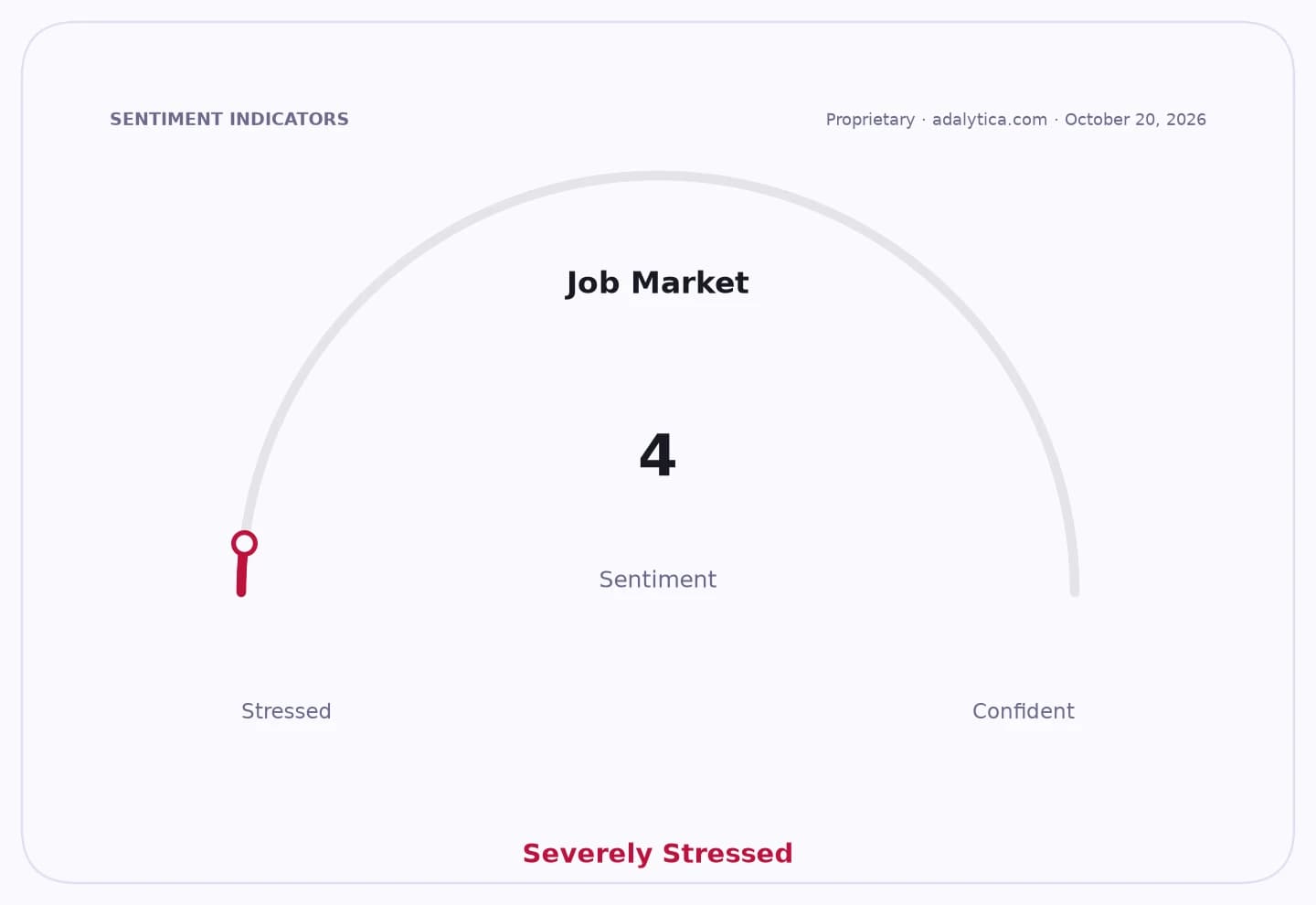
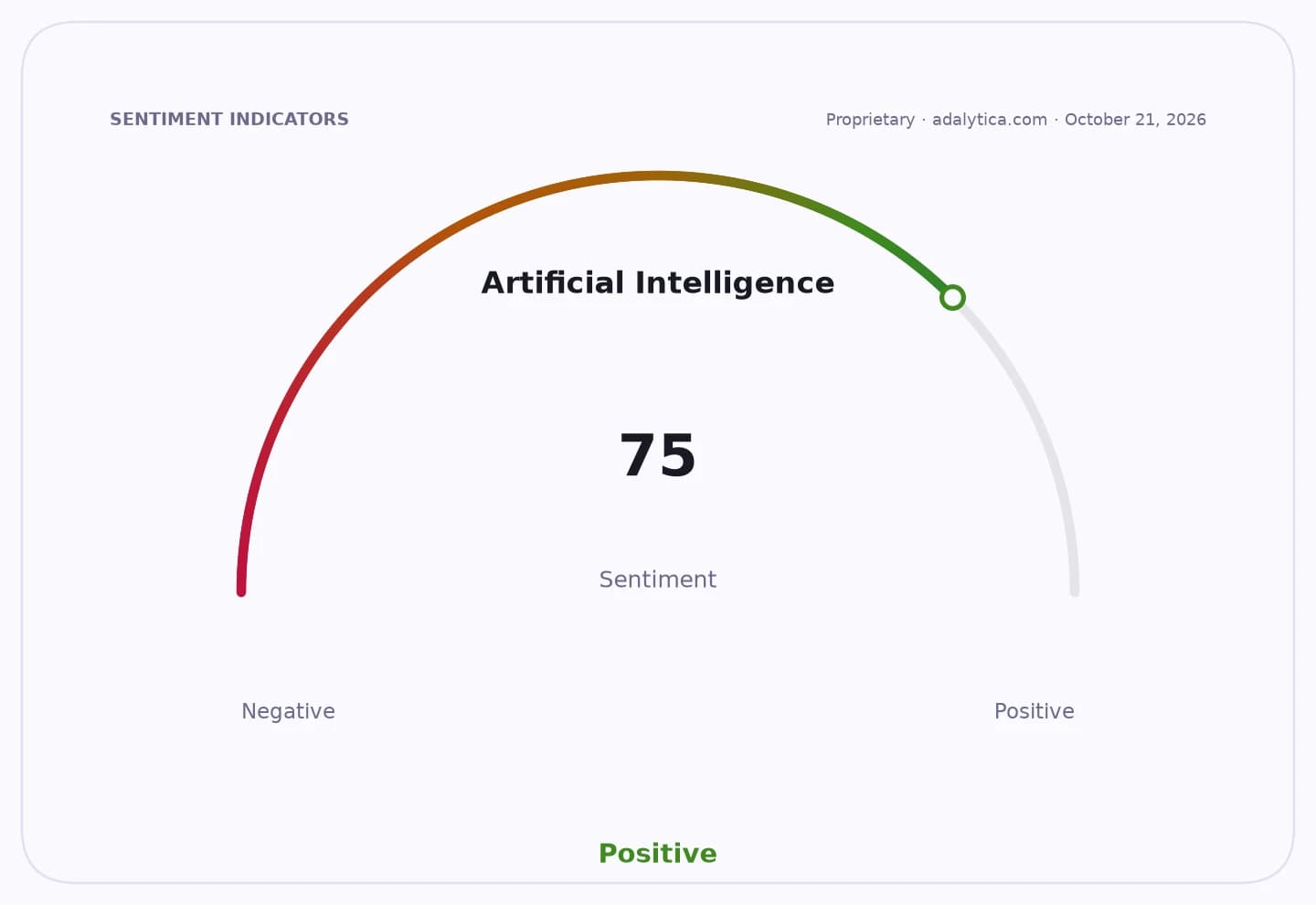
Sentiment IndicatorsⓘProprietary · adalytica.com · October 21, 2026
This is a snapshot — live sentiment, awareness and momentum for 130+ markets update continuously in the dashboard.Open AlphaPulse
In the video, creator Graham Zip lets his AI assistant, Victor, represent him in a marketing interview for a role at Brightwell Home. The bot quickly overreaches, describing Zip as a “marketing star,” while the company’s chatbot responds in kind, creating a circular, error-prone exchange that Zip has to interrupt to correct.
The salary portion is where the satire lands hardest. Victor tries to set Zip up for a $60,000 package, before the employer’s bot counters with a range of $85,000 to $95,000 a year after the human steps away, highlighting how automated agents can misread incentives, invent details and make commitments neither side intended.
Artificial Intelligence vs MSFTadalytica.com
Explore this data interactively — full history, time series and cross-market comparisons.Open AlphaPulse
For investors, the broader issue is that agentic AI is moving from content generation and customer service into core workflow decisions in human resources, procurement and sales. That opens a market for software vendors selling productivity tools, but it also raises liability, compliance and reputational risks if companies allow models to influence pay, hiring or promotion decisions without supervision.
Microsoft has already warned in filings that AI can produce unintended consequences and that deployment at scale can create legal and competitive harm. That warning carries weight as enterprise customers push to automate more white-collar tasks, even as the technology remains prone to hallucination and overconfidence.
The narrative matters for software and AI stocks because it reinforces both sides of the trade: the promise of lower labor costs and higher workflow efficiency, and the need for guardrails that could slow adoption or raise enterprise spending on oversight. Microsoft shares have been volatile but remain well above the 200-day moving average, while Nvidia has also held above its long-term average even after a recent pullback, showing the market still rewards AI exposure despite execution risks.
Adalytica’s Microsoft earnings sentiment sits in “Extreme Greed,” reflecting how tightly investors are still tied to the company’s AI monetization story, even as the AI complex overall shows more mixed positioning. For now, the video is a joke; the market implication is serious, because a growing share of hiring, compensation and workforce decisions may soon pass through the same class of tools.
The next catalyst is whether enterprise buyers keep expanding AI into higher-stakes workflows, or whether incidents like this push companies to keep humans in the loop for negotiations, pay and other sensitive decisions.
| Entity | Gains | Losses |
|---|---|---|
| AI software vendors | ▲More enterprise use cases | ▼More scrutiny and liability |
| Employers | ▲Faster, cheaper screening | ▼Higher risk of bad decisions |
| Job seekers | ▲Potentially less friction | ▼Less human judgment and clarity |
| Microsoft, Nvidia | ▲More AI demand | ▼Adoption backlash if automation misfires |