A growing shortage of attractive software jobs at home is pushing young engineers to accept work abroad, even when it means taking a sharp hit to pay.
Germany tech jobs draw young engineers abroad
For Gideon, a 24-year-old with six years of experience, the move to Germany came only after months of rejections and a salary cut of about €30,000. His case captures a wider labour-market shift: skilled tech workers in emerging markets are increasingly treating overseas employment as the only route to stability, but the transfer often comes with lower compensation, tighter competition and a recalibration of expectations.
Sentiment IndicatorsⓘProprietary · adalytica.com · October 14, 2026
This is a snapshot — live sentiment, awareness and momentum for 130+ markets update continuously in the dashboard.Open AlphaPulse
The dynamic matters economically because it reflects an uneven global market for technical talent. Demand for software engineers remains strong in advanced economies, but employers are selective, and foreign hires are often brought in at local salary bands rather than the premium pay many candidates expect. That can ease wage pressures for companies in Europe and North America while forcing workers in lower-income markets to accept arbitrage on pay in exchange for access to jobs, visas and career mobility.
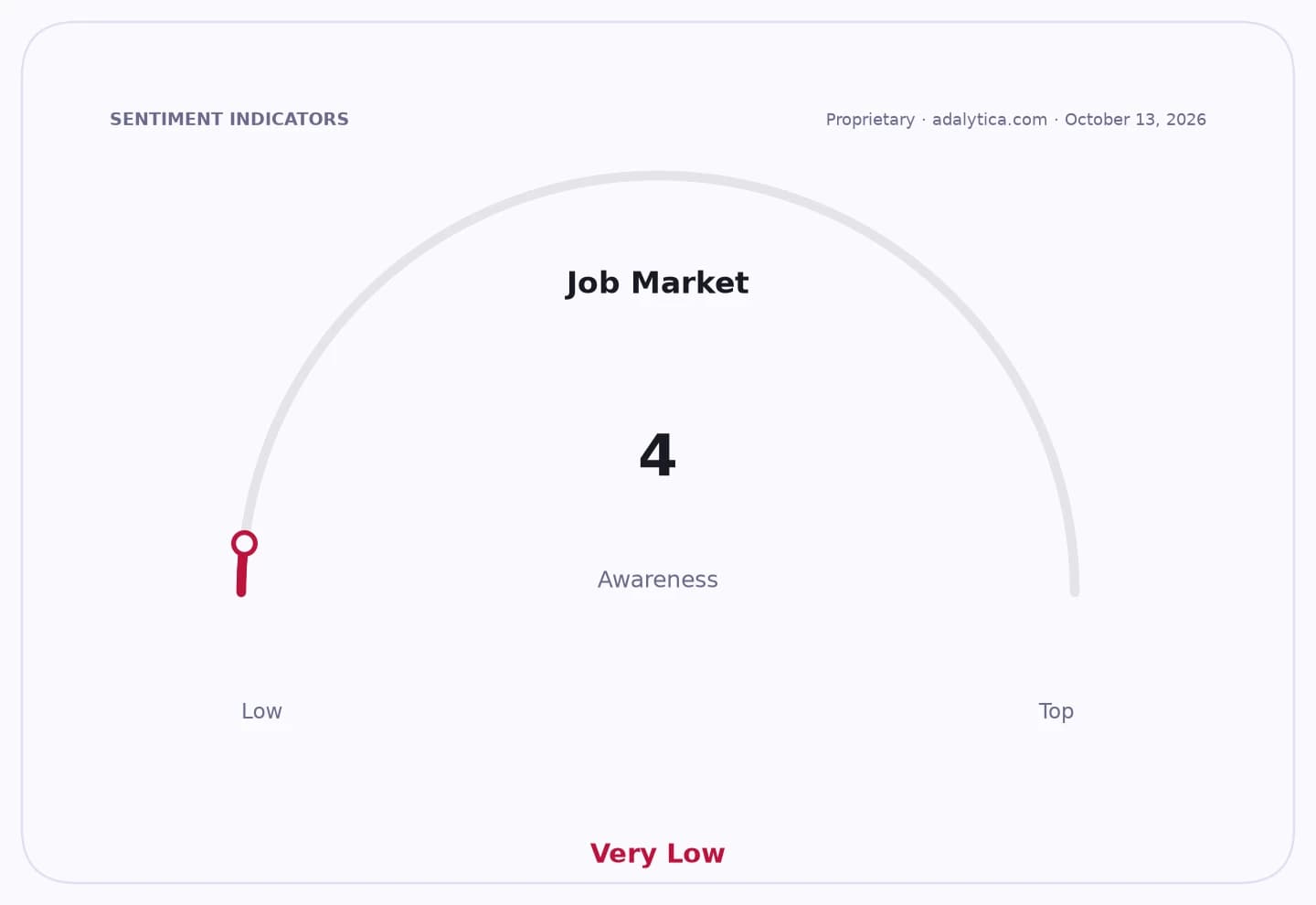
The broader job backdrop is mixed. Adalytica’s Job Market Sentiment gauge shows “Extreme Greed,” while awareness remains in “Extreme Fear,” a combination that suggests strong hiring appetite but low visibility for job seekers. US payroll data also point to a still-resilient labour market, with nonfarm employment around 159.0 million in the latest reading and unemployment at 4.2%, close to levels that indicate a relatively tight labour backdrop. Yet that aggregate strength is masking weaker conditions in some white-collar sectors, particularly technology, where hiring has become slower and more selective after the pandemic-era boom.
That helps explain why even qualified candidates are facing prolonged searches. In tech, the bargaining power has shifted away from workers who once could command rapid raises and competing offers. For younger engineers, the trade-off is increasingly between taking a lower salary abroad or waiting for a scarce opening at home. For employers, especially in Germany and other developed markets, the opportunity is access to a broader talent pool at more manageable cost.
The macro implications cut both ways. Source countries risk a quiet drain of skilled labour, while destination countries gain relief from shortages in critical digital roles. But the pay compression also underscores how global tech labour markets are normalizing after years of excess demand. If hiring stays cautious, more workers may keep looking overseas; if growth picks up, compensation pressure could re-emerge.
For investors, the message is that labour costs in tech are not uniformly rising. Companies with cross-border hiring power may preserve margins better than those dependent on local labour markets, while staffing firms, relocation platforms and digital recruitment businesses could benefit from a more mobile workforce. The next catalyst is whether Europe’s demand for engineers broadens enough to absorb more foreign applicants, or whether the current pattern of rejections and pay cuts becomes the new baseline for ambitious young developers.
| Entity | Gains | Losses |
|---|---|---|
| German employers | ▲Wider talent pool | ▼Local wage pressure |
| Young engineers abroad | ▲Job access | ▼Lower pay |
| Source-country labour markets | ▲Remittances | ▼Talent outflow |
| Tech recruiters | ▲More cross-border demand | ▼Higher placement friction |