More than half of Russian companies say they are willing to pay above-market salaries to workers who bring extra qualifications, underscoring a labor market where employers are competing on skills as much as headcount.
Russian employers pay more for extra skills
The clearest message from hh.ru’s survey is that additional education and verified training now translate directly into pay power. Some 55% of employers said they would pay more for extra competencies, with 34% limiting that premium to certain roles and 21% applying it to any employee.
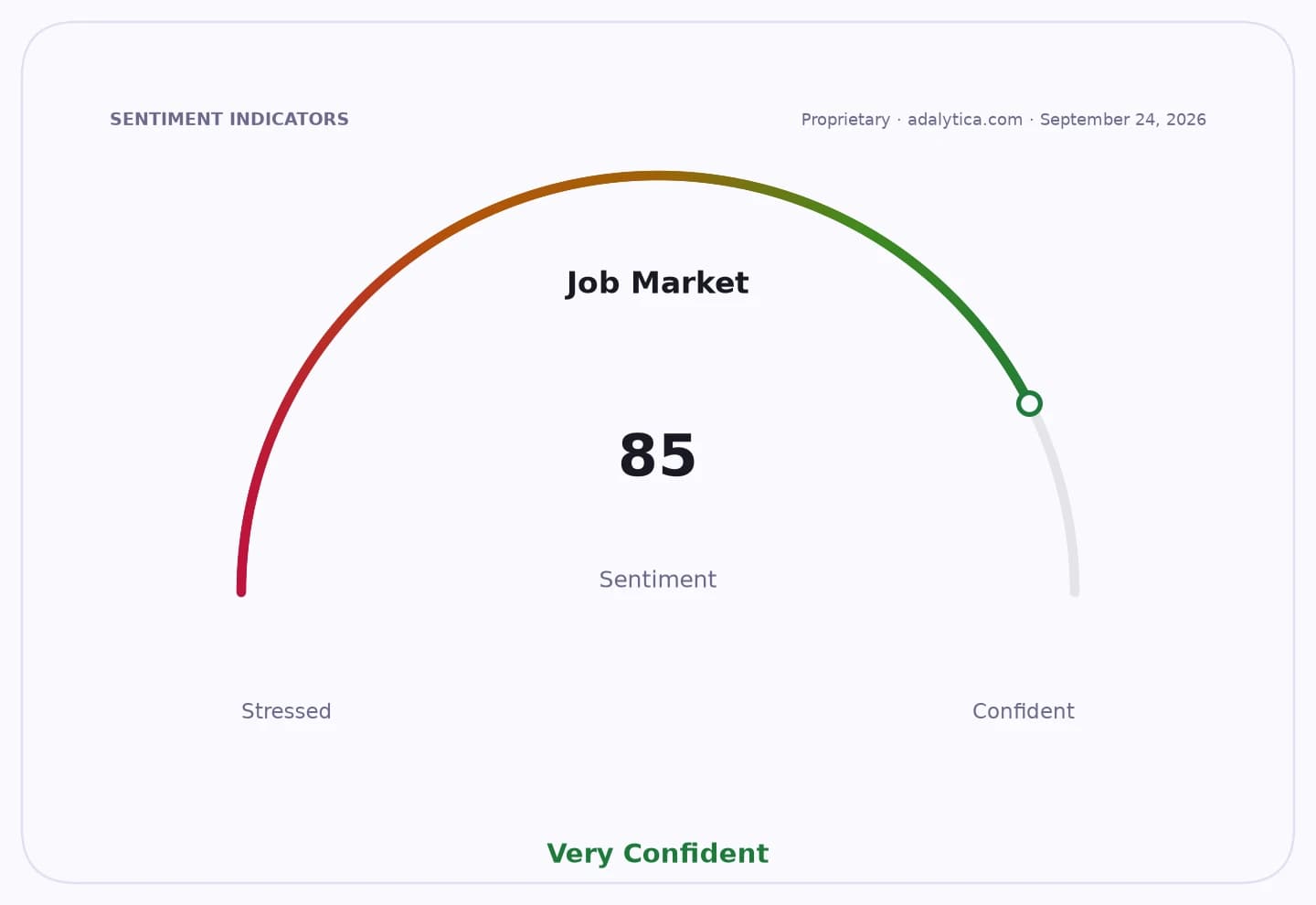
Sentiment IndicatorsⓘProprietary · adalytica.com · October 3, 2026
This is a snapshot — live sentiment, awareness and momentum for 130+ markets update continuously in the dashboard.Open AlphaPulse
That matters for the economy because it points to persistent demand for specialized labor even as hiring conditions remain uneven. The strongest willingness to pay up is concentrated in light industry, construction and real estate, and mining and processing, sectors that depend on hard-to-find technical expertise and where productivity gains can be tied more easily to certification and experience.
For job seekers, the most valuable credentials are not necessarily elite degrees but practical retraining. Professional retraining tops the list, with 36% of employers saying they look for it, followed by advanced training courses at 32% and skills certificates at 29%. Internships in other companies matter to 16%, while second degrees, online courses, master’s programs, MBAs and postgraduate study attract far less employer attention.
The pattern suggests a labor market rewarding quickly deployable skills over long academic pipelines. That can support wages in selected industries, but it also raises the premium on workers able to prove competence outside formal diplomas, especially in sectors trying to offset shortages with higher pay and more targeted hiring.
For investors, the takeaway is that wage pressure may stay uneven rather than broad-based: companies exposed to construction, property, manufacturing and extraction may need to spend more to recruit and retain talent, while employers able to fill roles with retraining could control costs better than peers relying on premium degree requirements.
The next catalyst will be whether this preference for skills-based pay shows up in hiring plans, payroll costs and sector margins, especially if labor shortages persist into the coming quarters.
| Entity | Gains | Losses |
|---|---|---|
| Workers with retraining/certificates | ▲Higher pay offers | ▼Less leverage without skills |
| Employers in shortage sectors | ▲Better access to talent | ▼Higher wage bills |
| Construction, real estate, mining firms | ▲Retain specialists | ▼Margin pressure |
| Degree-only job seekers | ▲Limited advantage | ▼Lower bargaining power |