Competition among job seekers is rising at its fastest pace in more than two years, a sign the labour market is loosening enough to give employers more leverage and make it harder for workers to secure jobs quickly.
Seek applications per job ad rise in August
New data from Seek showed applications per job ad climbed 2.9% in August from July, the sharpest increase in more than two years. The metric matters because it captures the balance of supply and demand in hiring: when more candidates chase each opening, employers can be more selective, wage pressure typically eases and recruitment timelines lengthen.
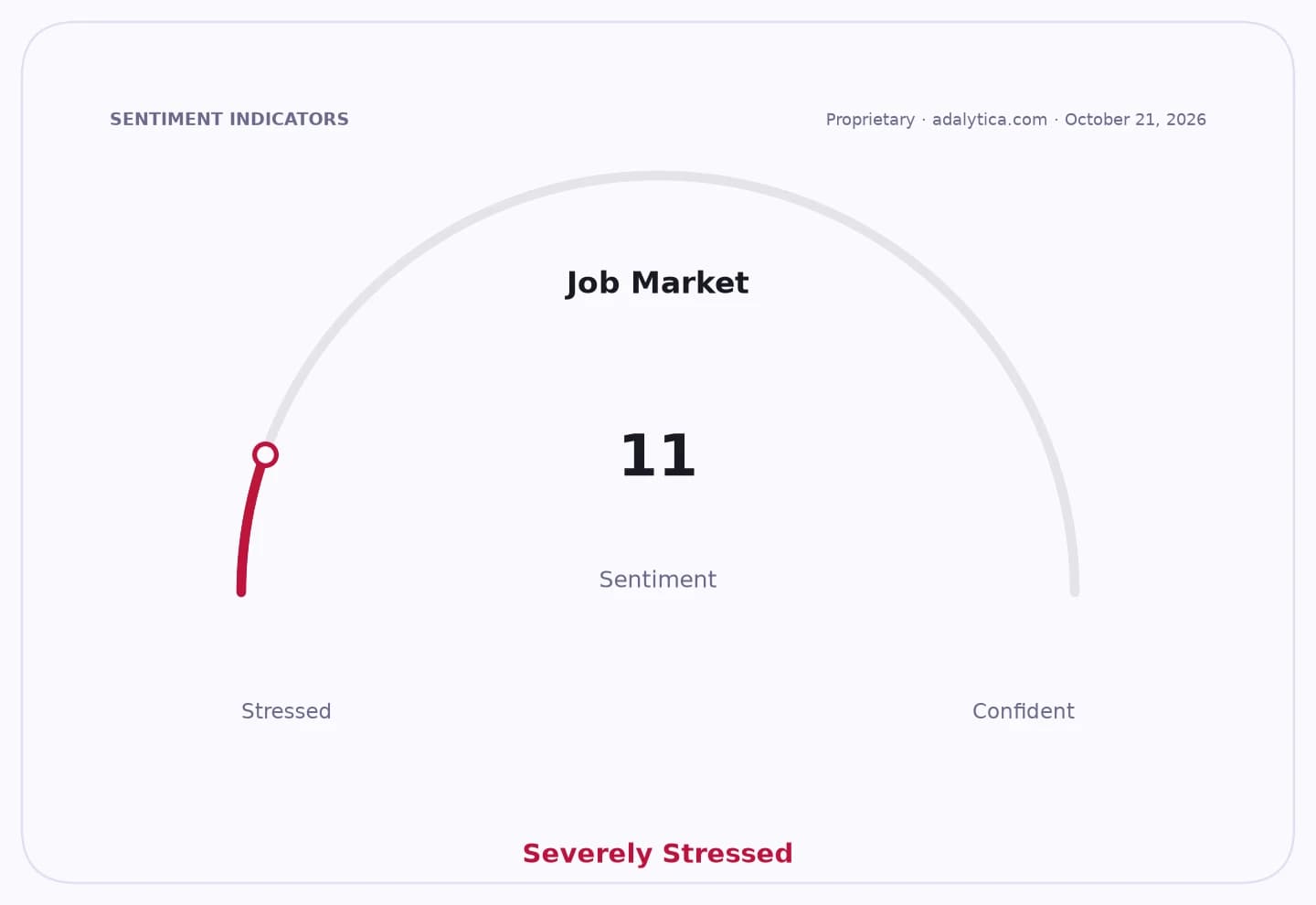
Sentiment IndicatorsⓘProprietary · adalytica.com · October 21, 2026
This is a snapshot — live sentiment, awareness and momentum for 130+ markets update continuously in the dashboard.Open AlphaPulse
For investors, the shift is a read-through on the broader economy as much as on the labour market itself. A pickup in competition for vacancies usually reflects slower hiring demand, weaker confidence among job seekers or both. That can help cool inflation over time by reducing pressure on wages, but it also raises the risk that consumer spending softens if workers become less secure about finding or switching jobs. In that sense, the data sit at the intersection of central bank policy, household income and corporate hiring plans.
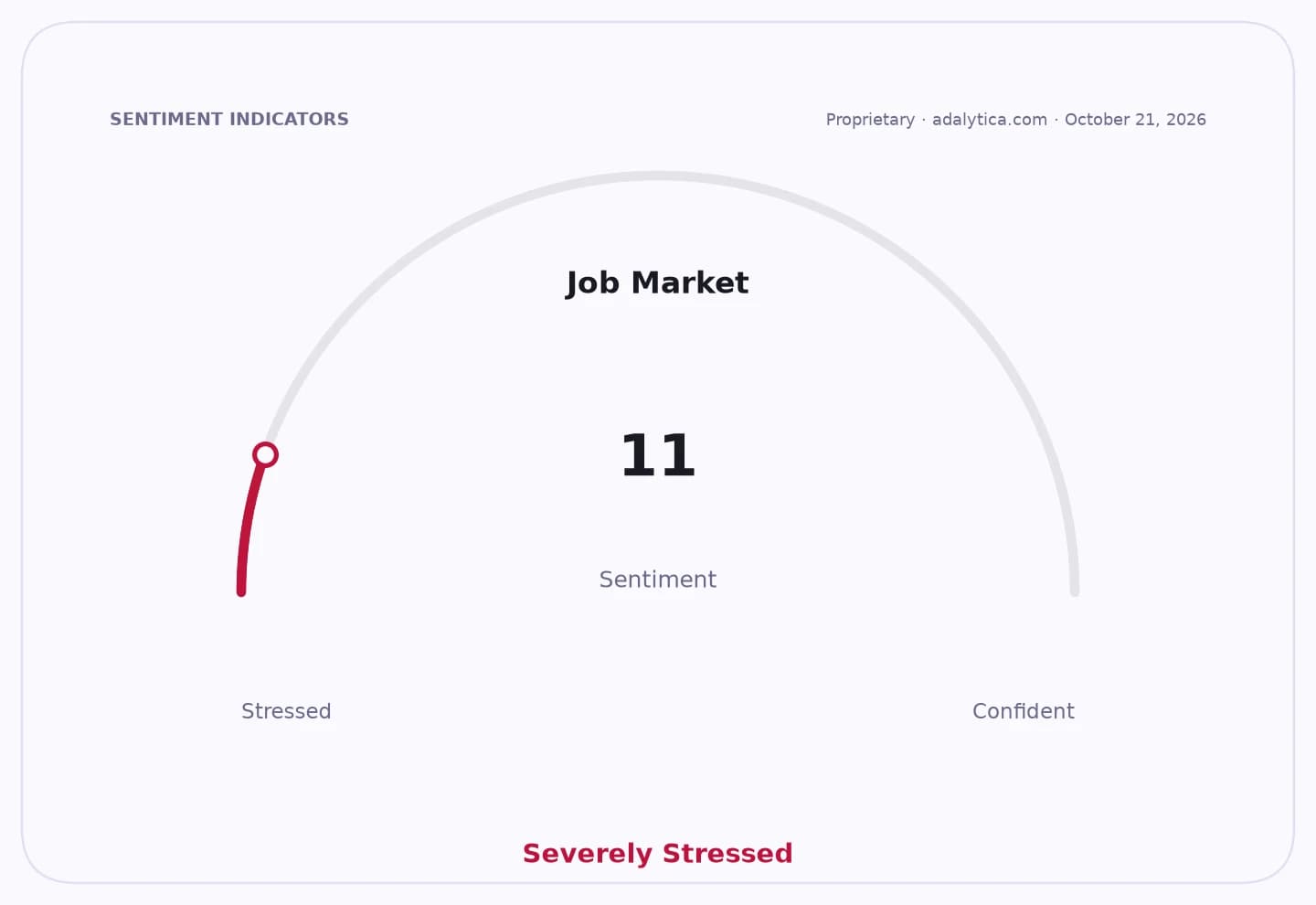
The move also fits with a broader pattern of nervousness in the labour market. Adalytica’s Job Market Sentiment indicator is in “Extreme Fear,” underscoring how quickly sentiment around employment has deteriorated even as the Nonfarm Payrolls gauge remains neutral. That divergence suggests the headline job count may still look resilient while the underlying struggle for vacancies worsens.
The latest Seek reading is particularly relevant for sectors that rely on steady labour turnover, from retail and hospitality to administrative services, where a larger applicant pool can slow wage growth and improve hiring quality for employers. For job seekers, it means bargaining power is fading just as competition intensifies.
The key question now is whether the August jump marks the start of a sustained cooling in labour demand or simply a temporary surge in applications. If it persists, it would strengthen the case for a softer jobs backdrop, lower wage inflation and eventually easier policy conditions. If it reverses, it would suggest the labour market remains more resilient than the latest applicant data imply.
| Entity | Gains | Losses |
|---|---|---|
| Employers | ▲Larger applicant pools | ▼Less pressure to raise pay |
| Job seekers | ▲More openings to choose from | ▼Lower bargaining power |
| Central banks | ▲Easier inflation outlook | ▼Less urgency for labour support |
| Wage-sensitive sectors | ▲Cooler labour costs | ▼Workers seeking higher pay |