Africa’s security agenda is moving back to the center of the continent’s economic outlook as 43 African Union member states met in Bujumbura to press for stronger conflict-prevention, disarmament and crisis-response mechanisms.
African Union security talks in Burundi
The four-day gathering in Burundi underscored a simple market and policy reality: without greater stability, Africa’s ambitions for trade, industrialization and cross-border investment remain constrained by war, terrorism and political fragmentation. Burundi’s defense ministry and military said the talks covered the continent’s political and security outlook, while participants linked peace directly to development and the delivery of the AU’s Agenda 2063 goals.
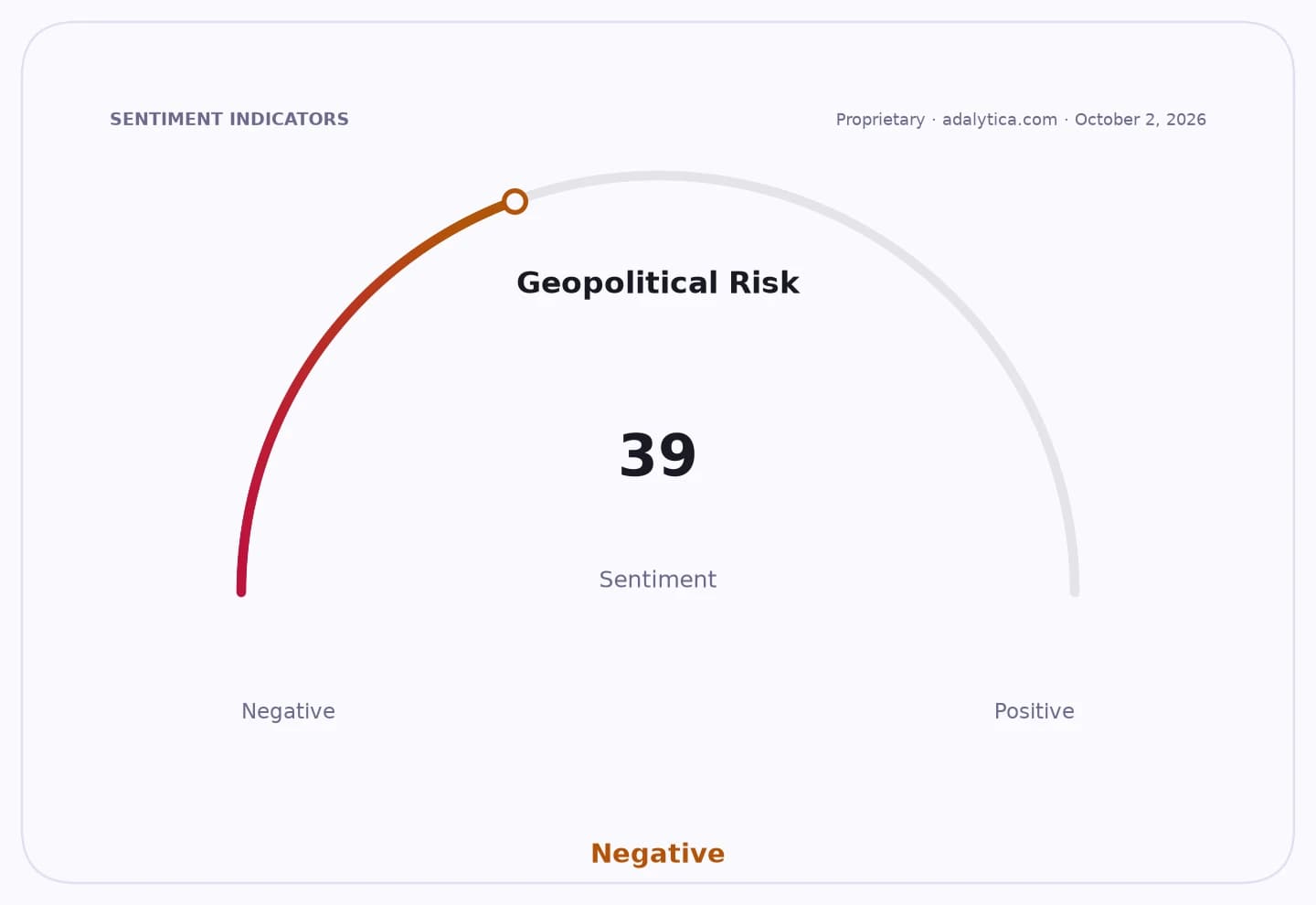
Sentiment IndicatorsⓘProprietary · adalytica.com · October 2, 2026
This is a snapshot — live sentiment, awareness and momentum for 130+ markets update continuously in the dashboard.Open AlphaPulse
The session brought together representatives from 43 of the AU’s 55 members, a broad turnout that suggests the bloc still sees security cooperation as one of its few shared priorities. Delegates examined expert reports on conflict trends, the roots of violence and collective responses to crises, with particular focus on ethnic tensions, terrorism and youth unemployment — all issues that can quickly spill into migration pressure, fiscal strain and disrupted supply chains.
The meeting also highlighted a familiar financing problem. AU peace and security mechanisms remain dependent on external support in many cases, and observers cited limited money, logistics gaps and weak institutions as major obstacles to implementation. That matters for investors because underfunded stabilization efforts tend to prolong risk premiums across frontier markets, delay infrastructure execution and weigh on sentiment toward local currencies, sovereign debt and private capital deployment.
Burundi framed the summit as a signal of confidence in Bujumbura, which hosts key state institutions and UN agencies, but the bigger message was continental. The AU is trying to turn recurring summit rhetoric into operational coordination at a time when armed conflict, governance failures and economic stress are feeding one another across several regions.
The recommendations from Bujumbura are set to go to the AU Peace and Security Council and the wider Union, where they will feed into broader decisions on conflict management and disarmament. For investors, the key question is whether Africa’s leaders move beyond declarations and unlock more reliable funding and enforcement for peace operations — a prerequisite for any sustained improvement in the continent’s investment climate.
| Entity | Gains | Losses |
|---|---|---|
| African Union | ▲Stronger coordination mandate | ▼Higher implementation burden |
| Burundi | ▲Diplomatic visibility | ▼Exposure if security pledges stall |
| African investors | ▲Better stability prospects | ▼Continued policy and conflict risk |
| External peace funders | ▲Greater relevance | ▼Pressure to keep financing gaps open |