Artificial intelligence is moving from a promise in medicine to a potential accelerator of cancer drug discovery, with Arm Holdings CEO Rene Haas saying the technology could help find a cure within our lifetime by tackling biological problems too complex for humans to solve alone.
AI Drug Discovery Spurs Biotech ETF Strength

That matters because oncology is one of the most expensive and failure-prone areas in pharmaceuticals, where years of trial-and-error research can burn billions of dollars before a drug ever reaches patients. Haas said AI could shorten development timelines by analyzing patient-sample data and modeling how DNA markers respond to cancer, while London cancer researchers say the real question is no longer whether to use AI but what data to feed it.
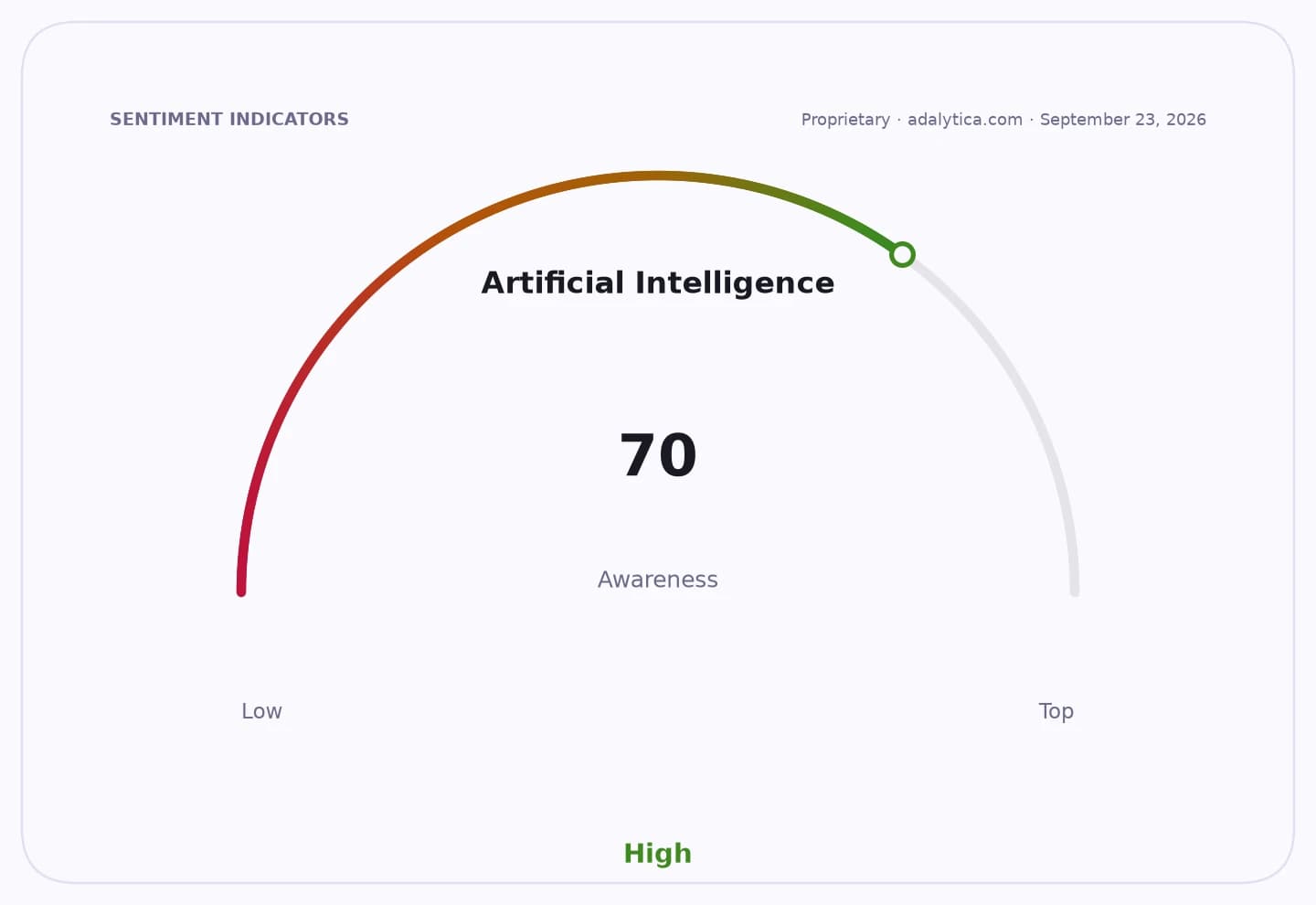
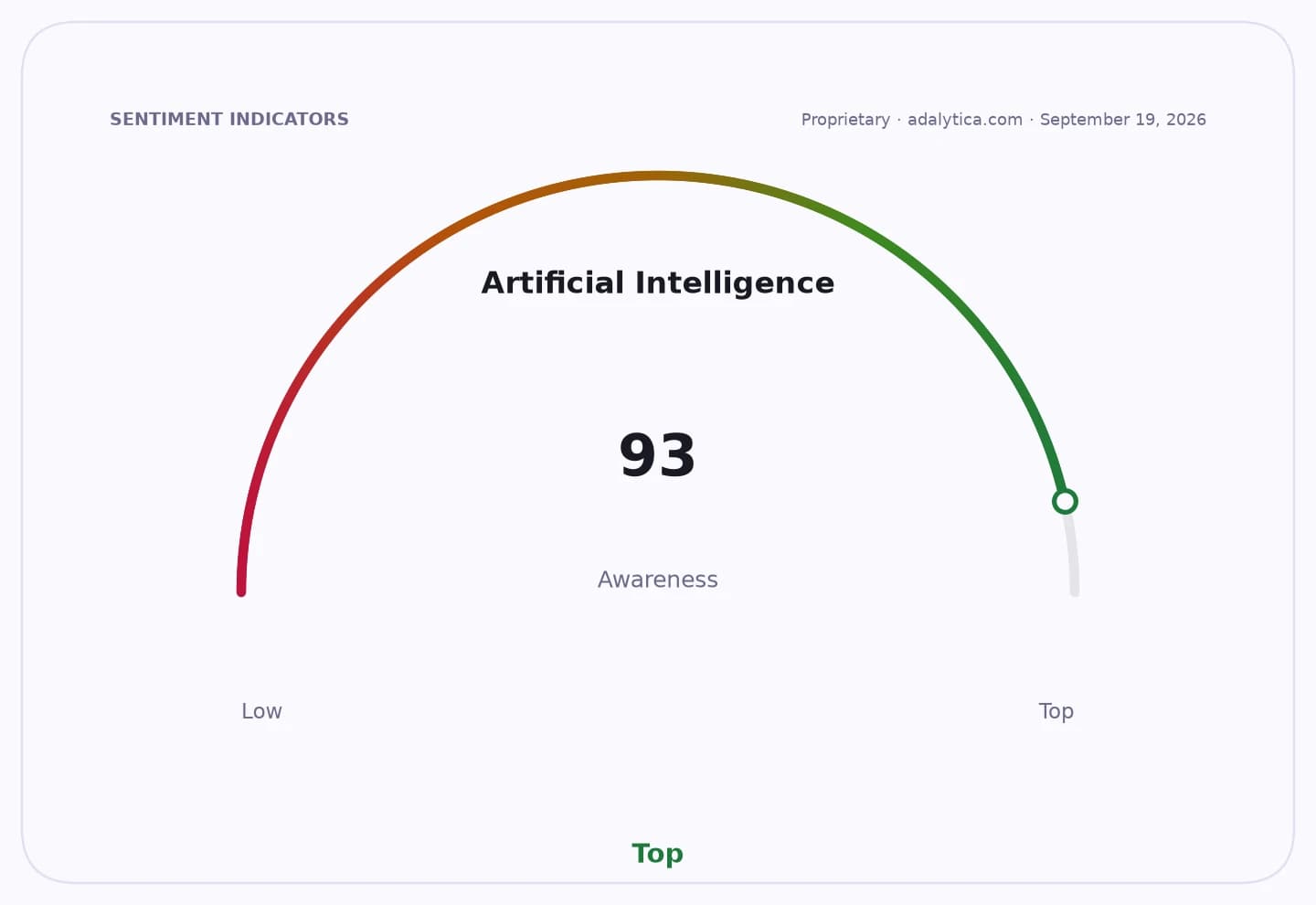
Sentiment IndicatorsⓘProprietary · adalytica.com · September 8, 2026
This is a snapshot — live sentiment, awareness and momentum for 130+ markets update continuously in the dashboard.Open AlphaPulse

For investors, the implication is that AI is no longer just a chip and cloud-computing story; it is becoming a healthcare platform play with potential spillovers across drug makers, diagnostics firms and semiconductor suppliers. The setup also helps explain why the biotech ETF IBB and the broader biotech gauge NBI have both stayed elevated, with IBB closing at 207.33 on Sept. 8, above its 200-day moving average of 177.66, while NBI finished at 7,236.34 on Sept. 4, far above its 200-day average of 6,080.55.
The rally has come alongside signs that investors are still willing to pay for AI-linked healthcare upside even as the sector remains technically extended. IBB’s relative strength index was 54.1 on Sept. 8 after reaching 83.3 in August, while NBI’s RSI stood at 61.5 on Sept. 4 after a similar overbought spike earlier in the month.
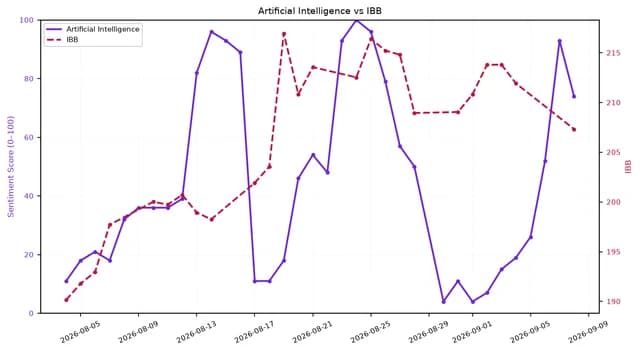
Haas also warned that chip shortages remain a bottleneck for AI’s expansion, a reminder that the medical promise depends on the same hardware supply chain driving the rest of the AI boom. Arm, which designs processors used across hundreds of billions of devices, sits at the center of that trade, while Nvidia remains the market’s most aggressively bid AI name, with Adalytica’s Nvidia earnings sentiment reading 96 out of 100, or “Extreme Greed.”
The bigger narrative is that AI is broadening from productivity software and data centers into biology, where better models and better training data could eventually improve screening, speed up treatment development and deepen demand for compute. The near-term catalyst is whether more oncology companies can turn that thesis into measurable trial gains, with investors watching for clinical updates, AI drug-discovery partnerships and any easing of the chip constraints Haas says are still slowing the industry.
| Entity | Gains | Losses |
|---|---|---|
| AI drug developers | ▲Faster discovery, lower R&D time | ▼Higher data and compute costs |
| Cancer patients | ▲Earlier detection, new treatment options | ▼Delays from slow adoption |
| Semiconductor makers | ▲More demand for chips and data centers | ▼Supply bottlenecks and capacity strain |
| Traditional biotech laggards | ▲None | ▼Pressure to adopt AI or lose ground |