Nvidia’s commitment of up to $2 billion to Brookfield Asset Management’s artificial intelligence infrastructure fund is more than a flashy partnership — it is another sign that the next phase of the AI boom is shifting from chip demand alone to the far more capital-intensive business of building the power plants, data centers and network infrastructure needed to keep those chips running.
Nvidia Invests Up to $2B in Brookfield AI Fund
That matters because the economics of AI are no longer just about who sells the fastest processors. The winners increasingly include the companies that can finance and assemble the physical backbone of the industry, from electricity supply to cooling systems to server farms. For Nvidia, helping bankroll that ecosystem strengthens the market for its GPUs and gives it a stake in the broader infrastructure layer that will determine how quickly AI spending can compound over the next decade.
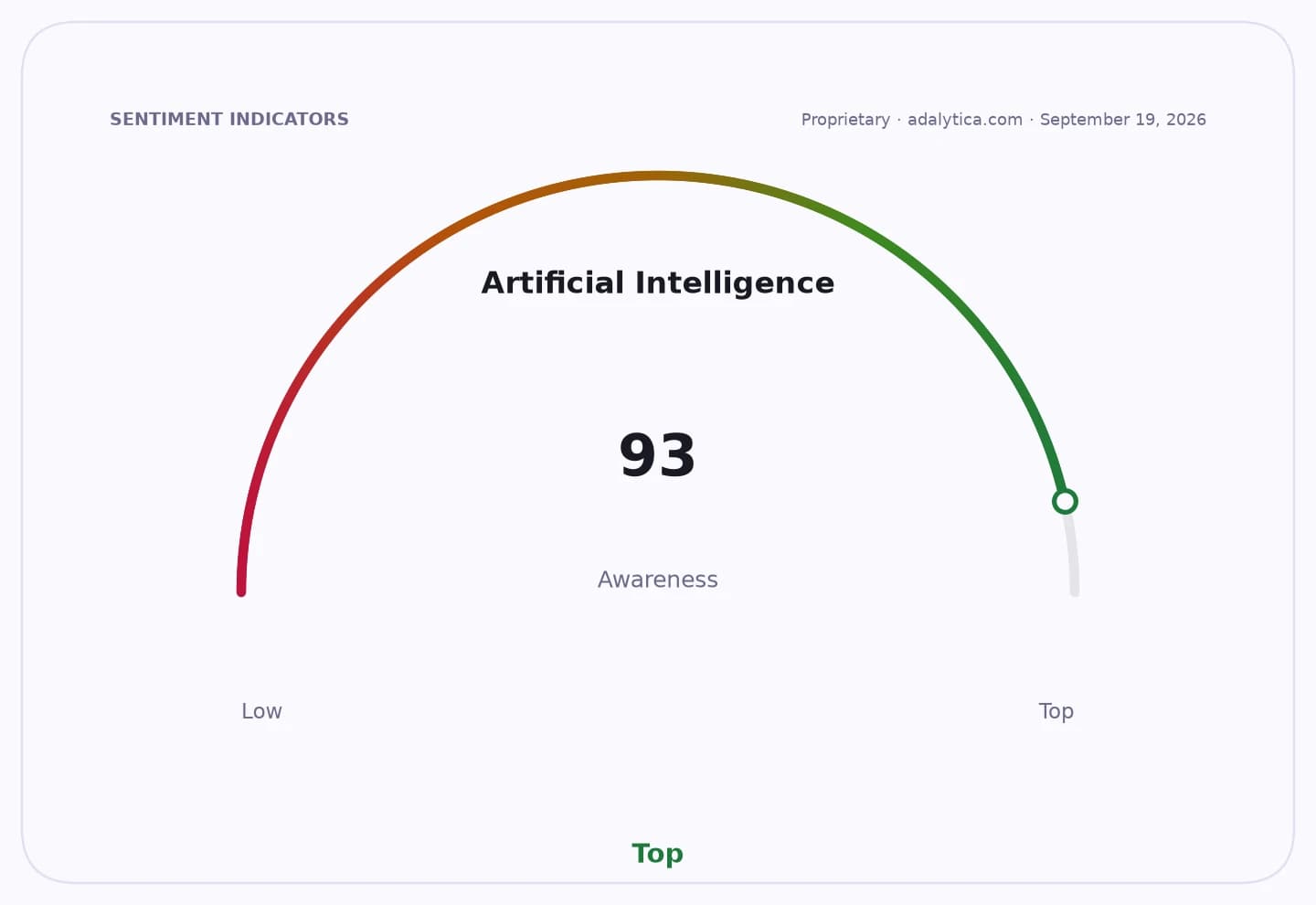
Sentiment IndicatorsⓘProprietary · adalytica.com · September 19, 2026
This is a snapshot — live sentiment, awareness and momentum for 130+ markets update continuously in the dashboard.Open AlphaPulse
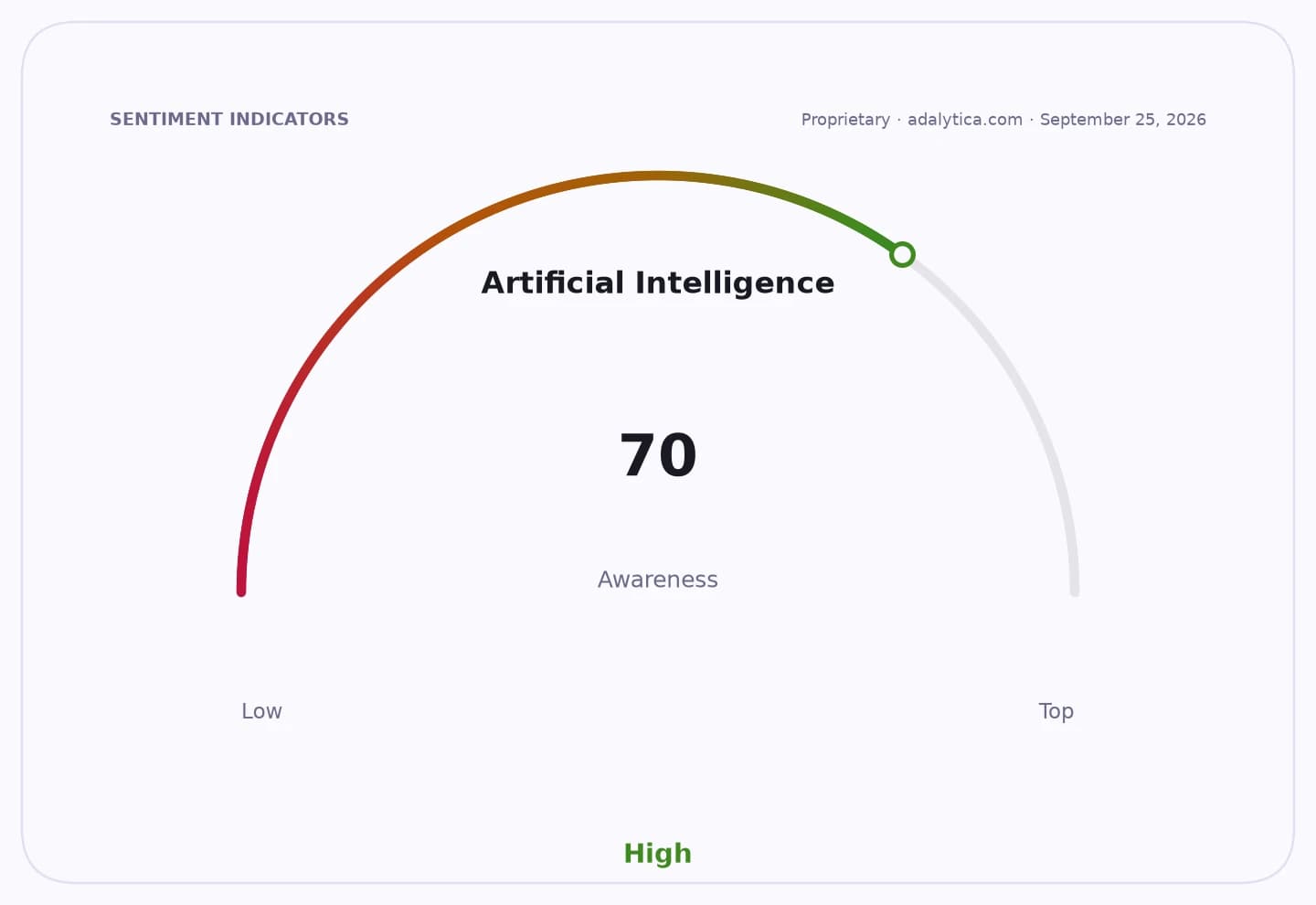
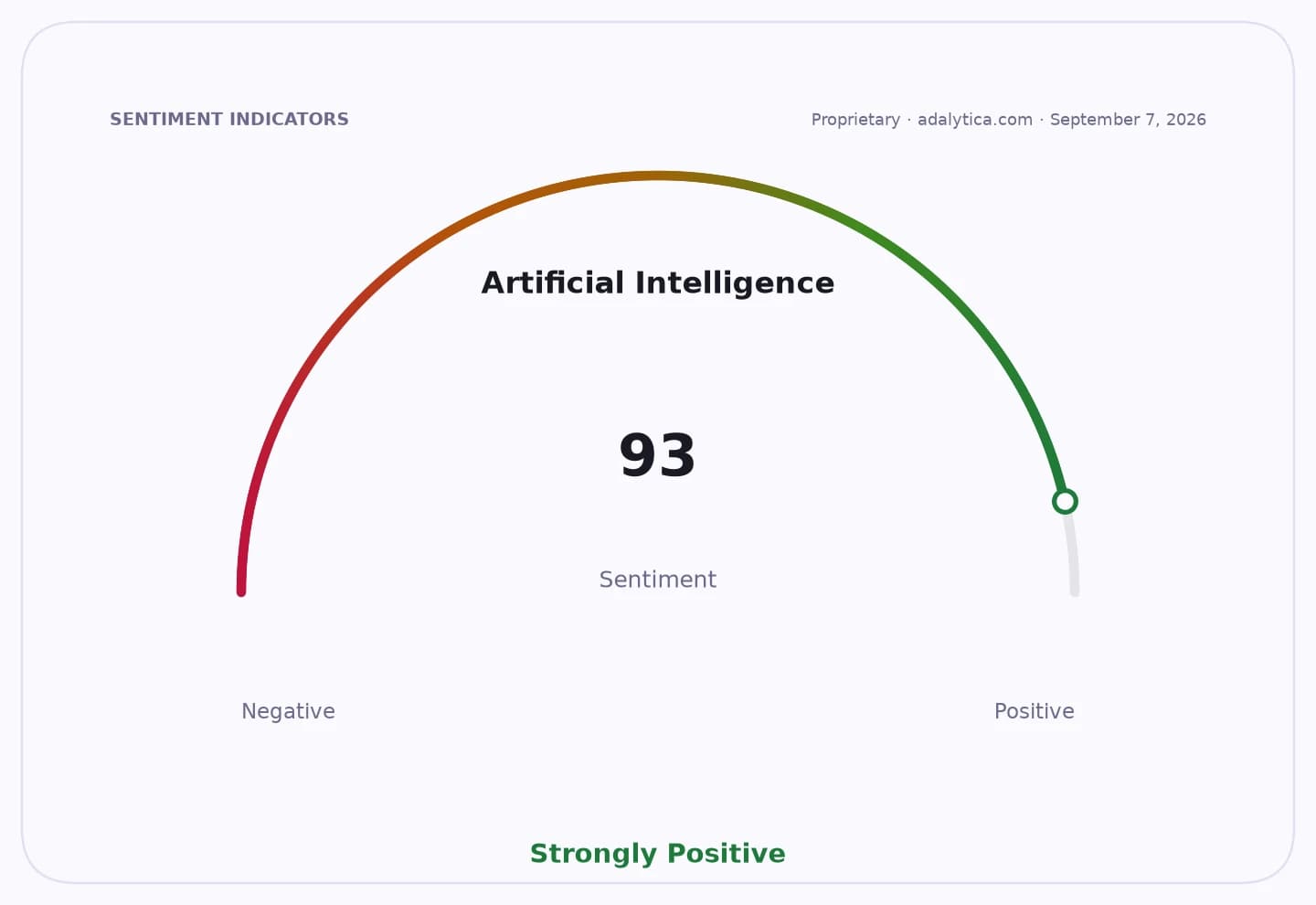
Brookfield, whose investment platform spans infrastructure and private capital, stands to gain by pairing its financing muscle with Nvidia’s brand and technology credibility. Investors in BN are likely to see the move as a useful validation of Brookfield’s push into AI infrastructure at a time when the sector is attracting large sums even as sentiment has turned sharply more cautious. Adalytica’s AI snapshot shows extreme fear in sentiment even while awareness remains elevated, a combination that often appears when enthusiasm is high but valuations and execution risks are being reappraised.
The backdrop helps explain why the deal matters. Global AI stocks have wobbled recently, but capital keeps flowing into the real economy behind the theme. Crusoe’s latest funding round valued the AI infrastructure provider at $30.9 billion, underscoring how investors are still willing to pay up for the picks-and-shovels layer of the buildout. Nvidia itself has told investors its supply and capacity commitments have jumped sharply, reaching $279 billion as of late July, reflecting how aggressively the company is positioning for future demand.
For investors, the key question is not whether AI spending continues — it almost certainly does — but who captures the durable returns. Nvidia is trying to make sure its ecosystem keeps expanding even if individual customers delay or reshape their plans. Brookfield is trying to become a preferred capital provider to one of the biggest industrial buildouts in years. TSMC, meanwhile, remains a critical enabler of the semiconductor side of the story, with the foundry industry still central to every AI hardware cycle.
The stock reaction may come and go, but the strategic message is clear: AI is becoming an infrastructure story as much as a software or semiconductor story. That broadens the opportunity set for long-term investors, especially those willing to own the companies that finance, build and supply the picks-and-shovels layer rather than chase the most obvious headline names.
For patient investors, the Brookfield-Nvidia tie-up is worth watching as a sign that the AI economy is still early in its capital-spending cycle. If the infrastructure buildout continues to scale, both NVDA and BN could benefit over years, not quarters — and that is usually where the best compounding happens.
| Entity | Gains | Losses |
|---|---|---|
| Nvidia | ▲More AI demand visibility | ▼Near-term capital commitment |
| Brookfield Asset Management | ▲Credibility in AI infrastructure | ▼Dependence on heavy execution |
| AI infrastructure providers | ▲Easier funding access | ▼Higher competition for projects |
| Skeptical short-term traders | ▲Volatility opportunities | ▼Missed long-term buildout |