AI is turning the global data-center buildout into a once-in-a-generation infrastructure cycle, and investors should think about it that way.
Nvidia, Microsoft, Amazon on AI data-center spending
PwC said annual spending on data centers, the backbone of artificial intelligence systems, is set to rise from an estimated $560 billion in 2025 to more than $800 billion in 2026 and $1.1 trillion by 2030, making it what the firm calls the largest infrastructure investment cycle in history. For long-term investors, that matters because it points to sustained demand not just for chips, but for the entire stack of power, land, cooling, networking and cloud capacity that AI needs to keep scaling.
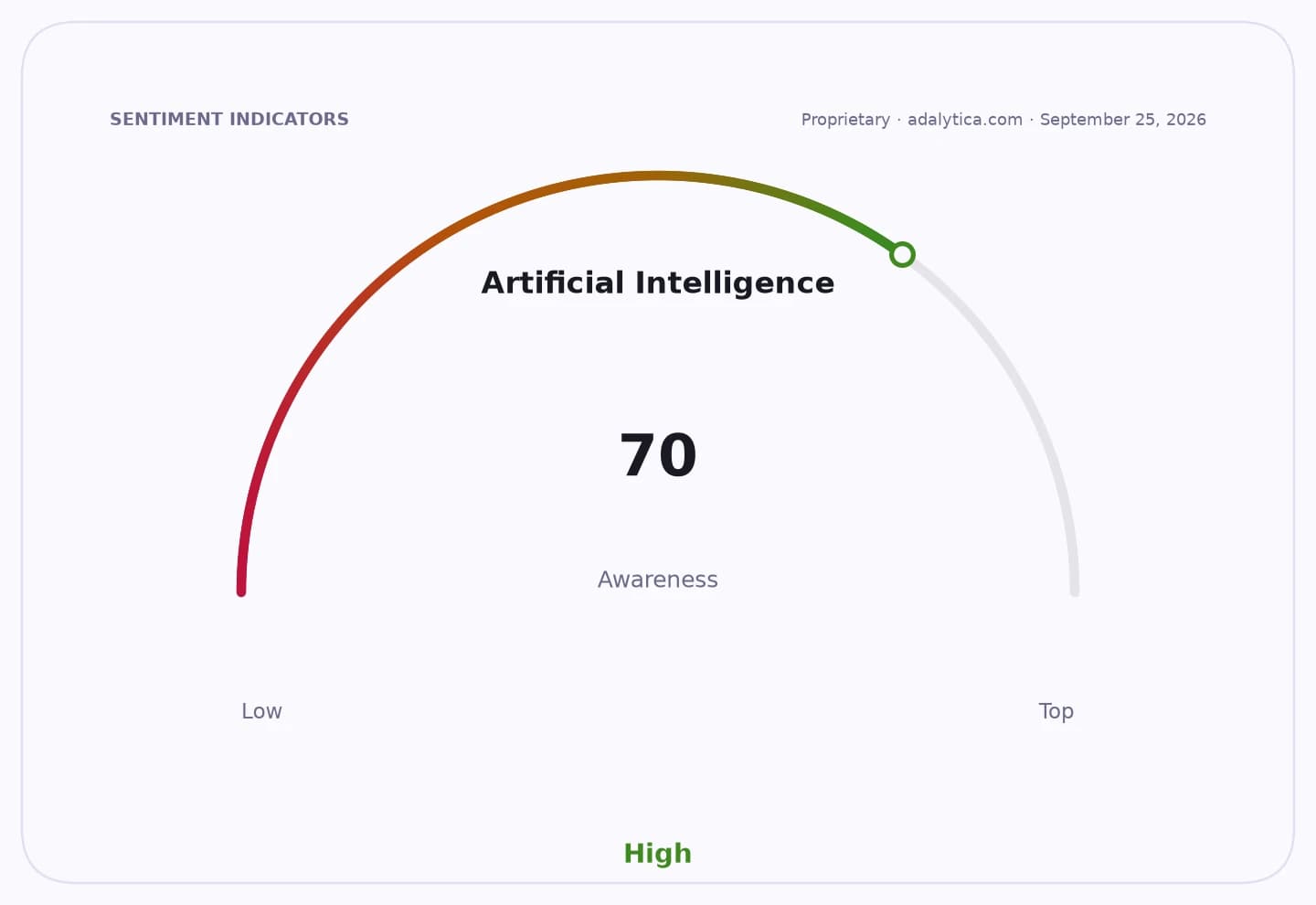
Sentiment IndicatorsⓘProprietary · adalytica.com · September 25, 2026
This is a snapshot — live sentiment, awareness and momentum for 130+ markets update continuously in the dashboard.Open AlphaPulse
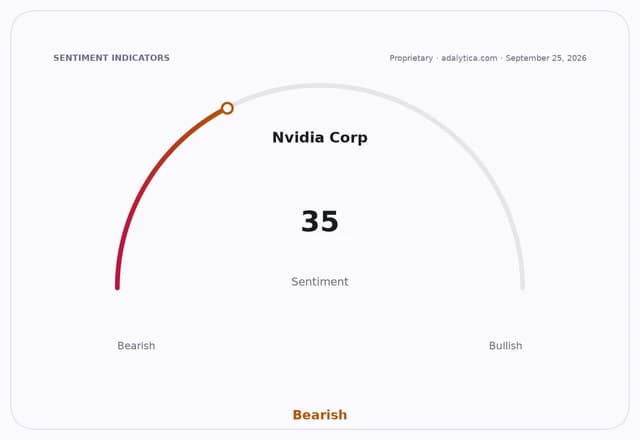
The numbers are striking because this is not a one-off capex burst. PwC expects global data-center investment to reach $1.8 trillion a year by 2050, with total spending over the 2026-2050 period at $31.6 trillion and potentially as much as $50 trillion if AI adoption accelerates further. Unlike past infrastructure booms, the spending mix shifts over time: construction is now about 30% of costs, but equipment makes up 70%, and that share is expected to rise to 93% by the end of the cycle as servers, storage, networking gear and chips are refreshed every few years.
That is why Nvidia, Microsoft and Amazon matter so much here. They sit at different points in the same chain of demand. Nvidia supplies the advanced processors and sees its backlog and capacity commitments ballooning as customers race to secure supply. Microsoft and Amazon are pouring money into cloud and AI infrastructure to support their platforms, and their own filings point to the pressure from power constraints, regulatory hurdles and the need for huge, multi-year investments. In other words, this is not just an AI story — it is a utility, semiconductor and cloud-computing story rolled into one.
Artificial Intelligence vs NVDAadalytica.com
Explore this data interactively — full history, time series and cross-market comparisons.Open AlphaPulse
For investors, the clearest takeaway is that AI infrastructure spending should not be judged on a single quarter or even a single year. The opportunity set looks durable, but it will be uneven. Companies with access to cheap electricity, advanced chip supply and permitting discipline are likely to win the most business. That includes the U.S., which PwC says could attract almost half of the world’s investment over the next 25 years, and parts of Asia-Pacific and Europe that can solve power and connectivity bottlenecks.
Europe illustrates the tension well. PwC estimates the region will draw $5.6 trillion in data-center investment from 2026 to 2050, with annual spending rising from $94 billion in 2025 to more than $230 billion by the end of the decade. Yet the region’s expansion is being shaped as much by regulation and power as by capital. The European Commission has launched a program to support seven AI “gigafactories” with a target of mobilizing 30 billion euros, while countries including Germany, Italy, Spain and Poland prepare bids. Romania, meanwhile, is still evaluating offers for its Black Sea AI Gigafactory, a project estimated at more than 4 billion euros but already flagged as vulnerable to administrative delays.
That is the real investment narrative here: AI is forcing the world to build a new industrial base, and the bottleneck is no longer just funding. It is electricity, grid access, chip availability and political execution. The beneficiaries are likely to be the companies that can deliver those scarce inputs at scale, while the losers are projects that cannot secure power fast enough or that get slowed by permitting and environmental pushback.
For patient investors, the best way to play this trend is not by chasing every headline, but by owning the picks-and-shovels businesses with real moats and multi-year demand. The AI buildout looks like a long runway, not a trade, and it is still early enough to reward investors who stay diversified and think in years, not days.
| Entity | Gains | Losses |
|---|---|---|
| Nvidia | ▲Surging chip demand | ▼Supply bottlenecks, execution risk |
| Microsoft & Amazon | ▲Cloud and AI scale-up | ▼Power costs, capex pressure |
| Europe’s AI gigafactory builders | ▲Public funding, new capacity | ▼Permitting delays, grid constraints |