President Donald Trump’s plan to create an “AI Force” and appoint an AI czar adds a powerful new catalyst to the race for artificial intelligence infrastructure, signaling that Washington wants to accelerate, not restrain, the buildout of compute, chips and software.
Trump AI Force Could Lift Nvidia, Microsoft, AMD

That matters because the next phase of the AI trade is no longer just about model quality or chatbot adoption. It is about who controls the hardware, cloud capacity, energy and procurement pipelines that make frontier AI possible. If the White House turns AI into a national-security priority, the winners are the companies supplying the picks-and-shovels — and the losers are the regulators, critics and shorts betting the buildout slows down.
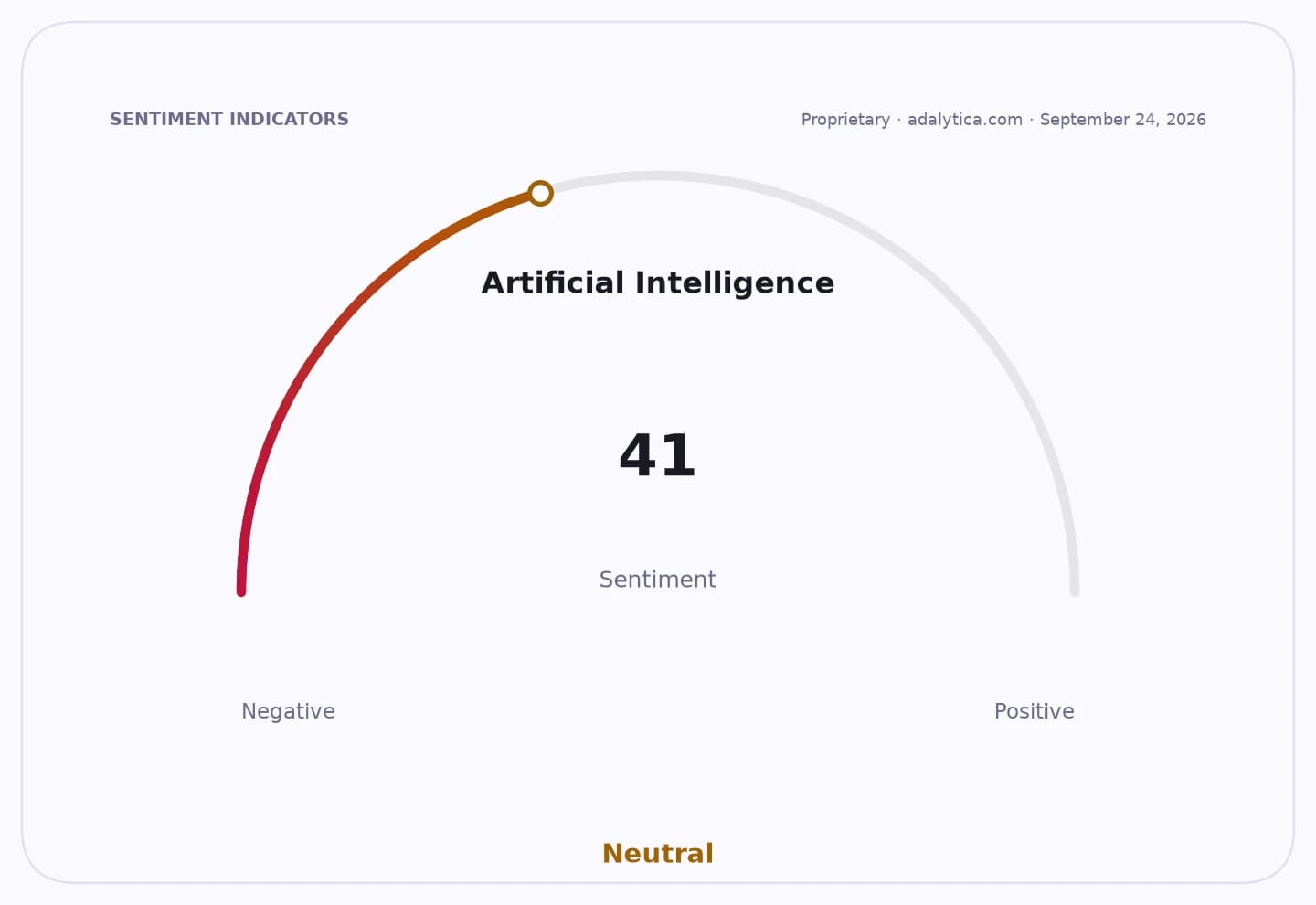
Sentiment IndicatorsⓘProprietary · adalytica.com · September 22, 2026
This is a snapshot — live sentiment, awareness and momentum for 130+ markets update continuously in the dashboard.Open AlphaPulse

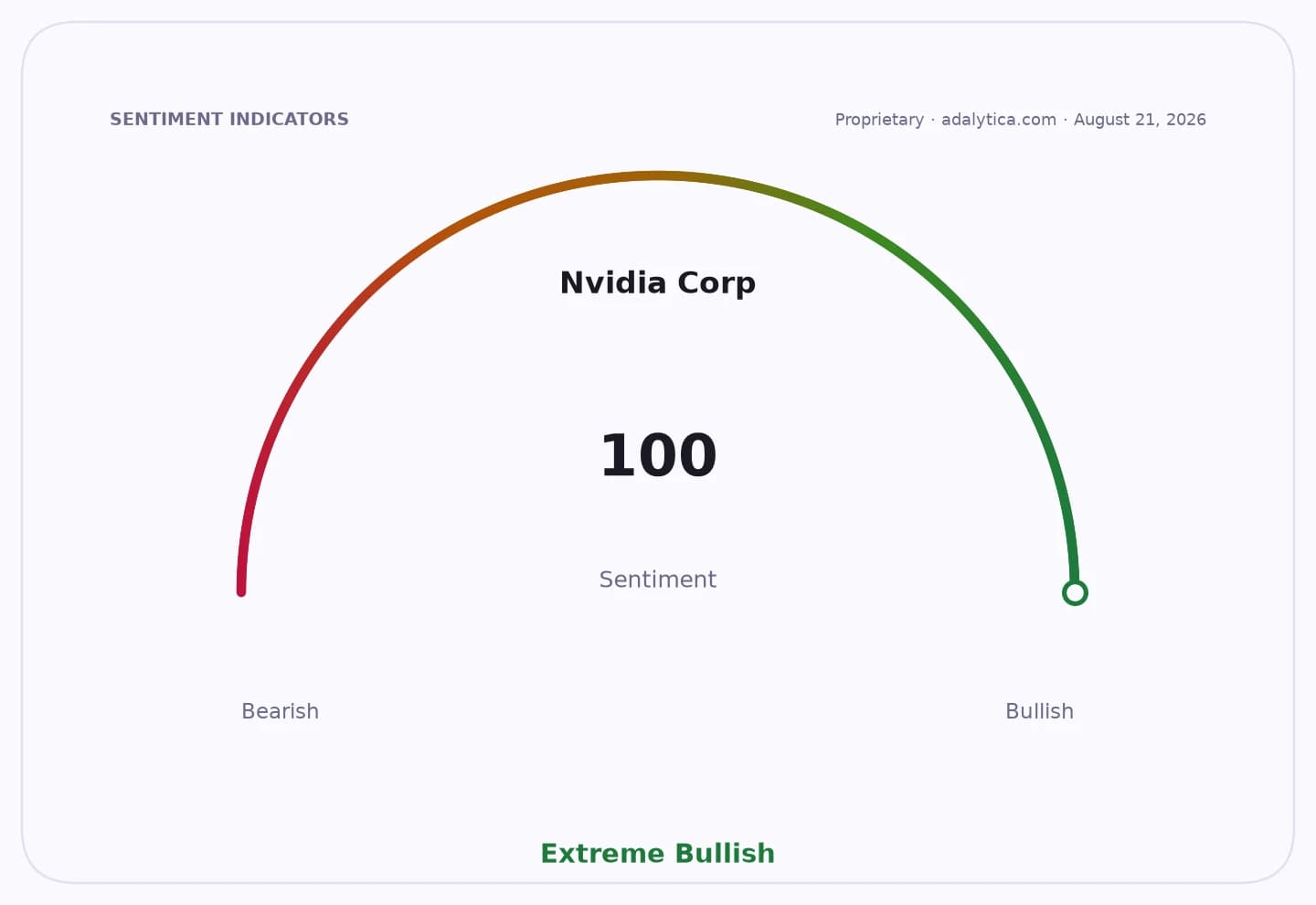
Nvidia is the clearest beneficiary. The stock has been grinding higher, closing at $228.11 on Sept. 22, above its 50-day moving average of $214.90 and 200-day average of $198.50, while RSI readings of 61.1 and a strengthening MACD suggest momentum remains firm. AMD has been even more explosive, jumping to $615.62 and pushing far beyond its 50-day average near $498.62, with RSI at 82.1, a classic sign of a powerful but stretched trend. Microsoft, meanwhile, has held near $498.65, still well above its 200-day average of $430.27, as the market continues to treat it as a core platform winner in AI deployment.
The broader investment case is straightforward: if Trump’s AI team prioritizes speed, domestic supply and federal coordination, capital spending on data centers, accelerators, networking and enterprise software should stay elevated longer than bears expect. That is especially important for Nvidia, which sits at the center of AI training and inference, and for Microsoft, which is monetizing AI through Azure, Copilot and enterprise software. AMD remains a more speculative but potentially higher-beta beneficiary if policy support broadens demand for U.S.-based chip supply.
Artificial Intelligence vs NVDAadalytica.com
Explore this data interactively — full history, time series and cross-market comparisons.Open AlphaPulse
The policy backdrop is also shifting in favor of the sector. Global leaders are debating tighter controls on advanced AI, while Trump’s language points in the opposite direction — a push to build faster and project technological dominance. That divergence matters to investors because policy can either compress the AI cycle or extend it. Right now, Washington appears to be choosing extension.
Adalytica’s AI-related sentiment gauge turned more constructive on the announcement, with awareness rising sharply over the past week, a sign that investors are starting to price in a more aggressive federal AI stance. But the market may still be underestimating the second-order effect: an AI czar could accelerate procurement across defense, cloud and semiconductor supply chains, creating a long runway for the companies that sell the infrastructure rather than the headlines.
For investors, the takeaway is to stay positioned in AI infrastructure, not the policy noise. If the U.S. government is about to formalize an AI offensive, the most attractive trades are the companies with the chips, cloud, and enterprise distribution to monetize that spending at scale.
| Entity | Gains | Losses |
|---|---|---|
| Nvidia | ▲Higher AI chip demand | ▼Export-control uncertainty |
| Microsoft | ▲Faster AI adoption across Azure and Copilot | ▼Regulatory scrutiny on AI use |
| AMD | ▲Broader U.S. chip procurement | ▼Needs flawless execution |
| AI regulators/shorts | ▲Increased debate, volatility | ▼Slower policy influence, squeezed bearish bets |