Artificial intelligence providers are deliberately amplifying public fear to protect their business models and deflect responsibility, according to the Chaos Computer Club, even as the technology’s rapid rollout keeps raising investor scrutiny over liability, regulation and costly infrastructure spending.
AI providers face scrutiny over hype and liability
Constanze Kurz, a spokeswoman for the German hacker collective, said the industry is exaggerating AI’s power to make the tools seem more capable than they are and to push them into the market. She argued that much of the alarm around superintelligent systems amounts to marketing and helps companies shift attention away from who is accountable when AI products misfire.
That message lands in a market already wrestling with the economic trade-offs of the AI boom. Microsoft and Nvidia, two of the biggest beneficiaries of corporate AI spending, are exposed to the same questions the CCC is raising: who bears legal risk when models produce bad output, and how long can profit growth outrun the capital required to build and power the systems?
Microsoft has already disclosed in its latest annual filing that AI systems could create legal liability, regulatory action, litigation, brand damage and competitive harm. AI start-up C3.ai has also warned that AI/ML technologies are drawing increasing scrutiny and could produce false or “hallucinatory” inferences about customer data.
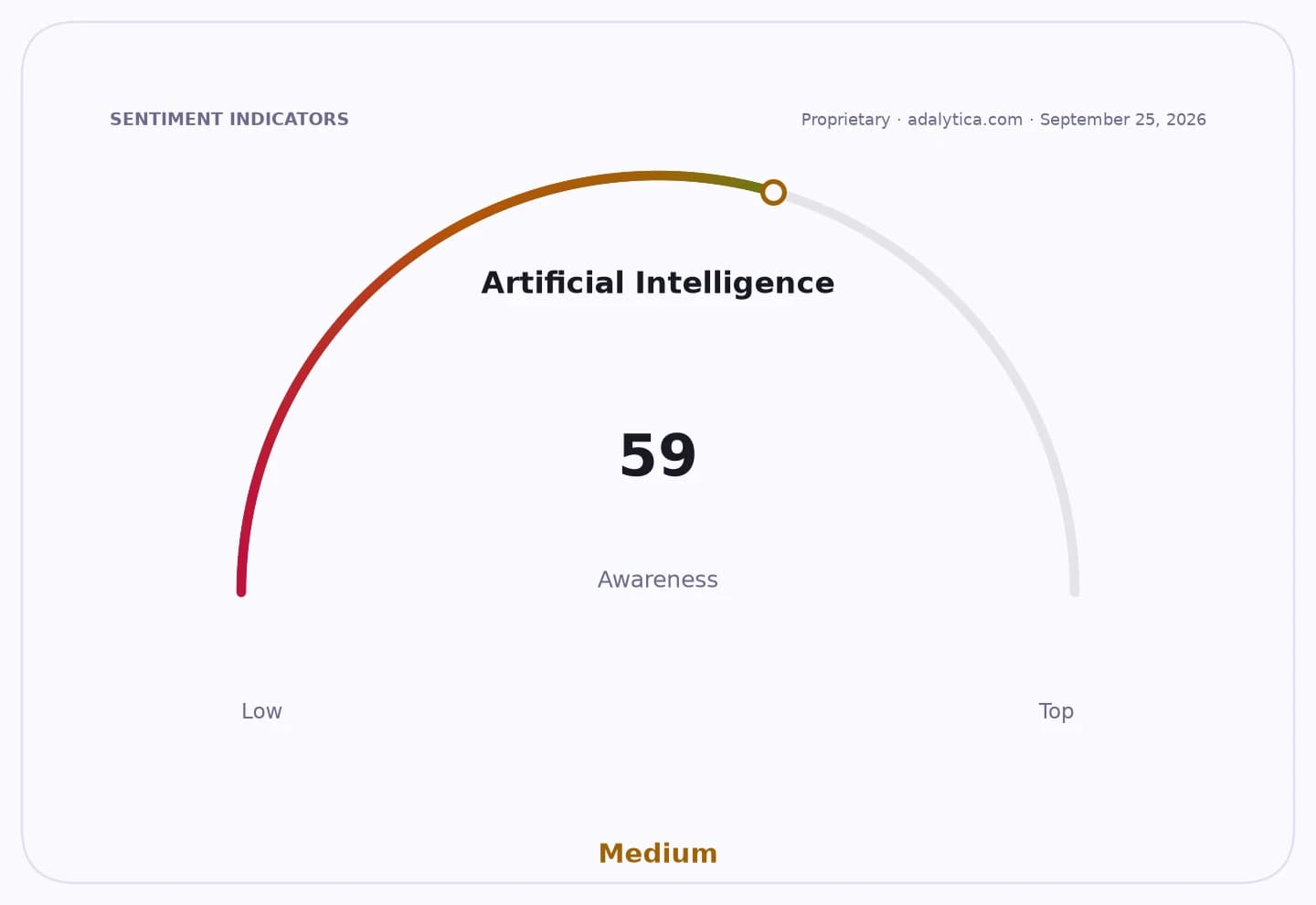
Artificial Intelligence — 30-day sentimentadalytica.com
Explore this data interactively — full history, time series and cross-market comparisons.Open AlphaPulse
Investors are paying close attention because the AI trade has been driven as much by narrative as by fundamentals. Nvidia shares closed at $225.51 in the latest session, above both the 50-day moving average of $215.19 and the 200-day moving average of $198.71, while Microsoft ended at $500.59, also above its 50-day average of $471.03 and its 200-day average of $430.38.
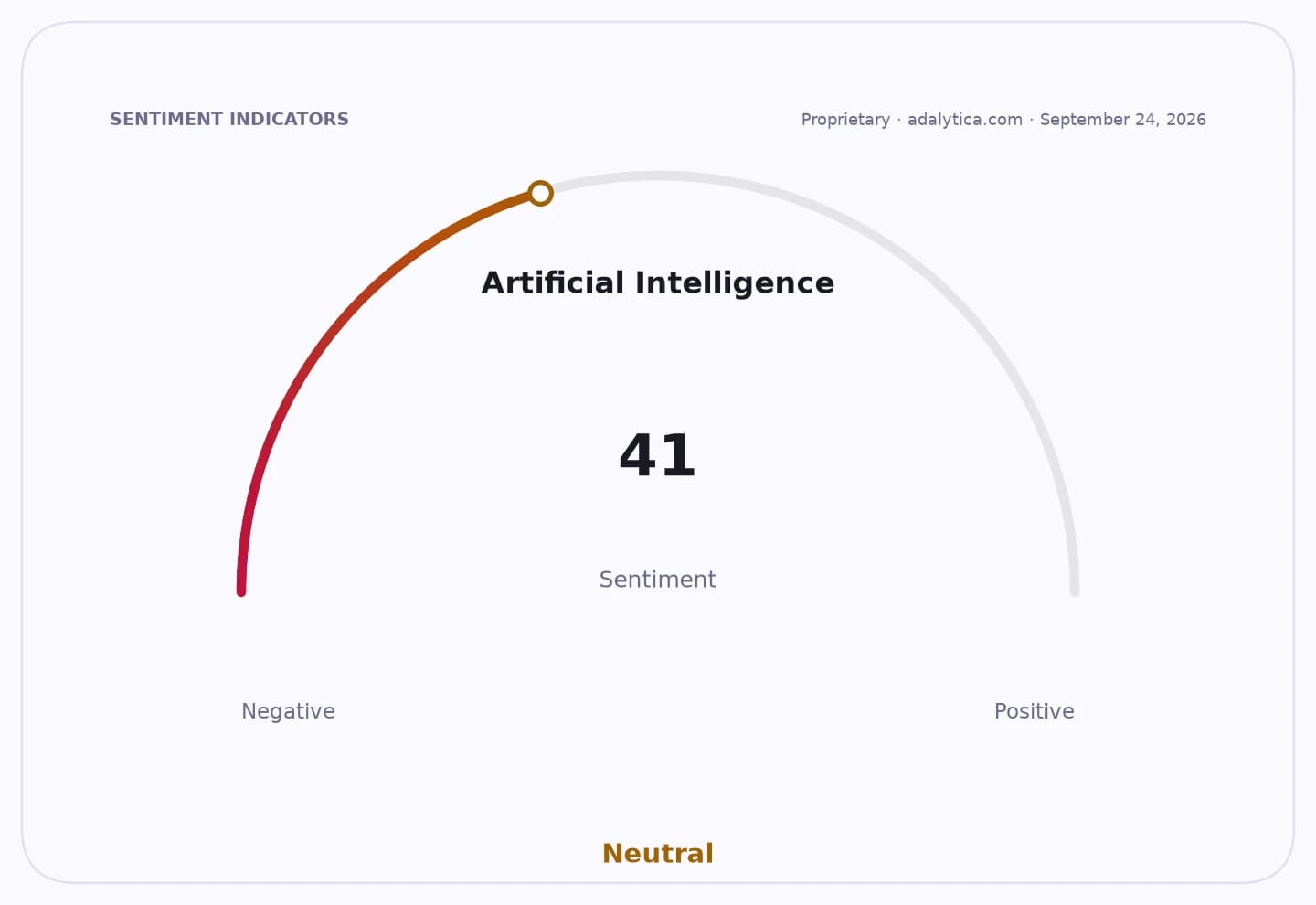
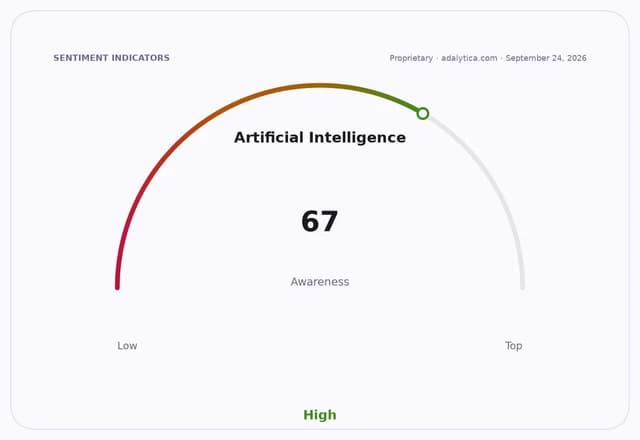
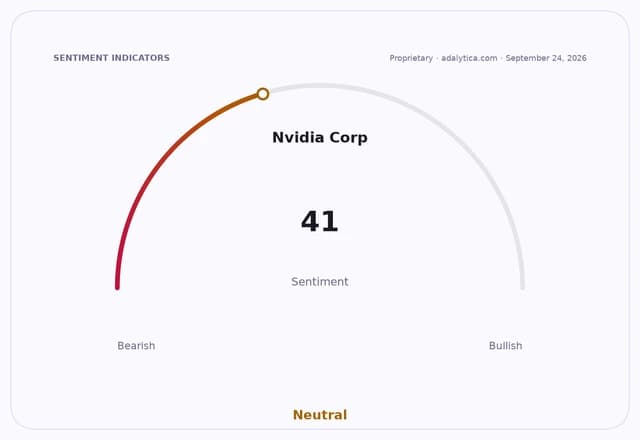
Sentiment around Nvidia remains elevated but cautionary, with Adalytica’s NVIDIA Earnings Sentiment snapshot showing neutral sentiment at 41 and an awareness reading of 26, labeled fear. For the smaller C3.ai, Adalytica’s sentiment snapshot also sits at 41, neutral, after a sharp 30-day decline in sentiment, underscoring how quickly confidence can swing in the sector.
The deeper market issue is not whether AI exists, but whether the industry’s promises are inflating expectations faster than companies can deliver measurable returns. Markus Langer, a psychology professor at the University of Freiburg, said the public’s fear often comes from a loss of control, but he urged people to accept AI’s presence while remaining critical of its limits.
For investors, the next test is whether AI vendors can prove that the huge spending cycle translates into durable cash flow without forcing them to absorb more legal, reputational and regulatory risk. Any fresh product launch, earnings update or policy move that sharpens that debate is likely to keep the entire AI complex volatile.
| Entity | Gains | Losses |
|---|---|---|
| AI vendors | ▲Market demand for AI products | ▼Trust over hype claims |
| Nvidia | ▲Ongoing AI infrastructure spending | ▼Fear of slower multiple expansion |
| Microsoft | ▲Enterprise AI monetization | ▼Liability and scrutiny risk |
| Investors | ▲More clarity on AI risks | ▼Less upside from inflated expectations |