NVIDIA is turning its dominant chip business into something more powerful: a financing engine for the AI economy.
NVIDIA Financing AI Expansion With Equity and Guarantees

That shift matters because it shows the company is no longer just selling the picks and shovels of the AI boom. It is now helping fund the infrastructure, customers and partners that must keep buying those chips, creating a feedback loop that could extend NVIDIA’s lead while also deepening its exposure to the sector’s credit and execution risks.
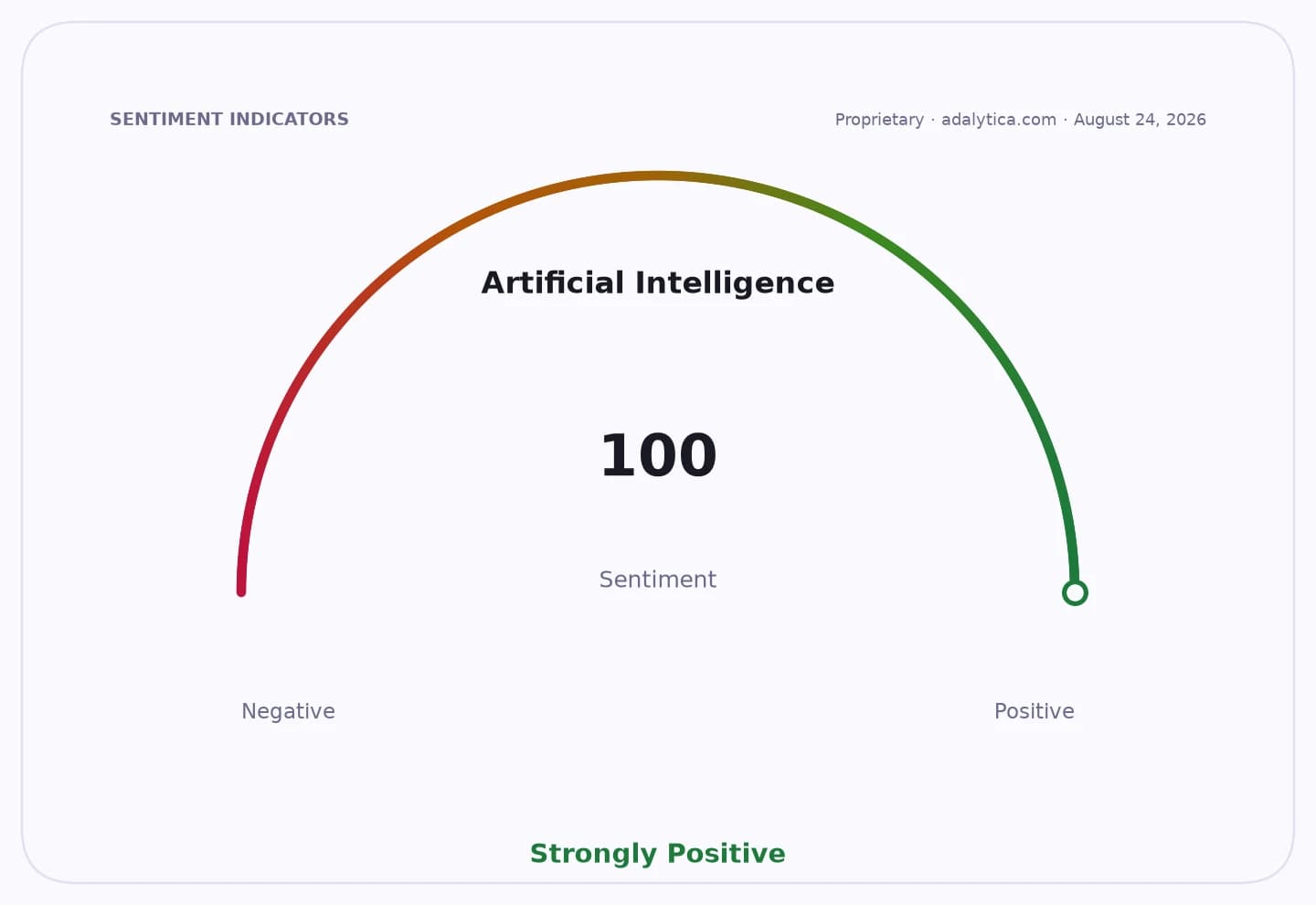
Sentiment IndicatorsⓘProprietary · adalytica.com · September 7, 2026
This is a snapshot — live sentiment, awareness and momentum for 130+ markets update continuously in the dashboard.Open AlphaPulse
Wall Street has started to describe NVIDIA as a kind of “banker” to artificial intelligence, and the numbers help explain why. By the end of July, its equity stakes in listed and private companies had reached $95.6 billion, nearly matching the $96.2 billion in revenue it generated in the second quarter. NVIDIA said total equity investments, including unrealized holdings, amounted to about $99 billion.
The portfolio has expanded at a pace that would be extraordinary for almost any other company. Its equity book was worth less than $100 million in early 2020 and has grown more than 900-fold in six years. Holdings include Intel, CoreWeave, Cohere, Synopsys and Nebius, while on Aug. 31 NVIDIA agreed to buy $3.5 billion of convertible bonds issued by Taiwan’s MediaTek.
The more consequential part of the story is not the stakes themselves, but the financing structure NVIDIA is building around its customers. In the second quarter, the company’s receivables climbed to $63.1 billion, implying an average collection period of about 60 days as it extended payment terms to major data-center buyers for as long as a year. At the same time, NVIDIA said it had $108.5 billion of payment guarantees outstanding for other AI companies, including about $105 billion tied to OpenAI’s planned expansion of nine data centers.
For investors, that is both a growth accelerator and a balance-sheet test. The bullish case is straightforward: by easing funding constraints for AI builders, NVIDIA helps ensure that demand for its accelerators remains strong even as customers struggle to finance multi-billion-dollar deployments. Colette Kress, the chief financial officer, has said the scale of companies able to use NVIDIA-provided capital could equal a quarter of the company’s revenue next year. Jensen Huang, the chief executive, has even said he regrets not investing more and earlier.
The bear case is that NVIDIA is increasingly underwriting the very ecosystem that depends on its spending. If AI adoption slows, if customers fail to monetize new capacity, or if financing markets tighten, the company could face more concentrated counterparty risk than a traditional chip maker. The comparison to a bank is not literal — NVIDIA is not taking deposits or making loans in the classic sense — but the economic function is similar: it is recycling its own cash generation back into the industry to secure future demand.
That strategy is being reinforced by outside capital. NVIDIA has lined up preliminary support from a broad group of Wall Street and private-capital firms including BlackRock, Blackstone, Brookfield, Goldman Sachs, Apollo and KKR for a $500 billion AI infrastructure push, and it sold $25 billion of bonds in the second quarter, more than the $21.3 billion it generated in free cash flow over the period.
The result is a company with a dual income stream: hardware sales today, and investment gains tomorrow. NVIDIA said income from these activities reached $7.8 billion in the second quarter, a material contribution that suggests the financing arm is no longer peripheral to the story. If AI infrastructure becomes a durable asset class, NVIDIA may be laying claim not only to chip margins but also to the economics of the buildout itself.
For markets, that makes NVIDIA’s results increasingly tied to the health of the broader AI funding cycle. The stock has recovered sharply in recent months, with technical readings such as the 50-day and 200-day moving averages pointing to a stronger trend after earlier volatility, while Adalytica’s proprietary NVIDIA earnings sentiment gauge shows extreme greed. But the more important question for shareholders is whether the company’s capital recycling model can keep compounding without turning into a source of hidden credit risk.
| Entity | Gains | Losses |
|---|---|---|
| NVIDIA | ▲More demand support | ▼Higher counterparty risk |
| AI startups / cloud buyers | ▲Easier financing | ▼Greater dependence on NVIDIA |
| OpenAI and model builders | ▲Access to capital | ▼More leverage to one supplier |
| Traditional lenders / rivals | ▲Less direct role | ▼Missed financing opportunity |