The Ministry of Manpower’s move to strengthen job-market analysis and training planning with artificial intelligence signals a policy shift that could influence how quickly workers are reskilled and how effectively employers fill vacancies as AI reshapes demand for labor.
AI labor planning boosts staffing outlook
That matters economically because labor planning has become a binding constraint in an economy where skills mismatches can slow hiring, cap productivity and leave growth on the table. Using AI to scan vacancies, identify emerging occupations and map training needs should give officials a faster read on where shortages are forming, which sectors are losing traction and where apprenticeships or mid-career retraining need to be expanded.
Sentiment IndicatorsⓘProprietary · adalytica.com · July 20, 2026
This is a snapshot — live sentiment, awareness and momentum for 130+ markets update continuously in the dashboard.Open AlphaPulse
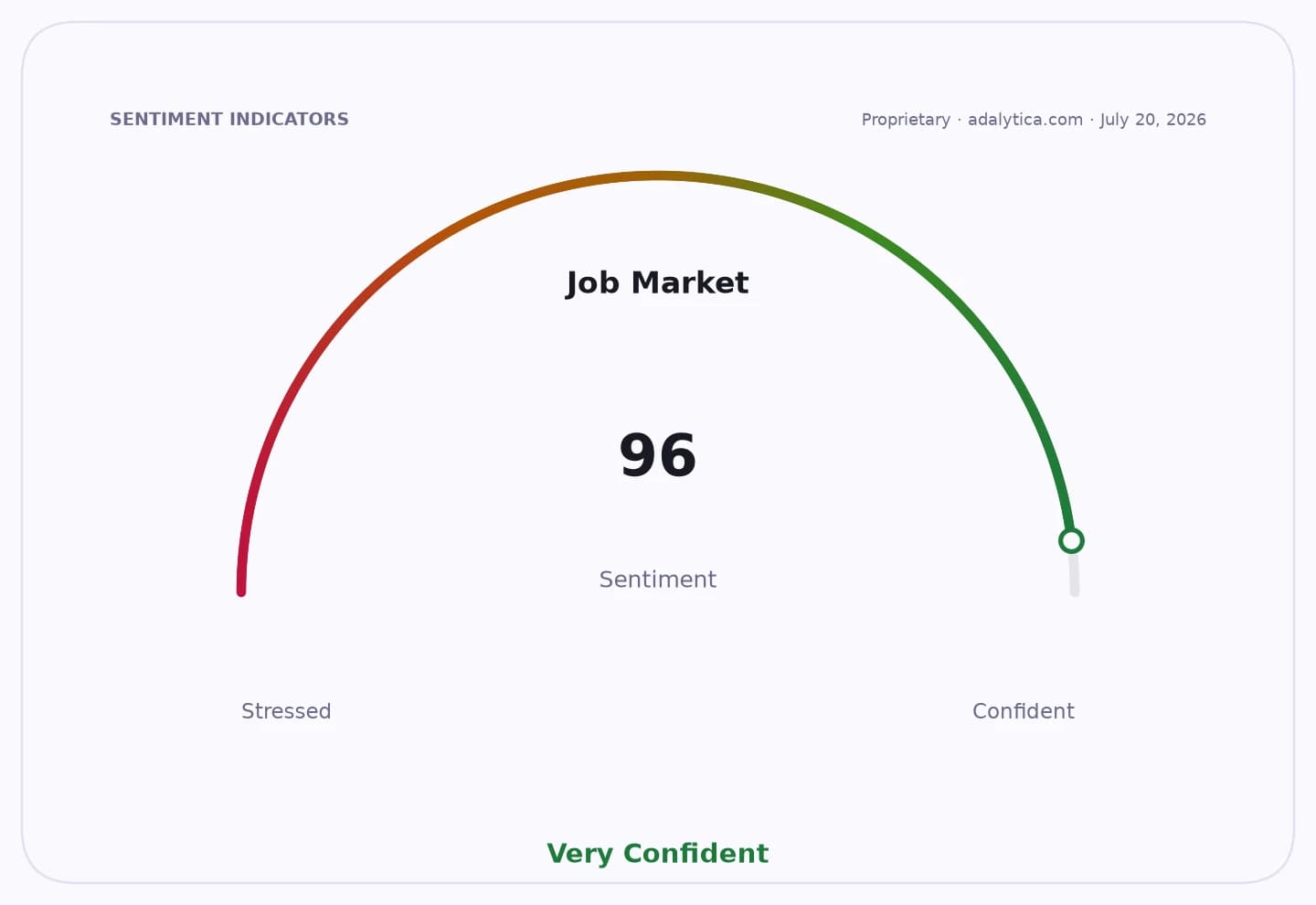
The timing is important. Adalytica’s Job Market Sentiment gauge shows extreme greed at 96, suggesting very strong optimism around labor conditions, even as awareness remains low at 18, a sign that market participants may still be underestimating how quickly AI is changing entry-level hiring patterns. By contrast, the Nonfarm Payrolls Sentiment snapshot is stuck in fear at 21 with awareness in extreme fear, pointing to lingering caution about the durability of job creation. The split captures the central policy problem: headline labor resilience can mask rapid churn underneath.
For employers, better labor-market analytics could reduce recruitment friction and make workforce planning more precise. For workers, especially graduates and apprentices, it could improve the odds that public training programs match real demand rather than lagging behind it. That is particularly relevant as unions prepare to press the case that AI is eroding entry-level opportunities and putting pressure on apprenticeship pipelines. If government planning becomes more responsive, it could blunt some of the displacement risk; if it does not, the mismatch between AI-driven hiring and traditional training systems will widen.
The development also has implications for ManpowerGroup and other staffing firms. Manpower’s shares have already been volatile, with the stock surging to $52.34 on July 17 after a sharp jump in volume, extending a run that pushed it well above both its 50-day and 200-day moving averages. That rally suggests investors are willing to pay for companies exposed to labor-market reallocation and flexible hiring, but it also leaves the stock vulnerable if growth in placements or margins fails to keep pace with the optimism. AI-led labor reordering could help staffing and interim-services providers, yet it can just as easily compress traditional low-skill placement volumes if entry-level demand weakens faster than new categories are created.
The broader narrative is that AI is no longer just a technology story; it is becoming a labor-planning story. Governments are trying to get ahead of the disruption, unions are trying to protect the bottom rung of the job ladder, and investors are weighing which companies benefit from workforce churn versus those exposed to it. The key catalyst now is whether AI-assisted planning translates into measurable gains in placement rates, apprenticeship uptake and wage matching, or whether it simply confirms that the labor market is moving faster than policy can follow.
| Entity | Gains | Losses |
|---|---|---|
| Ministry of Manpower | ▲Better labor planning | ▼Slower policy response |
| Workers and trainees | ▲Better-targeted reskilling | ▼Mismatched training paths |
| Staffing firms like ManpowerGroup | ▲Higher flexible-work demand | ▼Fewer entry-level placements |
| Unions / apprenticeships | ▲Stronger protection case | ▼Greater AI-driven displacement |