Companies are pouring more money into digital tools, data and AI, yet most still are not getting a meaningful lift in revenue, underscoring a growing gap between marketing sophistication and commercial results.
Companies Invest More in AI Marketing, ROI Lags

A study of 114 companies cited in the context found 96.49% ran marketing campaigns in the past year and 86.84% used digital technology, data and/or AI to improve customer experience. But 61.11% still posted a marketing ROI below 10%, while 61.54% of firms with verifiable revenue growth expanded faster than the median 7.4%. The message for executives and investors is clear: better tools are not the same as better growth.
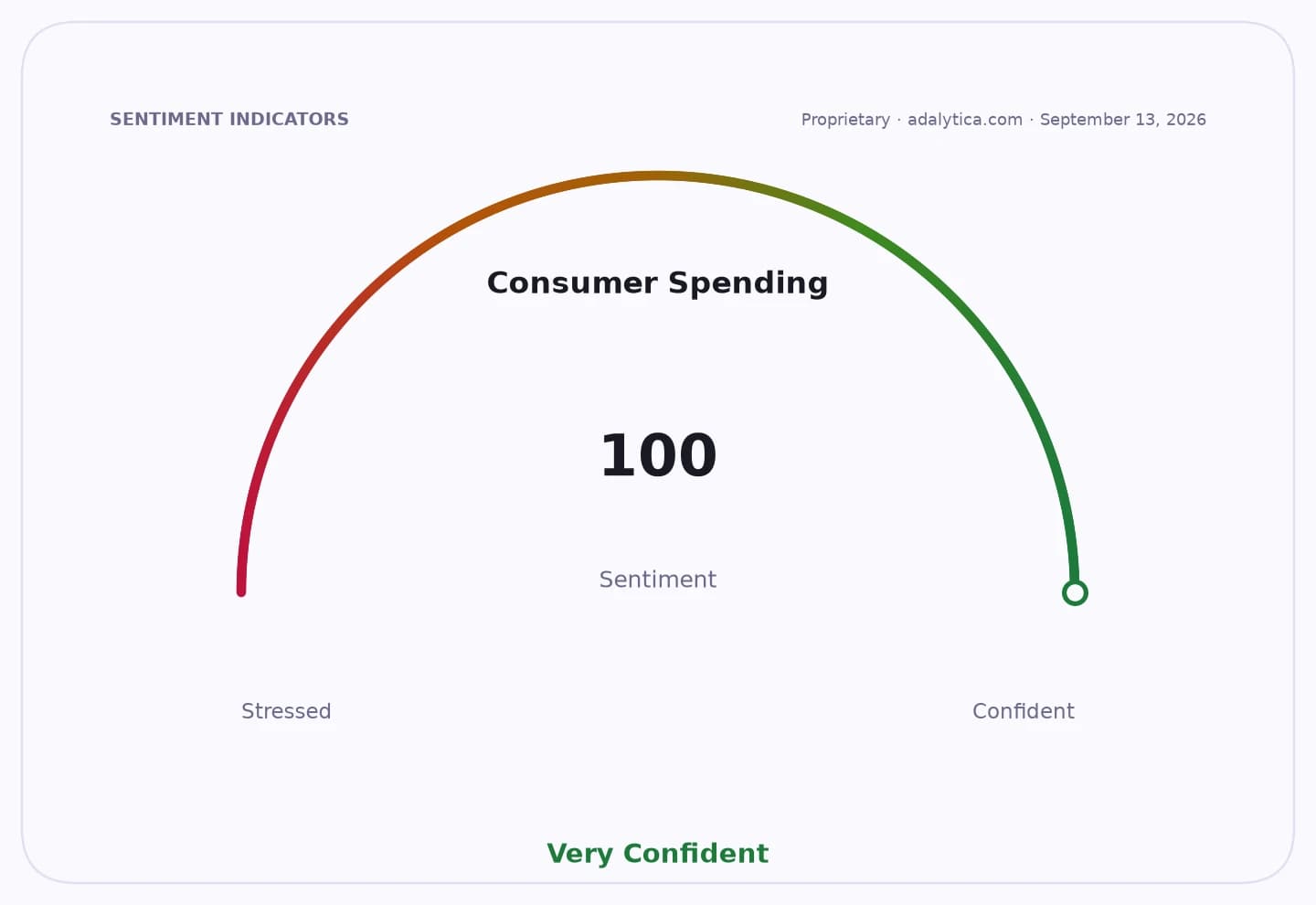
Sentiment IndicatorsⓘProprietary · adalytica.com · September 6, 2026
This is a snapshot — live sentiment, awareness and momentum for 130+ markets update continuously in the dashboard.Open AlphaPulse

That mismatch matters because marketing is increasingly being treated as growth capital, not a discretionary cost. As APINDO chair Shinta Kamdani put it, the real question is not how much is being invested, but how much incremental growth each investment creates. In practice, that means segment selection, channel mix, brand building and product positioning have to be judged on their contribution to sales, margin and customer lifetime value — not on media reach or campaign volume.
The findings also suggest many companies are still early in the AI adoption curve. Around 70% of firms now rank AI as a priority and allocate an average 15% of their marketing budgets to it, but only about 30% are considered ready to use it effectively. That gap helps explain why more technology is not automatically translating into higher revenue. AI can improve targeting, speed of insight and personalization, but it cannot fix weak product-market fit, poor execution or a lack of organizational discipline.
For investors, the implication is that marketing intensity alone is a poor proxy for growth quality. The bull case is that firms that can link data, decision-making and distribution may widen their return on spend and win share with less waste. The bear case is that rising AI and digital budgets could become another layer of overhead if companies keep measuring activity instead of incremental sales.
That is the central narrative here: marketing is getting more sophisticated, but without stronger operating execution and clearer accountability, the return on that sophistication remains elusive. The next phase of competition will likely reward companies that can prove causality between marketing spend and revenue — and punish those that merely automate the old playbook.
| Entity | Gains | Losses |
|---|---|---|
| AI-ready firms | ▲Better targeting and speed | ▼Legacy processes |
| Marketing vendors | ▲Higher tech budgets | ▼ROI skeptics |
| Investors | ▲Clearer growth discipline | ▼Spend-heavy, low-return firms |
| Consumers | ▲More personalized outreach | ▼Generic mass campaigns |