Italy’s digital economy reached 84.4 billion euros in 2025, but the bigger investment story is that growth is being driven by large companies while smaller firms are still stuck on the sidelines.
Italy digital economy grows as AI adoption lags

That matters because the digital sector is now expanding faster than Italy’s economy and is becoming a more reliable source of capex, recurring revenue and productivity gains. Anitec-Assinform sees the market rising 3.4% this year and another 3.7% in 2026, when Italy’s GDP is expected to grow just 0.7% in Banca d’Italia’s base scenario. For investors, that kind of spread is where secular winners are born: software, cloud, cybersecurity, AI and managed services can keep compounding even in a sluggish macro backdrop.
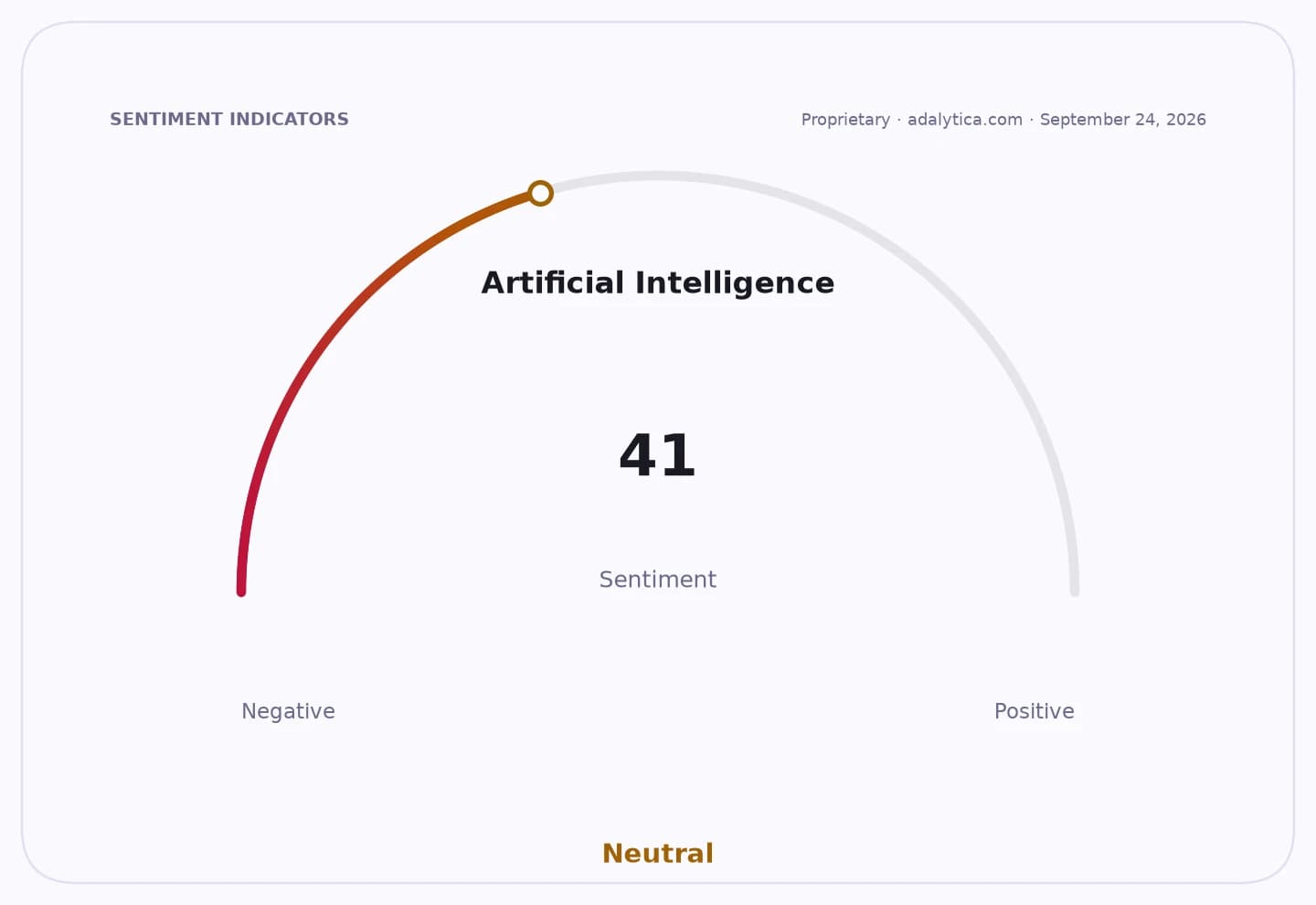
Sentiment IndicatorsⓘProprietary · adalytica.com · September 25, 2026
This is a snapshot — live sentiment, awareness and momentum for 130+ markets update continuously in the dashboard.Open AlphaPulse

The headline number masks a structural bottleneck. Artificial intelligence was used by just 16.4% of Italian companies in 2025, with adoption concentrated in larger organizations. That is a problem, but also an opportunity. When adoption is this uneven, the next phase of growth does not come from broad market enthusiasm — it comes from the infrastructure and service layers that make technology usable for small and mid-sized enterprises. That is where recurring revenue models, leasing, IT support, connectivity and bundled workplace solutions can take share.
The market is already moving in that direction. ICT services rose 8.1% to 18.8 billion euros, cybersecurity climbed 12% to 2.24 billion, and AI spending jumped 47.6% to 1.38 billion. Those are not just healthy growth rates; they are signs of a shift from discretionary software buying to operational dependence on digital systems. Once a business starts relying on AI, remote monitoring, data recovery and managed connectivity, switching costs rise and the vendor relationship deepens.
That is why the real investment thesis is not simply “Italy goes digital.” It is that Italy’s small-business digital gap is creating a long runway for companies that can package hardware, software and support into predictable monthly contracts. The model is especially attractive in a market where firms resist upfront spending but accept monthly fees if downtime is reduced and technical risk is transferred. In other words, this is the kind of environment where the market underestimates the value of toll-road businesses in technology.
The financing layer matters too. Italy’s intensity of investment in equipment and transport remains at 16%, far below the European average of 28%, which helps explain why leasing and rental structures are gaining traction. Assilea says leasing stipulations reached 36 billion euros in 2025, up 5.8%, while automotive rental continues to show how subscription-style access can scale. Even though long-term rental in vehicles has recently weakened, the broader lesson is clear: Italian firms increasingly prefer access over ownership when balance sheets are tight and technology refresh cycles are faster.
For equity investors, the implication is to look beyond the obvious mega-cap software names and toward the picks-and-shovels beneficiaries of enterprise modernization in Europe. That includes cloud infrastructure, cybersecurity, managed services, IT distribution, telecom-linked workplace solutions and rental/financing platforms that help small businesses adopt technology without large upfront costs. In a low-growth country, those models can create growth where GDP cannot.
The next catalyst is adoption, not awareness. As more Italian firms move from experimentation to deployment in AI and digital tools, the winners will be the companies that remove complexity, finance the equipment and provide support after the sale. The gap with PMI is the market inefficiency — and that gap is where the best returns may be found.
| Entity | Gains | Losses |
|---|---|---|
| ICT services providers | ▲Recurring demand | ▼One-off hardware sellers |
| Cybersecurity and AI vendors | ▲Faster spending growth | ▼Late adopters |
| SMEs | ▲Lower tech barriers | ▼Upfront capex burden |
| Large enterprises | ▲First-mover productivity gains | ▼Smaller competitors trailing behind |