Meta Platforms is entering a more difficult phase of the digital ad cycle as marketers increasingly reallocate budgets toward smaller, lower-cost influencer campaigns that can generate outsized sales without the expense of broad paid media. That matters because Meta still makes almost all of its money from advertising, and any sustained shift in where brands spend has direct consequences for revenue growth, pricing power and investor expectations for the stock.
Meta Platforms Faces Budget Shift to Influencers
The underlying message from marketers is clear: performance is improving even as spending falls. Brands are reporting they can drive roughly twice the sales while paying influencers less, with niche creators often outperforming one big-name endorsement. For advertisers, that is an efficiency story. For Meta, it is a warning that every dollar saved elsewhere is a dollar that may not flow as quickly into its auction-driven ad system.
Sentiment IndicatorsⓘProprietary · adalytica.com · August 23, 2026
This is a snapshot — live sentiment, awareness and momentum for 130+ markets update continuously in the dashboard.Open AlphaPulse
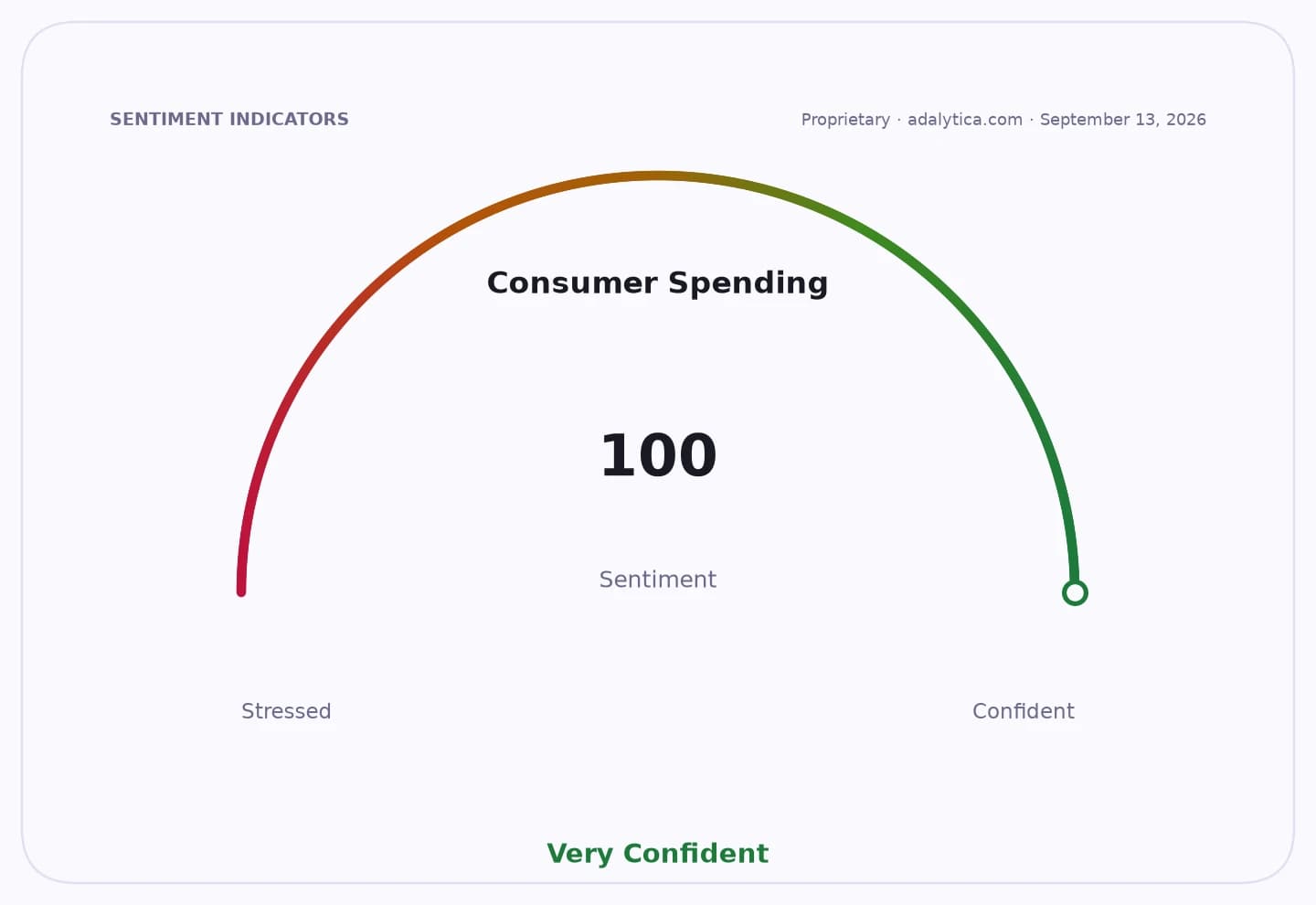
The economic significance runs deeper than a single campaign tactic. Consumer spending sentiment, tracked by Adalytica.com, is in “Fear” territory at 25, while retail goods spending sentiment has slid to 36 and remains neutral. That combination points to a consumer environment where brands are under pressure to extract more conversion from every marketing dollar. In that setting, companies usually become less loyal to expensive, broad-reach advertising and more willing to test direct-response channels, creator partnerships and performance marketing that can be tied tightly to sales.
That is exactly the sort of spending behavior that can squeeze platforms built on scale. Meta, Google and The Trade Desk all depend on advertisers showing up with budgets and bidding aggressively for inventory. Meta’s own filings have warned that advertising revenue depends on sustaining engagement and monetization, while The Trade Desk has said the programmatic market could be hurt if it develops more slowly than expected. If the advertising mix keeps moving toward smaller, more targeted and cheaper campaigns, the risk is not just slower growth but also lower pricing momentum across the digital ad stack.
Investors should care because the market tends to reward the clearest growth names first, then punish them hardest when efficiency gains at the advertiser level start to cap spending. Meta’s stock has been volatile, with conventional technical indicators showing a sharp rebound and then renewed weakness, including the 50-day moving average above the latest price and RSI readings in oversold territory in recent sessions. That tells you sentiment has already turned fragile. A world in which advertisers can generate more sales with less spend makes it harder for bulls to argue that revenue acceleration will automatically keep pace with the company’s massive AI and infrastructure investment plans.
The bigger thesis is that the next leg of digital advertising will be about performance, not just reach. That creates winners among creator platforms, commerce-enablement tools and ad-tech intermediaries that can prove incrementality. It also means Meta must keep proving that its own targeting, measurement and AI-driven ad products can win back share of wallet even as marketers become more disciplined.
For investors, the opportunity is to avoid assuming that rising efficiency equals rising platform revenue. I believe the market is underestimating how quickly ad budgets can migrate when CFOs demand measurable sales. The best positioning is to favor the picks-and-shovels of performance marketing and selective AI-enabled ad-tech beneficiaries, while treating Meta as a strong company that still faces a harder monetization backdrop than many bulls expect.
| Entity | Gains | Losses |
|---|---|---|
| Smaller influencers | ▲More brand demand | ▼Dependence on reputation |
| Brands/advertisers | ▲Lower spend, higher sales | ▼Greater campaign complexity |
| Meta Platforms | ▲AI tools may help targeting | ▼Budget shift from paid ads |
| The Trade Desk | ▲Performance ad demand | ▼Slower programmatic growth |