Social networks are moving from inspiration to checkout, and that shift is creating one of the clearest secular openings in digital commerce.
Meta and Shopify Gain From Social Commerce Shift

In Brazil’s Northeast, 21% of internet users already buy directly through social networks, according to Cetic.br’s TIC Domicílios survey, a sign that the line between content, advertising and retail is disappearing fast. That matters because every step of the consumer journey — discovery, persuasion, payment and fulfillment — is being pulled into the same platform, concentrating spending power in the hands of the companies that control attention and the merchants that can convert it.
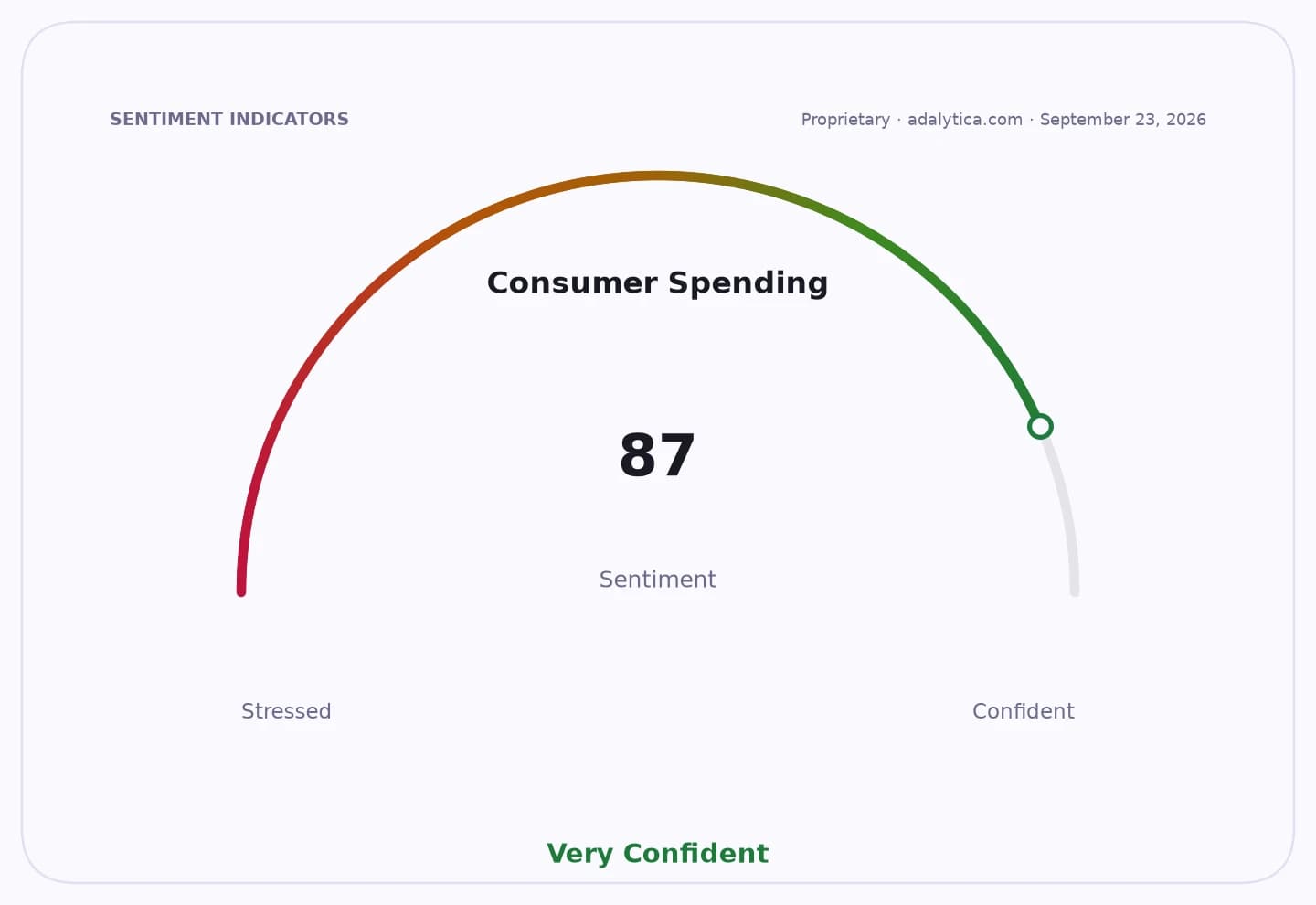
Sentiment IndicatorsⓘProprietary · adalytica.com · September 25, 2026
This is a snapshot — live sentiment, awareness and momentum for 130+ markets update continuously in the dashboard.Open AlphaPulse

The economic significance is larger than a simple change in shopping habits. Social commerce shortens the funnel, lowers the cost of demand generation and gives platforms a new way to monetize behavior at a time when traditional retail is under pressure from high rates, inflation, tight credit and weaker confidence. In Brazil, where consumers are already facing a difficult backdrop, the ability to turn scrolling into spending can redirect sales away from physical stores and toward app-based marketplaces and payment rails.
That is the opportunity investors are underestimating. Meta Platforms, whose stock has surged to around $777.59, is showing the market how much value can be extracted when engagement turns into commerce and ad monetization. The shares are trading well above both the 50-day and 200-day moving averages, and the momentum backdrop remains strong. Shopify, meanwhile, at roughly $145.16, sits at the other end of the same trade: it is the infrastructure layer that lets merchants capitalize on social-driven demand. Its business benefits when discovery happens inside Instagram, Facebook or WhatsApp but the transaction still runs through its merchant tools, payments and checkout stack.
Amazon is also exposed, but in a different way. At $249.38, the shares are below the 50-day moving average and the recent price action suggests investors are questioning how much consumer traffic will be captured by social-first shopping rather than the traditional search-and-browse model. That’s the key competitive question: social platforms own intent creation, while commerce enablers and fulfillment networks fight over the conversion layer.
The broader market signal is clear. Adalytica’s consumer spending sentiment is flashing extreme greed even as retail sales sentiment sits in extreme fear, a combination that usually marks a tug-of-war between powerful demand formation and a strained real-economy backdrop. In practical terms, that means the winners are likely to be the platforms and infrastructure providers that convert attention into transactions with the least friction, while the losers are the retailers and ad-dependent businesses that rely on slower, less measurable demand capture.
My view is that investors should treat social commerce as a multi-year infrastructure story, not just a consumer trend. The next leg of growth will come from payment integration, creator-led storefronts, in-app checkout, logistics and merchant software — the toll roads of digital retail. If you want exposure to the shift, own the rails, not just the storefronts. Meta and Shopify remain the clearest beneficiaries as social media becomes a full-stack commerce channel.
| Entity | Gains | Losses |
|---|---|---|
| Meta Platforms | ▲More commerce monetization | ▼Traditional retailers |
| Shopify | ▲Merchant checkout volume | ▼Search-first commerce models |
| Amazon | ▲Ad and marketplace pressure offset by scale | ▼Social-first shopping rivals |
| Brick-and-mortar retailers | ▲Faster digital reach | ▼Foot traffic and basket share |