AI systems talking directly to each other could make digital advertising faster, cheaper and far less dependent on human middlemen, and that matters because the industry’s biggest profit pools are built on the friction this new standard is trying to remove.
Alphabet, Meta, Trade Desk on AI ad protocol shift

A report from ad-tech company ADvendio says an open protocol called Ad Context Protocol, or AdCP, could let a buyer’s AI agent communicate directly with a publisher’s or broadcaster’s system to discover inventory, check availability, negotiate terms and coordinate campaigns in real time. In practical terms, that could compress one of the most cumbersome parts of the digital ad market: the back-and-forth between agencies, platforms, publishers and ad-tech vendors that has long slowed execution and added costs.
For investors, the significance is bigger than a workflow upgrade. If ad buying becomes more automated and interoperable, the competitive map across digital advertising could shift. Companies with the deepest data, strongest seller relationships and most widely used infrastructure could gain leverage. Others that rely on manual coordination, closed systems or high-touch sales support could see margins squeezed as automation spreads.
That is why the story matters for Alphabet, Meta Platforms and The Trade Desk, the three names most closely tied to the future of automated ad buying. Alphabet and Meta already sit at the center of digital ad demand, while The Trade Desk has built itself as a neutral platform for programmatic buying across open internet inventory. If agentic AI becomes a real layer in ad transactions, each company will want to make sure its systems become the default language for machines buying media.
The ADvendio report describes the shift as a third phase in ad sales. First came the manual era, with sales teams pushing requests through email chains and approvals. Then came copilots and task-specific AI tools. The next stage, it argues, is autonomous systems that can coordinate across platforms without needing people to translate each step. That is a meaningful change because digital advertising is still notoriously fragmented, with contracts, pricing, inventory and reconciliation often handled in different systems.
But automation alone will not solve trust. The report is clear that a machine-to-machine handshake does not equal a completed deal. Commercial rules still matter: framework agreements, negotiated pricing, spending commitments and publisher margins all have to be validated before money changes hands. That is the crucial investor takeaway. The winners in this next phase will not simply be the companies with the flashiest AI tools, but the ones that combine automation with reliable commercial controls.
That distinction helps explain why the market has been watching ad-tech stocks so closely. The Trade Desk, for example, has been trading far below its 200-day moving average, with its shares recently around $12.68 versus a 200-day average near $23.51, reflecting skepticism about near-term growth and competition. Its RSI reading has also been weak. By contrast, Alphabet has held up much better, with shares around $337.83 and above both its 50-day and 200-day moving averages, while Meta has surged to about $744, well above both long-term averages. In other words, investors already appear to be favoring the platforms they think can capture the next wave of AI-driven ad demand.
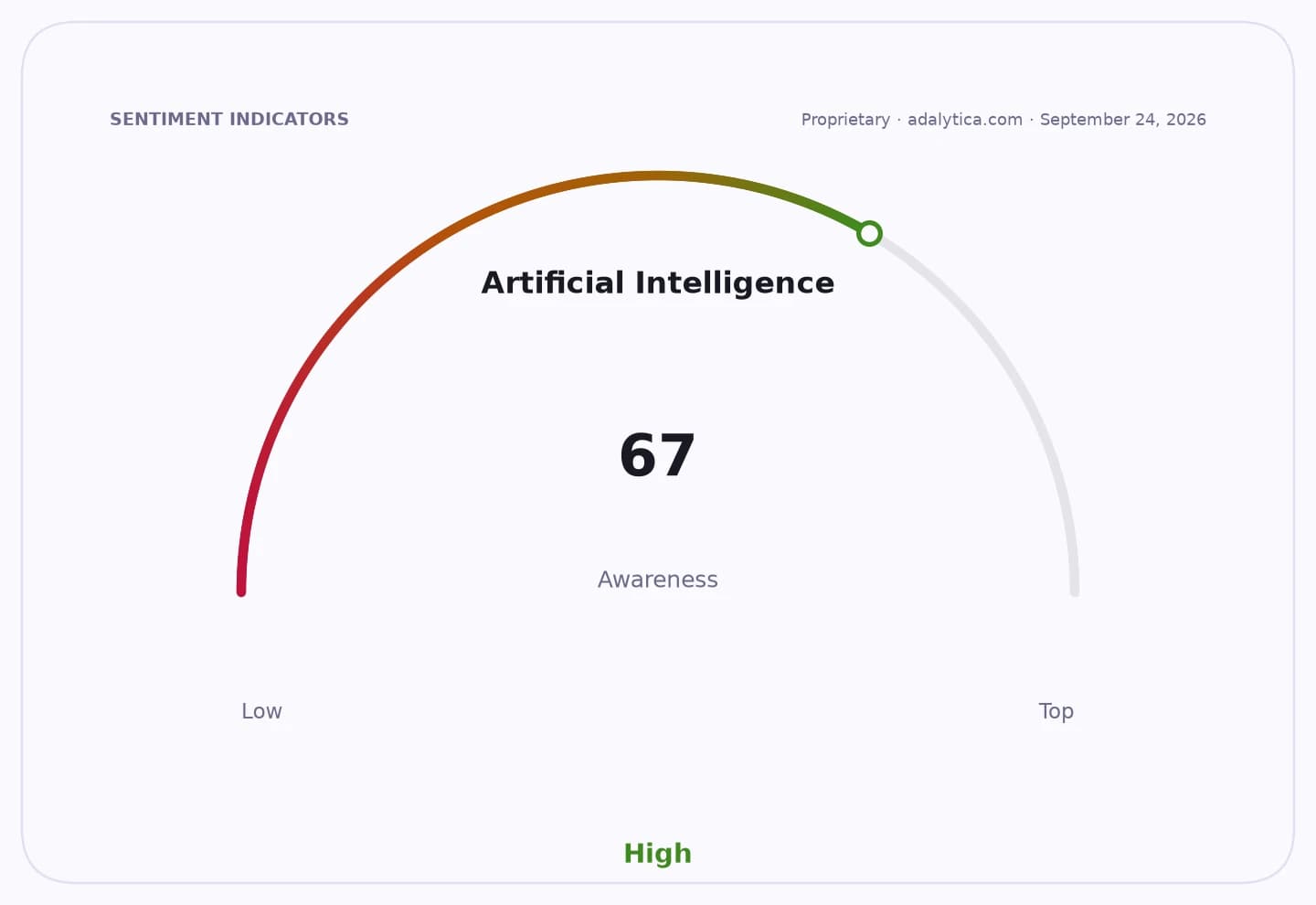
Adalytica’s earnings sentiment data points in the same direction. Microsoft’s earnings sentiment is showing “Extreme Greed,” while the broader AI theme remains neutral, suggesting investors are still sorting winners from hype. In ad tech, that means the market is likely to reward companies that can prove they are not just adding AI, but using it to remove friction and improve returns for advertisers.
For long-term investors, the most important implication is that AI may not only improve how ads are targeted or measured. It may change who captures the economics of the transaction itself. Open standards such as AdCP could widen the market by making systems talk to each other, but they could also intensify competition among the platforms and intermediaries that sit in the middle. That makes scale, trust, and integration more valuable than ever.
If AI-to-AI communication really does become a standard part of buying and selling ads, the next few years could favor the companies that own the rails, the data and the relationships. That is worth watching closely, especially for investors who think in terms of compounding over three to 10 years rather than the next quarter.
| Entity | Gains | Losses |
|---|---|---|
| Advertisers | ▲Faster buying, lower friction | ▼Less manual control |
| Publishers | ▲Quicker activation, easier inventory matching | ▼More pricing pressure |
| Alphabet and Meta | ▲Stronger AI ad infrastructure advantage | ▼Smaller ad-tech rivals |
| The Trade Desk and ad-tech middlemen | ▲Broader automation demand if integrated | ▼Margin pressure from disintermediation |