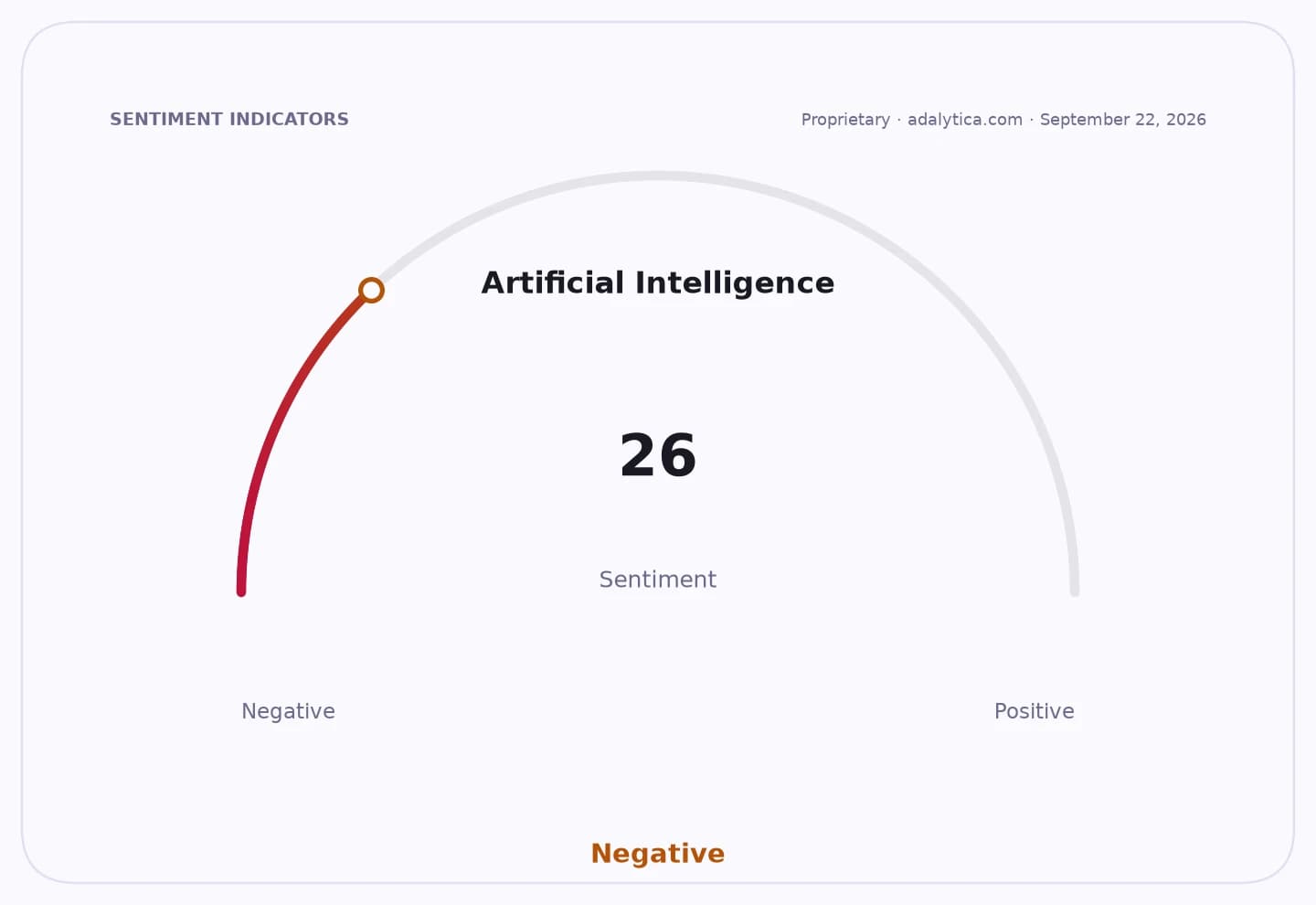
Most Russians do not want artificial intelligence in advertising, and that matters because trust, not just technology, will determine how quickly AI reaches mainstream commercial use.
Russia Survey Shows AI Ad Skepticism

A new consumer readout out of Russia suggests the public is still drawing a hard line between helpful automation and persuasive messaging. For advertisers, that is an important warning: AI may cut production costs, speed up campaign testing and personalize creative at scale, but if audiences believe the message feels synthetic or manipulative, the efficiency gains can be offset by weaker brand loyalty and lower conversion over time.

That is why this story matters economically beyond a single survey result. Advertising is one of the first places companies try out generative AI because the payoff is immediate — lower content costs, faster iteration and more targeted spending. But ad markets only work when consumers pay attention and trust what they see. If resistance spreads, brands may have to disclose more, use AI more selectively or keep humans in the loop, which slows adoption and raises costs. In other words, the economics of AI in advertising are not just about cheaper content; they are about whether cheaper content still persuades.
The market implications are real for the big digital platforms and model makers trying to prove AI can monetize beyond chatbots. Alphabet, Microsoft and Nvidia have all tied a big part of their long-term investment case to companies finding profitable uses for AI. If brands and agencies face pushback from consumers, that could delay spending decisions, especially in regions where trust in algorithms is already fragile. Google parent Alphabet, for example, is still trying to keep advertisers inside its ecosystem as it rolls out more AI tools, while Microsoft is spending aggressively across the AI stack. Investors want to see those dollars turn into durable revenue, not just faster experimentation.
The broader narrative is simple: AI is moving from novelty to infrastructure, but public tolerance will shape how far it can go. The same technology that is helping companies generate ads, summaries and creative copy is also raising questions about authenticity, accuracy and control. That tension is showing up in markets too, where conventional technical indicators on major AI beneficiaries have remained volatile even as the long-term AI story stays intact. Microsoft, Nvidia and Alphabet have all seen sharp swings, a reminder that investors are still trying to separate the secular winners from the hype.
For long-term investors, the takeaway is not to avoid AI, but to be selective about where the real monetization lands. The winners are likely to be the companies that make AI more useful without making consumers feel tricked by it. That favors platforms with scale, distribution and trust — and it suggests the AI advertising opportunity is still very much a work in progress. Worth watching, but investors should think in years, not quarters.
| Entity | Gains | Losses |
|---|---|---|
| Advertisers using human-led creative | ▲Trust and brand control | ▼Lower AI cost savings |
| AI ad tools and platforms | ▲Slower, measured adoption | ▼Faster rollout hopes |
| Consumers skeptical of AI ads | ▲More transparency | ▼Less personalized automation |
| Alphabet, Microsoft, Nvidia | ▲Long-term AI demand if trust holds | ▼Monetization delay if resistance spreads |