Artificial intelligence just delivered a milestone that matters far beyond academic bragging rights: two Chinese models scored a perfect 42 out of 42 at the International Mathematical Olympiad, underscoring how quickly frontier AI reasoning is advancing and how much more brutal the competition is becoming for Nvidia and its Silicon Valley customers.
AI math milestone boosts Nvidia, but rivalry intensifies
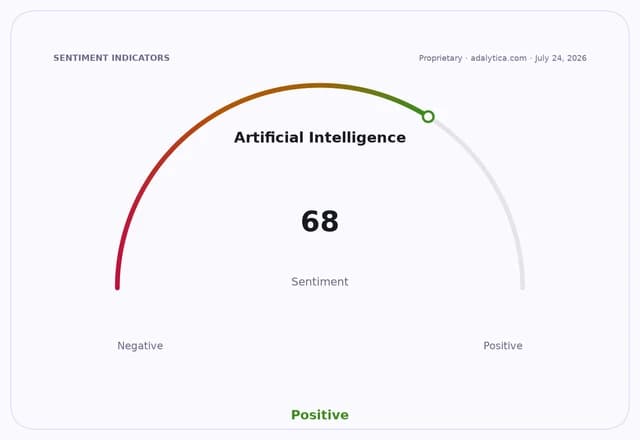
For investors, the significance is not the score itself but what it implies about the next phase of the AI race. If top-tier reasoning models can now solve elite mathematics at a human-champion level, then the performance gap between leading labs is narrowing while the demand for compute, training data and specialized chips remains enormous. That supports the bullish case for Nvidia’s hardware franchise. But it also strengthens the bear case that model quality is becoming less dependent on any single company’s stack, and that Chinese rivals are closing the gap fast enough to pressure pricing, procurement and supply chains.
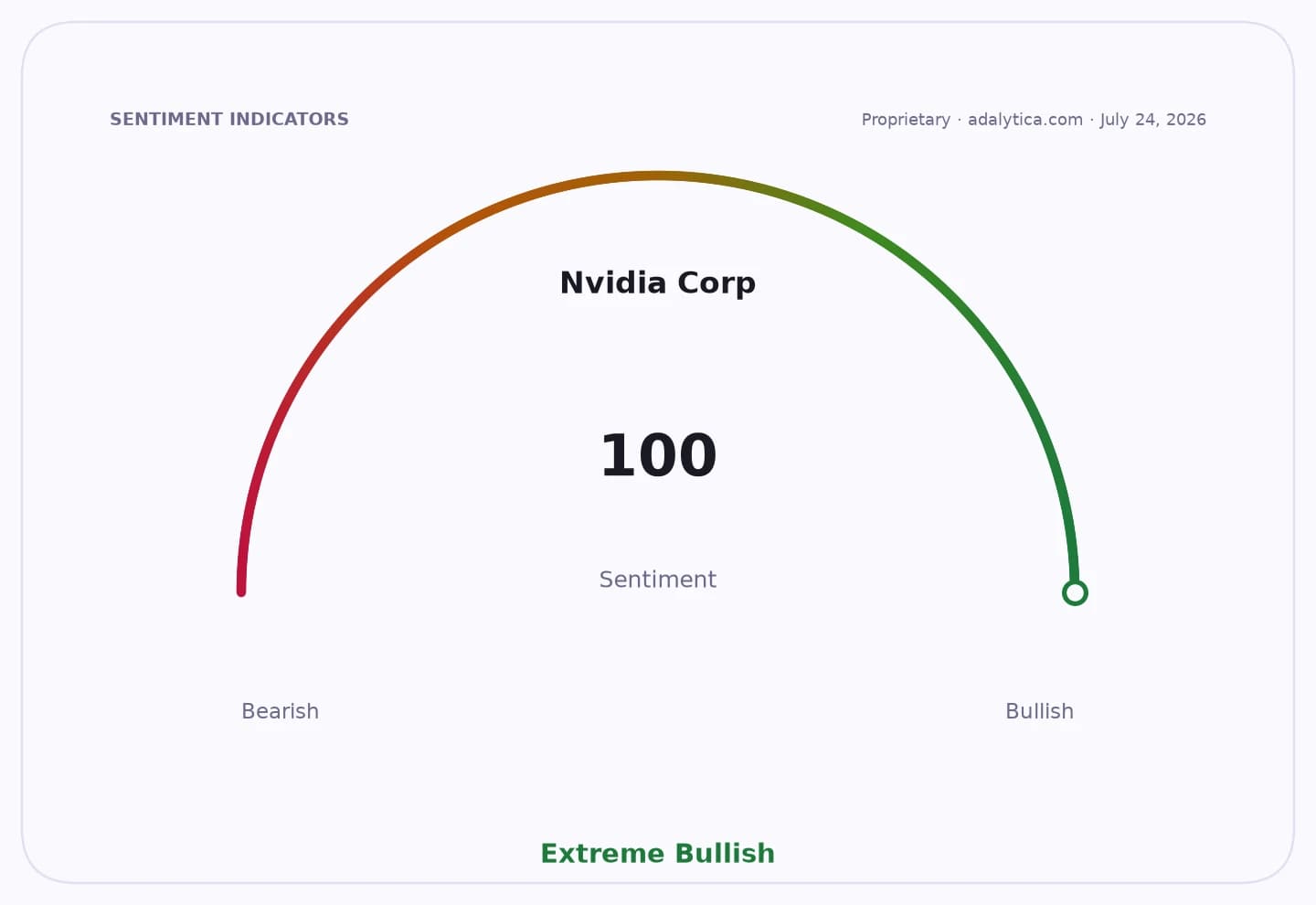
Nvidia remains the clearest near-term beneficiary of the AI capex cycle. Its shares have climbed back above the 200-day moving average and recently held near $208, with the stock still trading roughly 17% above its 50-day average, a sign that institutional money is treating any pullback as a buying opportunity. Conventional technical indicators also suggest momentum has stabilized after a sharp mid-year reset: the relative strength index is back above 60 and the MACD has turned positive again. Adalytica’s NVIDIA Earnings Sentiment gauge is at 100, flagged as Extreme Greed, reflecting just how stretched expectations have become.
That positioning is exactly why the competitive narrative matters. Nvidia’s problem is not demand destruction; it is that demand is increasingly strategic, contested and politicized. The IMO result adds to evidence that Chinese AI development is moving from imitation to elite problem solving, which may accelerate domestic chip investment, software optimization and model training efforts outside Nvidia’s preferred ecosystem. Even if export controls limit access to its most advanced accelerators, a faster Chinese model stack raises the odds of more custom silicon, alternative architectures and greater bargaining pressure on suppliers.

The market is already sketching that tension. Advanced chip peers have seen much stronger runs over the past year, with TSMC and AMD both reflecting investor enthusiasm for the broader AI buildout. But Nvidia’s near-term multiple still depends on the assumption that it will keep capturing the lion’s share of frontier spending. A world in which Chinese labs achieve world-class reasoning performance while U.S. hyperscalers pursue efficiency rather than brute-force scaling could change that mix, even if total AI capex keeps rising.
The bull case remains intact as long as the frontier keeps moving upward and training runs keep getting larger. A perfect math score by AI suggests that frontier models still have room to expand into scientific research, coding and engineering, all of which are GPU-intensive. The bear case is that as model architecture and optimization improve, the industry could shift toward more efficient inference, more heterogeneous chips and a slower growth rate in the incremental demand Nvidia enjoys today.
For now, the message to investors is that Nvidia is still the center of the AI economy, but it is no longer a story about scarcity alone. It is about a race in which technological breakthroughs, including from China, can both enlarge the market and erode the moat.
| Entity | Gains | Losses |
|---|---|---|
| Nvidia | ▲More AI compute demand | ▼Pricing power pressure |
| Chinese AI labs | ▲Global credibility boost | ▼Greater scrutiny |
| U.S. hyperscalers | ▲Stronger model options | ▼Higher capex risk |
| AMD/TSMC | ▲Spillover AI spending | ▼Nvidia-led concentration |
