A motorist in southern Vietnam was forced to pay 45,000 dong a liter — nearly double the retail pump price — for gasoline on the highway, and the episode matters because it exposes a brittle fuel distribution system at one of the country’s most important transport corridors.
Vietnam highway fuel stop dispute raises prices

This was not just an isolated case of an overcharging vendor. It happened beside a shuttered service station at Km41+100 on the Ho Chi Minh City–Long Thanh–Dau Giay expressway, a route that carries heavy long-distance traffic and serves as the last fuel stop on a roughly 300-kilometer stretch between Nha Trang and Ho Chi Minh City. When that station stopped operating, drivers were left with a gap in coverage, and scarcity did what it always does: it created a captive market.
For investors, the economics are straightforward. When fuel access is constrained, prices can spike far above regulated retail levels, but the deeper risk is that bad logistics and legal uncertainty can interrupt sales altogether. That hurts consumers and freight operators immediately, raises operating costs across the transport chain and can feed through to broader inflation if the disruption lasts. In a fuel market, reliability is as important as price.
The case is also a reminder that infrastructure assets can be worth less when ownership and operating rights are disputed. Vietnamese courts recently sided with the expressway operator, VEC, in a commercial case and ordered the handover of the site from Thái Sơn E&C and its fuel partner, Châu Thành. That follows years of conflict over the station’s construction, leasing and commercialization. In practical terms, the dispute has turned a critical refueling point into an empty lot with a sign still up, which is exactly the sort of operational failure that investors in transport, logistics and energy infrastructure should watch closely.
Authorities have already tried to patch the hole. Vietnam’s trade departments urged fuel wholesalers and retailers to boost supply to stations near the expressway, stressing measures such as more truck runs, larger storage and higher output during peak periods. That tells you the problem is not only one of consumer inconvenience; it is a coordination failure between regulators, operators and downstream distributors.
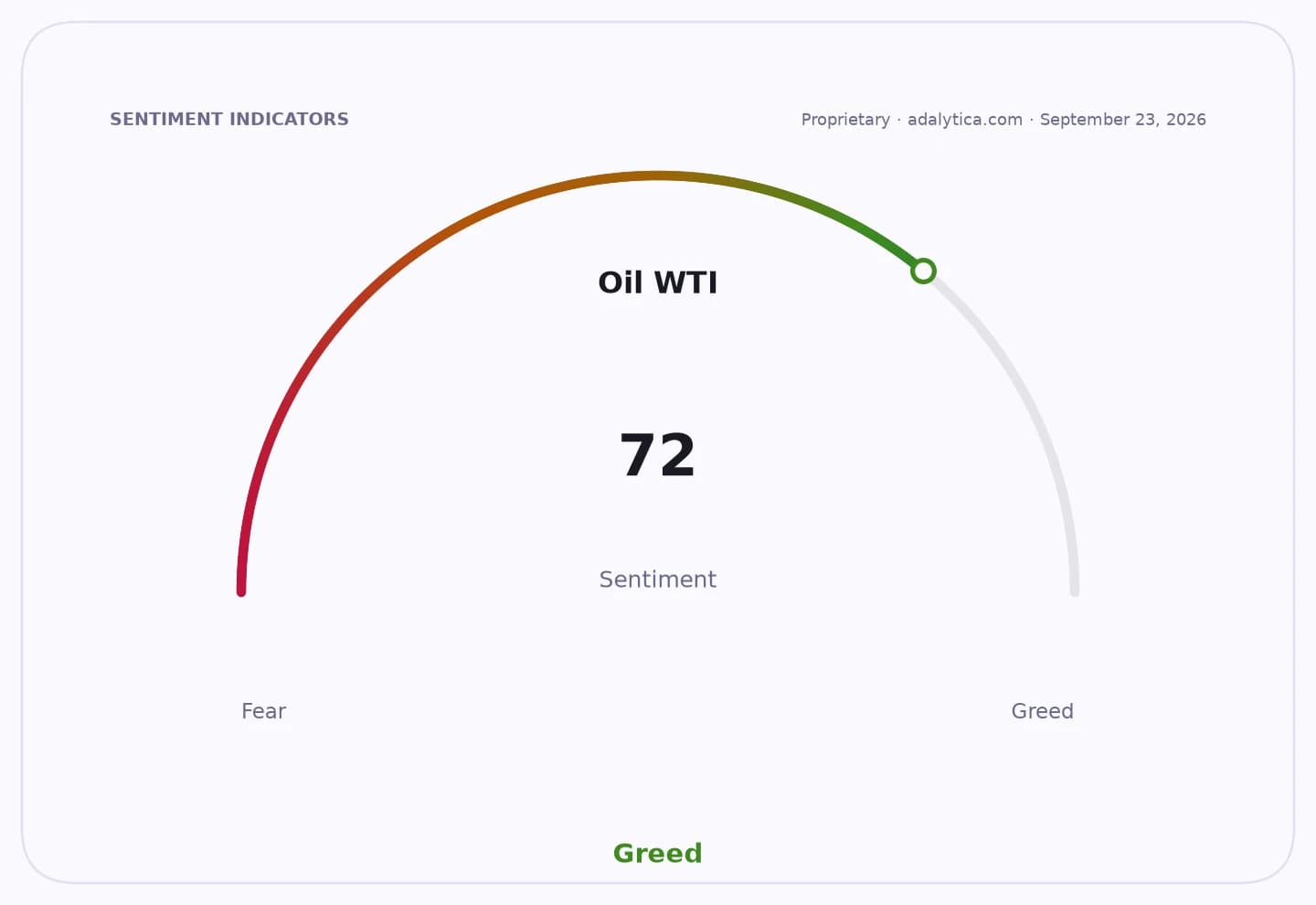
For energy investors, the broader takeaway is that demand for gasoline and diesel remains resilient, but the real value lies in dependable distribution, storage and retail networks, not just in the commodity itself. That is why outages, legal disputes and bottlenecks can be as important as crude prices. With global oil sentiment still running hot — Adalytica’s Oil WTI Trade Signals show extreme greed — any local supply snag can become even more expensive at the margin.
Long term, this is a reminder to favor companies and assets with scale, disciplined operations and clear rights to critical infrastructure. Consumers will keep driving, freight will keep moving and fuel will keep being needed. The winners are the operators that can actually deliver it, not just own the signboard. For investors, this is worth watching — especially where highway access, storage capacity and legal clarity intersect.
| Entity | Gains | Losses |
|---|---|---|
| Fuel sellers near the corridor | ▲Higher margins | ▼Price backlash |
| Motorists and freight operators | ▲None | ▼Higher fuel costs |
| VEC and regulators | ▲Chance to restore control | ▼Public scrutiny |
| Investors in reliable energy infrastructure | ▲Stronger case for scale | ▼Disrupted local operators |