A wave of fake “health experts” generated by artificial intelligence is turning social platforms into high-margin distribution channels for misinformation, and that is a bigger economic problem than another content-moderation headache.
AI Misinformation Raises Trust-Safety Investment Case
What Miguel A. Lurueña says he found — more than 170 AI profiles devoted to spreading hoaxes in just two hours — is a warning that the cost of synthetic content is collapsing faster than the cost of policing it. That asymmetry matters because it threatens the trust premium that keeps users engaged, advertisers spending and regulators at bay. For Meta, TikTok and other ad-driven platforms, misinformation is no longer just a reputational issue; it is a balance-sheet risk tied to engagement quality, brand safety and future enforcement.
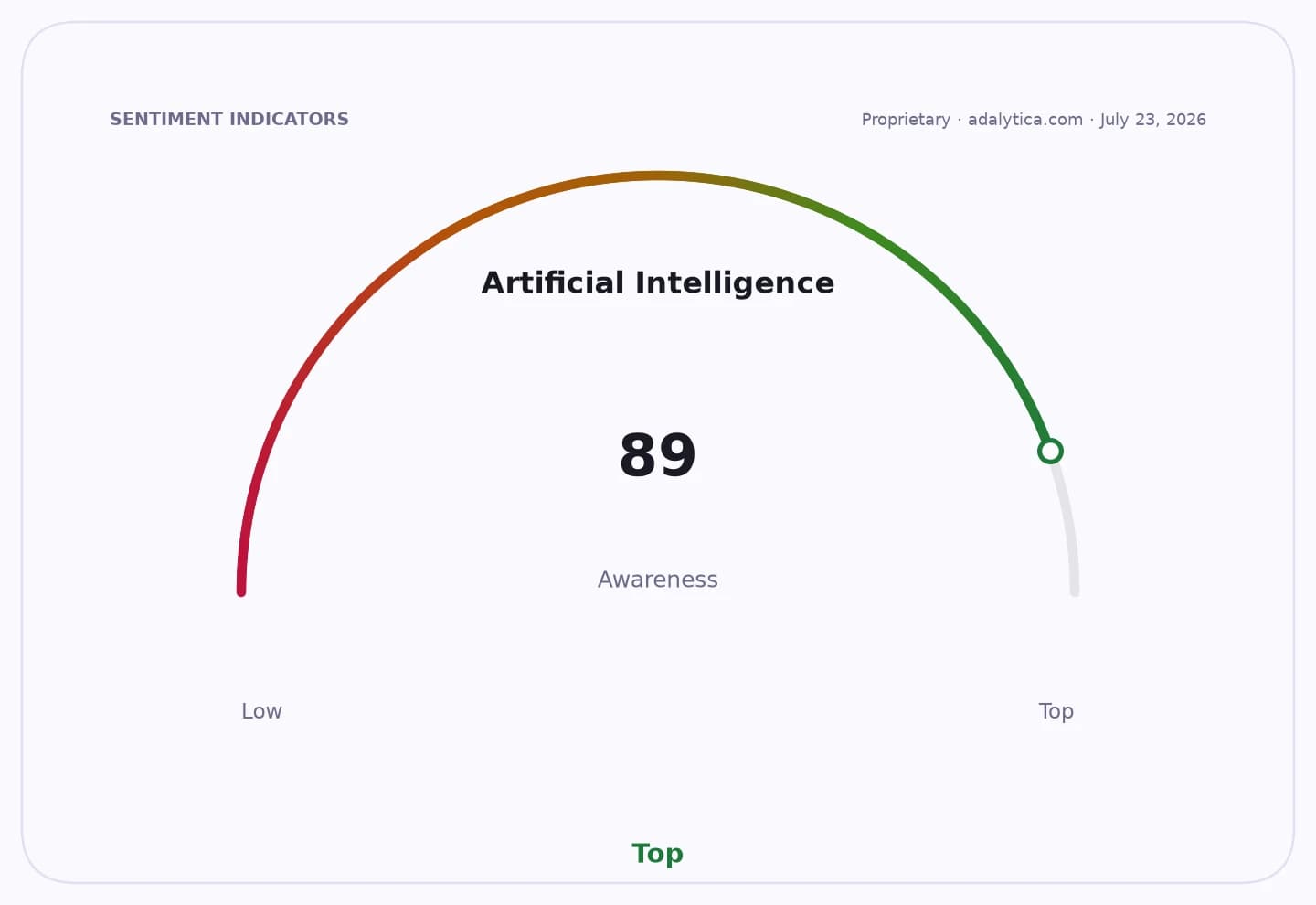
Sentiment IndicatorsⓘProprietary · adalytica.com · July 23, 2026
This is a snapshot — live sentiment, awareness and momentum for 130+ markets update continuously in the dashboard.Open AlphaPulse
The market has spent years treating AI as a demand engine for ads, commerce and creator tools. The seed headline shows the darker second-order effect: AI also scales fraud, impersonation and health misinformation with near-zero marginal cost. That makes moderation more expensive at the exact moment platforms are being pushed to automate more of their own systems. Meta’s filing already flags the risk from “false and inauthentic identities” and misleading content, while Pinterest and Snap have warned that AI-generated material and content controversies can damage brand reputation and user confidence. In other words, the platforms are admitting the business model is only as durable as the quality of the information layer underneath it.
Investors should care because the winner in this environment is not necessarily the company with the most AI features, but the one that can defend trust at scale. That favors the picks-and-shovels around identity verification, content moderation, brand-safety software and digital forensics, as well as the large platforms with the balance sheet to absorb higher compliance costs. It is also a reason to stay selective on ad-tech names whose economics depend on frictionless volume. Trade Desk has already been hit hard, and while that stock’s decline reflects broader ad-market concerns too, the bigger message is that any platform exposed to low-quality or synthetic traffic will face mounting pressure on pricing power and advertiser confidence.
The technical picture reinforces that caution. Meta has pulled back to around its 50-day moving average after trading far above it earlier in the year, while The Trade Desk remains under sustained pressure and below longer-term trend levels. Alphabet, meanwhile, is also off recent highs, a reminder that even the strongest digital ad franchises are not immune when investors start pricing in moderation costs, AI-driven content risk and slower monetization efficiency.
The broader narrative is straightforward: AI is not only creating the next internet growth cycle, it is also industrializing the next internet fraud cycle. That will force platforms, regulators and advertisers to spend more on verification, moderation and provenance. The market still underestimates how profitable that security layer can become.
For investors, the high-conviction move is to favor companies that sell trust, verification and safety infrastructure — and to be more skeptical of ad and social platforms whose engagement engines can be gamed by synthetic identities. The hoax economy is real, and so is the investment opportunity built to stop it.
| Entity | Gains | Losses |
|---|---|---|
| Trust-and-safety vendors | ▲Higher demand | ▼None material |
| Meta and peers | ▲Potentially more compliance spending | ▼Margin pressure, reputational risk |
| Advertisers | ▲Better brand-safety tools | ▼Higher acquisition costs |
| Synthetic-content operators | ▲Short-term reach | ▼Crackdowns, lost credibility |