Amazon has moved to stop Meta’s Muse shopping agent from acting on behalf of users, a sharp reminder that the coming market for AI-driven commerce will be shaped as much by platform control and data access as by model quality.
Amazon Blocks Meta Shopping Agent
The immediate significance goes beyond a single product dispute. If shopping agents become a meaningful interface for consumers, they could reroute traffic, weaken retailer relationships and shift bargaining power toward whoever controls the assistant layer. Amazon’s decision shows incumbents are already drawing lines around that layer before it can commoditize the checkout relationship.
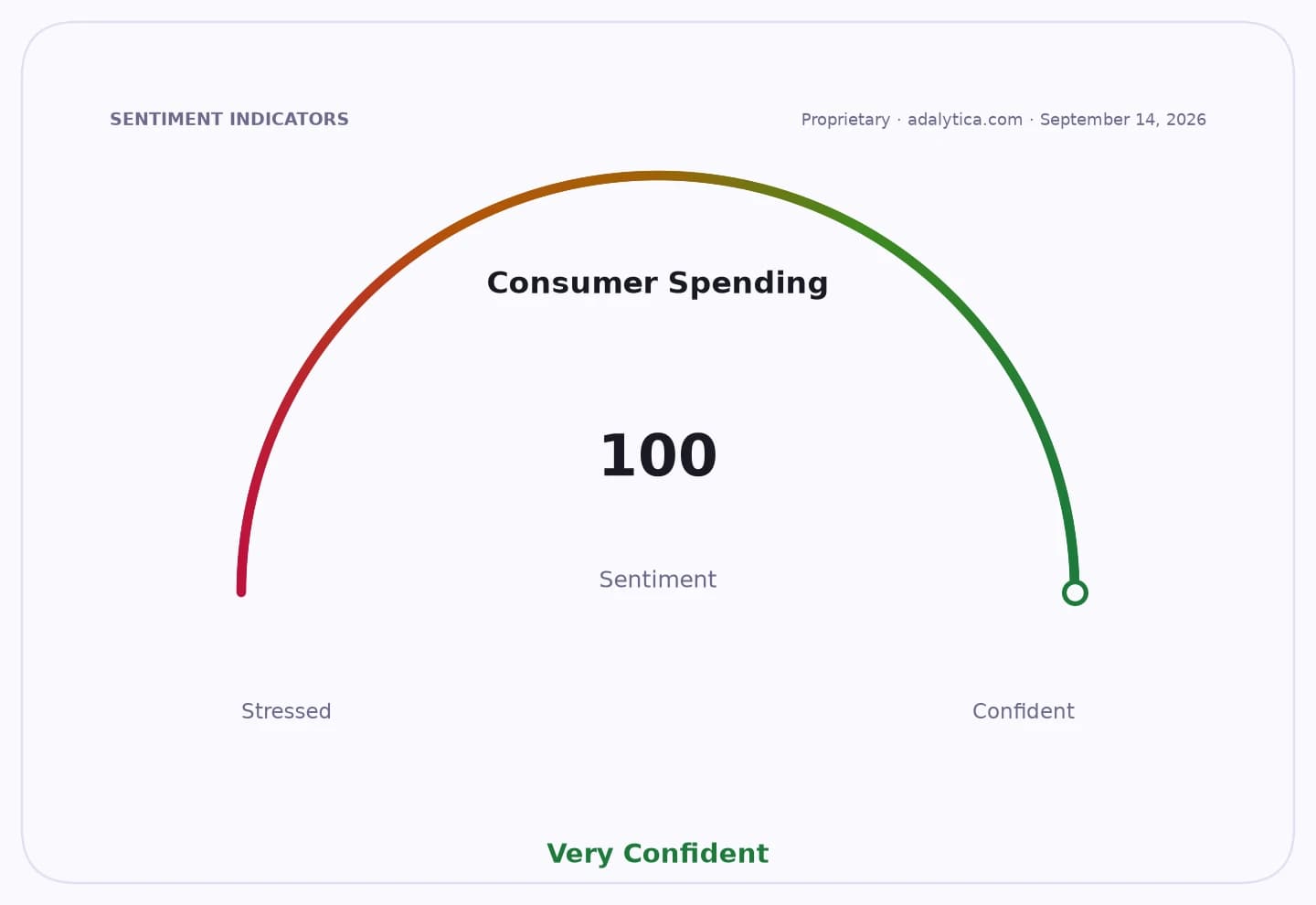
Sentiment IndicatorsⓘProprietary · adalytica.com · September 25, 2026
This is a snapshot — live sentiment, awareness and momentum for 130+ markets update continuously in the dashboard.Open AlphaPulse
For investors, the fight matters because it tests whether AI agents will be allowed to sit between consumers and merchants, or whether major platforms will force them to operate on constrained terms. Amazon has a strong incentive to protect its own marketplace, ad business and first-party user data. Meta, meanwhile, is trying to extend its AI push from social media into everyday commerce and devices, where user engagement could eventually translate into transaction volume and new monetization.
The broader commercial stakes are large. Agentic shopping could improve conversion, lift basket sizes and reduce friction for consumers, but it also introduces risks around pricing, customer trust and control of the purchase journey. That tension is already visible across the sector: retailers want the efficiency benefits of AI assistants, but they do not want outside agents to own the customer relationship or to bypass their rules.
The stock backdrop suggests investors are already treating the AI race as a winner-takes-more contest. Amazon shares recently traded around $249.67, below both its 50-day moving average of $256.18 and 200-day moving average of $240.85, while Meta closed at $751.66, above its 50-day average of $615.32 and 200-day average of $625.42. Microsoft, another major AI spender, ended at $516.17, also above its 50-day average of $475.40 and 200-day average of $430.61. The market is rewarding companies that appear best positioned to control AI interfaces and distribution, not just build models.
Technical indicators also point to very different momentum profiles. Meta’s RSI reading of 76.6 suggests the stock has been running hot after a sharp rally, while Amazon’s 40.0 points to a more neutral-to-weak setup. That divergence underscores a key investor question: whether Meta’s AI expansion can translate into durable platform power, or whether entrenched gatekeepers such as Amazon will limit its reach.
The battle is likely to intensify as AI shopping assistants move from demos to real consumer behavior. If Amazon keeps blocking outside agents, the result could be a more fragmented AI commerce landscape, where retailers retain tighter control and independent assistants struggle to scale. If the pressure to open up grows, the payoff could be a new layer of consumer automation that changes how products are discovered, compared and bought online.
| Entity | Gains | Losses |
|---|---|---|
| Amazon | ▲Protects marketplace control | ▼Faces slower agent adoption |
| Meta | ▲Pushes AI commerce agenda | ▼Limited shopping-agent access |
| Retailers | ▲Preserve customer relationship | ▼Lose some automation upside |
| Consumers | ▲Potentially better tools later | ▼Less seamless shopping today |