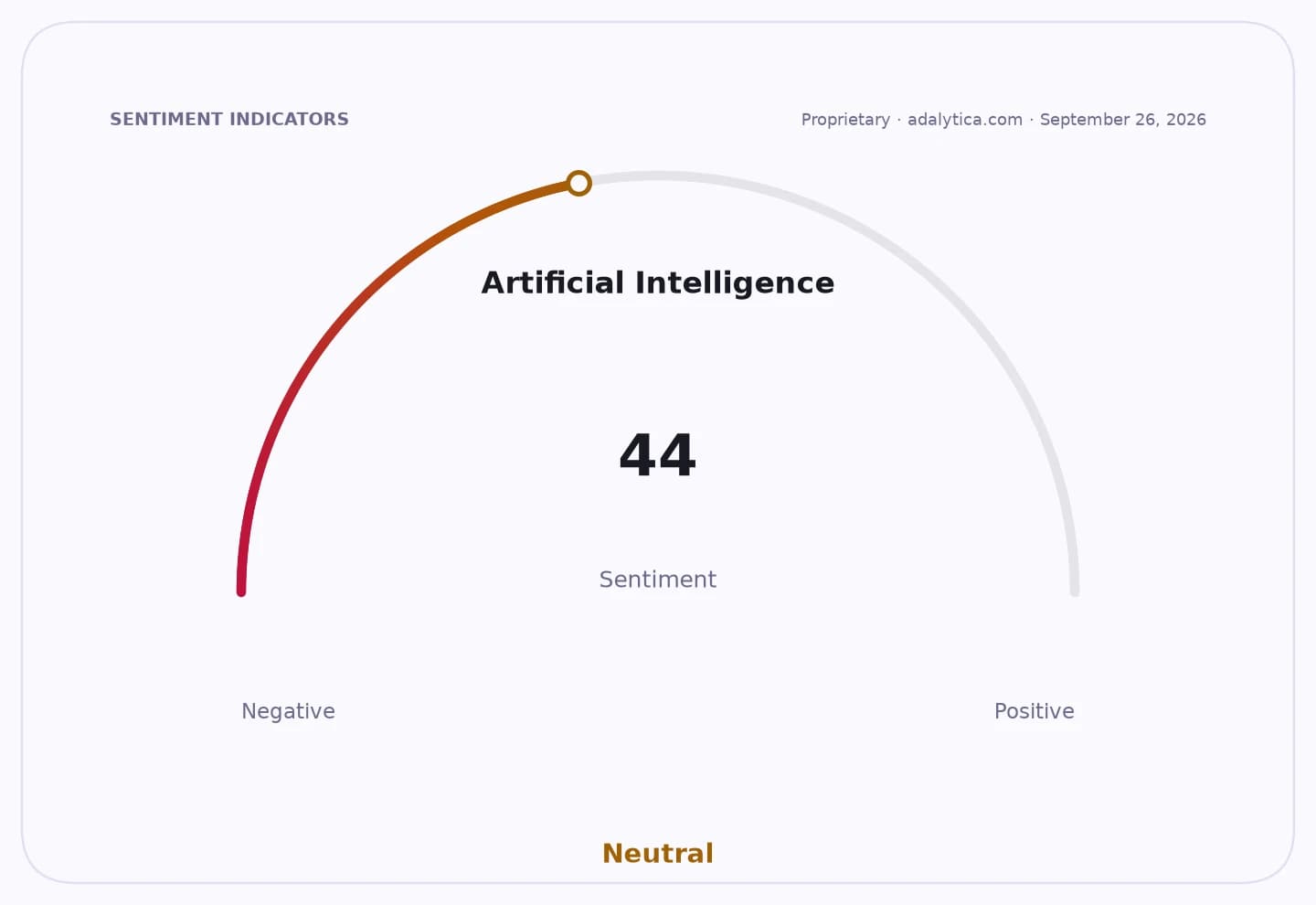
Investors are moving away from the most crowded parts of the AI trade and into companies with more durable cash flows, with Microsoft emerging as the clearer beneficiary while high-beta names such as Vertiv, Marvell, Palantir and ASML face sharper de-risking. The shift matters because it signals that the market is no longer rewarding every AI-linked stock equally and is instead demanding earnings visibility, balance-sheet strength and less exposure to infrastructure spending.
Rotation from crowded AI trades into Microsoft
Microsoft’s shares have been violently repriced lower and then back up in recent months, but the stock still trades well below its 200-day moving average at 393.82 versus 438.45, underscoring how much of the AI premium has been stripped out. A recent close of 393.82 came after a 2026 peak above 460, while the stock’s RSI rebounded to 45.2 from deeply oversold levels near 9 in late June, showing the selloff has eased even as the longer-term trend remains damaged.
Sentiment IndicatorsⓘProprietary · adalytica.com · July 20, 2026
This is a snapshot — live sentiment, awareness and momentum for 130+ markets update continuously in the dashboard.Open AlphaPulse

That is precisely why Microsoft looks more attractive to investors trying to stay exposed to AI without taking the full infrastructure risk. Its latest 10-Q said the company is still spending heavily on compute capacity, AI talent and data, but Microsoft also has the cloud scale and recurring software revenue to absorb that spend better than suppliers and toolmakers tied to capex cycles.
Netflix is the other half of the rotation story. The stock has been hammered to 68.95 from 120.44 in August 2025, and it now sits below both its 50-day moving average of 80.56 and 200-day moving average of 93.74, reflecting sustained skepticism despite the company’s consumer subscription model offering a very different risk profile from AI hardware.

The de-risking theme hits the names that had become synonymous with the trade in 2024 and early 2025. Vertiv has dropped to 289.56 from a recent high of 358.85, Marvell and ASML were explicitly sold in the seed trade, and Palantir remains in the center of the AI speculation complex. In market terms, investors appear to be rotating out of suppliers that depend on an extended buildout of data centers, chips and power infrastructure and into large-cap platforms with broader revenue streams.
The macro backdrop helps explain the change. Adalytica’s AI sentiment gauge is at 100, or “Extreme Greed,” while NVIDIA’s sentiment sits at 86 with “Extreme Greed” awareness, a combination that often marks crowded positioning rather than fresh upside. At the same time, the S&P 500 trade-signal snapshot has cooled to neutral, suggesting broader risk appetite is no longer providing the same tailwind it did when the AI trade was accelerating.
For investors, the message is not that AI is over, but that the winners are narrowing. Microsoft offers direct AI exposure with software leverage, while Netflix gives a non-AI growth alternative in a market still willing to pay for scale and resilience. The next catalyst is Microsoft’s cloud and AI spending trajectory, which will show whether the sector can turn infrastructure outlays into margin support instead of another round of multiple compression.
| Entity | Gains | Losses |
|---|---|---|
| Microsoft | ▲AI exposure with software cash flow | ▼Lower multiple if cloud margins slip |
| Netflix | ▲Rotation into recurring consumer revenue | ▼Skeptics on valuation and growth |
| Vertiv | ▲Bounces only if data-center capex reaccelerates | ▼AI infrastructure selloff |
| Marvell, ASML, Palantir | ▲Crowded-trade unwind if sentiment resets | ▼De-risking out of high-beta AI names |