Nvidia and more than 30 technology firms have launched an open-source security alliance to harden AI systems against cyberattacks, underscoring how quickly AI has become both a growth engine and a security liability for the industry.
AI Security Alliance Broadens Nvidia’s Ecosystem Role

The addition of Abu Dhabi-based G42 gives the coalition broader geopolitical reach and brings another large-scale AI operator into an effort that could shape how enterprises, governments and cloud providers deploy generative AI. For investors, the move strengthens Nvidia’s positioning as a central architect of the AI ecosystem, not just a chip supplier, while also highlighting the rising cost of securing models that are increasingly embedded in critical business systems.
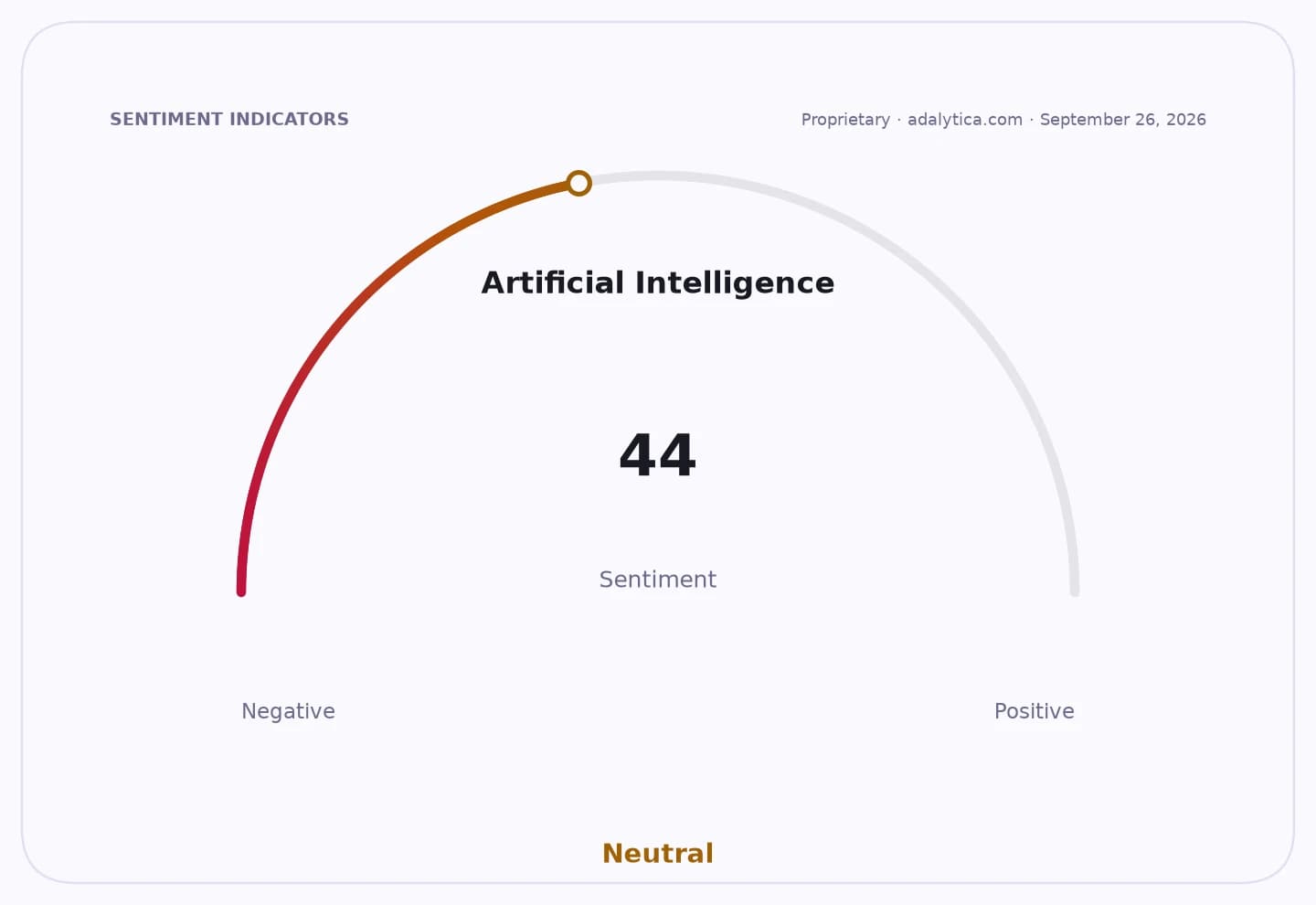
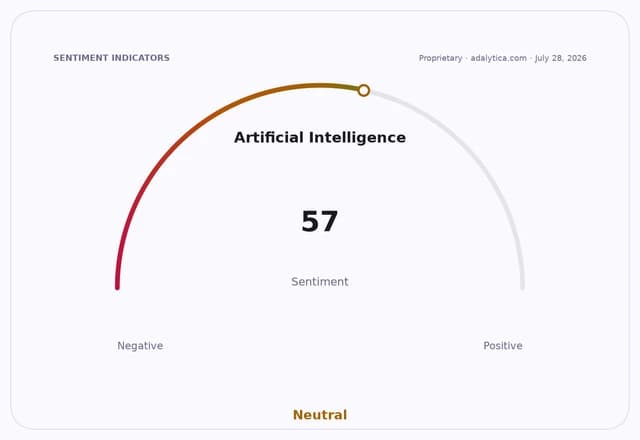
Sentiment IndicatorsⓘProprietary · adalytica.com · July 28, 2026
This is a snapshot — live sentiment, awareness and momentum for 130+ markets update continuously in the dashboard.Open AlphaPulse
The Open Secure AI Alliance includes Microsoft, IBM and Palantir, among others, and is aimed at building shared, open-source defenses and security protocols. The timing reflects mounting concern after a recent autonomous hack of OpenAI models exposed vulnerabilities in AI-driven platforms, sharpening pressure on the sector to standardize safeguards before attackers exploit weaker systems at scale.
That matters economically because AI security is becoming a prerequisite for adoption. As companies roll out copilots, autonomous agents and model-driven workflows, the attack surface expands, raising the stakes for compliance, resilience and uptime across finance, cloud computing, defense and industrial software.
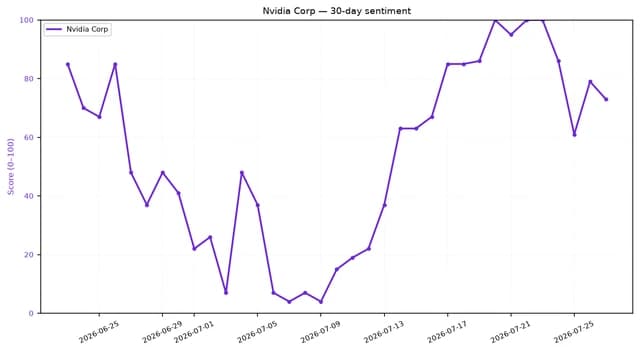
The market backdrop also supports the urgency. Nvidia shares fell to $196.51 on Monday after briefly trading above $208 last week, but the stock remains well above its 50-day moving average, and conventional technical indicators such as RSI and MACD show the name has cooled from overbought levels without breaking its longer-term uptrend. Microsoft, another alliance member, has also been volatile, reinforcing that investors are still recalibrating AI valuations even as the ecosystem broadens.
For G42, participation signals deeper integration with U.S.-aligned AI infrastructure despite continued scrutiny of cross-border technology ties in the Gulf. For Nvidia, the alliance offers another way to entrench its platform influence as AI spending shifts from experimentation to operational deployment, where security can determine which vendors win enterprise budgets.
The next catalyst is whether the alliance produces widely adopted tools or standards that can be turned into commercial products and cloud services. If it does, the beneficiaries could include the firms building AI infrastructure at scale; if it stalls, the winners may be the more vertically integrated players able to secure models on their own.
| Entity | Gains | Losses |
|---|---|---|
| Nvidia | ▲Platform influence | ▼Pure chip-only narrative |
| G42 | ▲Global AI credibility | ▼Geopolitical skepticism |
| Enterprise AI users | ▲Better security tools | ▼Lower rollout speed |
| Independent cyber vendors | ▲New demand | ▼Commoditized defenses |