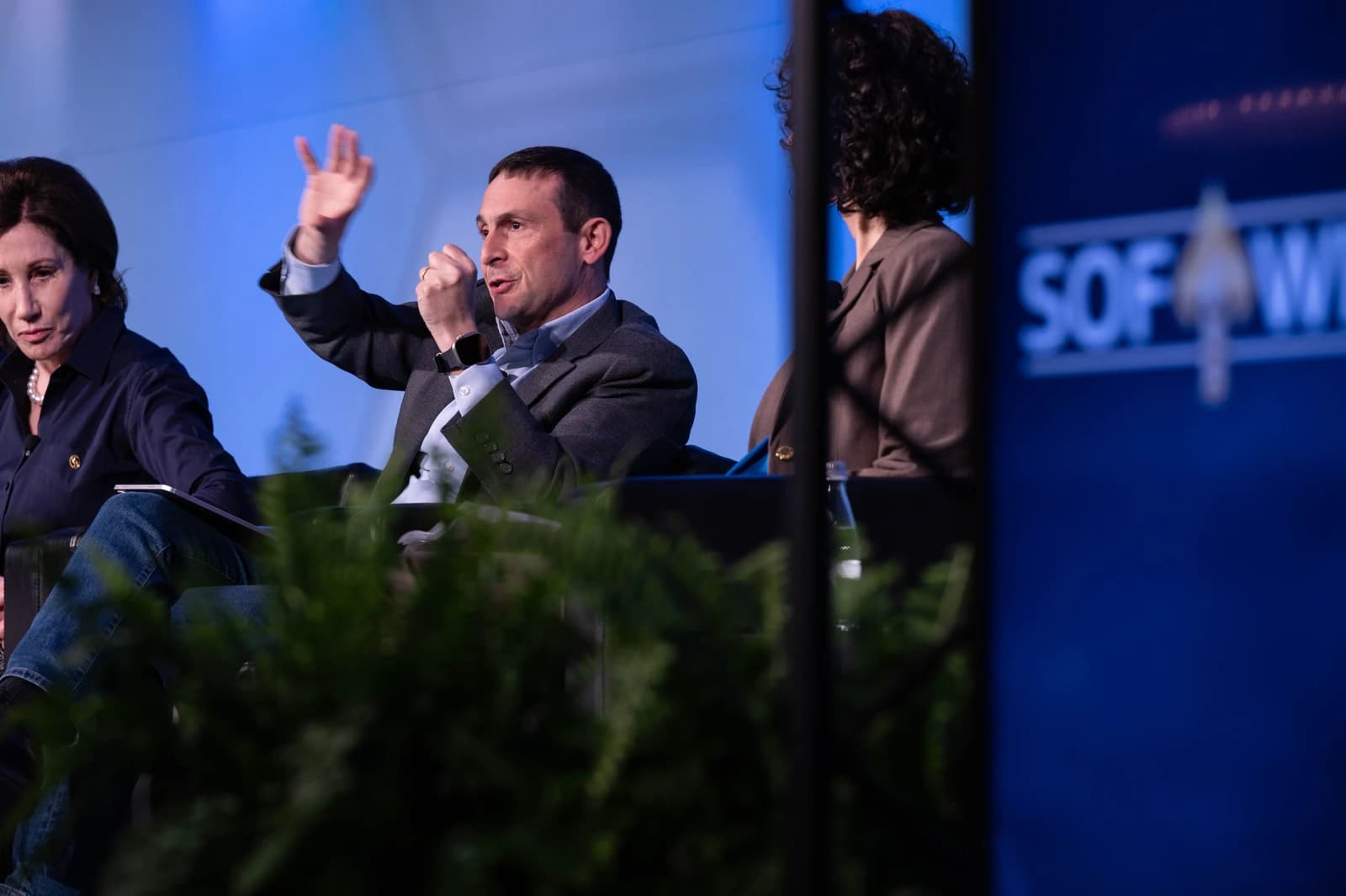
AI is accelerating how fast startups can launch products, but it is not replacing experienced programmers, according to Romanian serial entrepreneur Răzvan Gîrmacea, who says the technology has already cut the build cycle for a minimum viable product from six months to as little as six weeks.
AI cuts startup MVP build times to six weeks
That matters because faster and cheaper software development lowers the bar for startup formation, letting founders test ideas with far less capital and time. For investors, it points to a broader shift in the software stack: AI is compressing early-stage development costs, but the most valuable work is moving toward review, security, scaling and product judgment.
Gîrmacea, co-founder of the “Parents are OK” app for monitoring elderly parents, said he used OpenAI’s GPT models and Anthropic’s Claude primarily for design and coding support, while still working with a programmer. The app, launched two months ago, has 1,500 users in roughly 50 countries and 50 paying subscribers in 10 countries, all while remaining bootstrapped.
The entrepreneur, who has launched or tested more than 40 projects and completed three exits across two businesses, said AI is especially useful for research and product discovery. He described using tools such as Gemini Live to bounce around ideas, check competitors and refine concepts before building.
But he drew a line between speed and quality. “The quality of the code cannot be done without a programmer,” he said, arguing that experienced developers are still needed to assess security, scalability and whether AI-generated code is fit for production.
That distinction is becoming more important as AI coding tools spread through startups and larger companies. Gîrmacea said some developers now open multiple Claude terminals, generate code through prompts and then rely on another AI model for code review before giving approval, a workflow that suggests human programmers are shifting from writing every line to supervising output.
For smaller firms, that change could be material. Gîrmacea said AI can help teams build far more complex products on budgets that may be “ten times” lower, potentially shrinking headcount needs from five or 10 developers to two in some cases.
The next test is whether that productivity gain translates into durable businesses rather than just faster prototypes. As AI tools become more embedded in development workflows, the winners are likely to be founders and software teams that pair speed with disciplined engineering, while the losers may be companies that use AI to ship code faster without enough oversight.
| Entity | Gains | Losses |
|---|---|---|
| Startups with limited capital | ▲Faster MVP launches | ▼High upfront development costs |
| Experienced programmers | ▲More leverage from AI tools | ▼Routine coding work |
| AI coding tools | ▲Wider adoption in workflows | ▼Trust if outputs go unchecked |
| Bootstrapped founders | ▲Lower product-testing costs | ▼Teams that skip engineering oversight |