Artificial intelligence is not eliminating marketing roles so much as redrawing the job description, forcing marketers to become operators, analysts and automation specialists at once.
AI in Marketing Reshapes Jobs and Ad Spending
Artificial Intelligence
That shift matters because companies are using AI to compress execution time and widen the scope of what one person can do, from content generation to campaign workflow automation. For workers, the premium is moving away from narrow creative production and toward practical fluency in AI tools, data-driven decision-making and the ability to stitch systems together with platforms such as Zapier and n8n.
Sentiment Indicators
The message from the market is clear: marketing teams that can deploy AI effectively can scale output without scaling payroll at the same pace. That is especially relevant as businesses across advertising, ecommerce and customer engagement push harder on automation. Constant Contact’s Catalyst agent for small businesses, Aleph’s exclusive rights to resell ChatGPT ads in 44 countries and NiCE’s upgrade of Cognigy for governed enterprise agents all point to a more commercialized AI stack in marketing and adjacent enterprise functions.
For employers, the economic appeal is straightforward. AI can draft copy, generate images and speed repetitive tasks, but it still needs humans to set strategy, evaluate outputs and decide where automation should stop. In practical terms, marketers who can combine prompt literacy with workflow design, multi-tasking and rapid learning are becoming more valuable than those who can only produce standalone campaigns. The new advantage is not just creativity, but throughput.
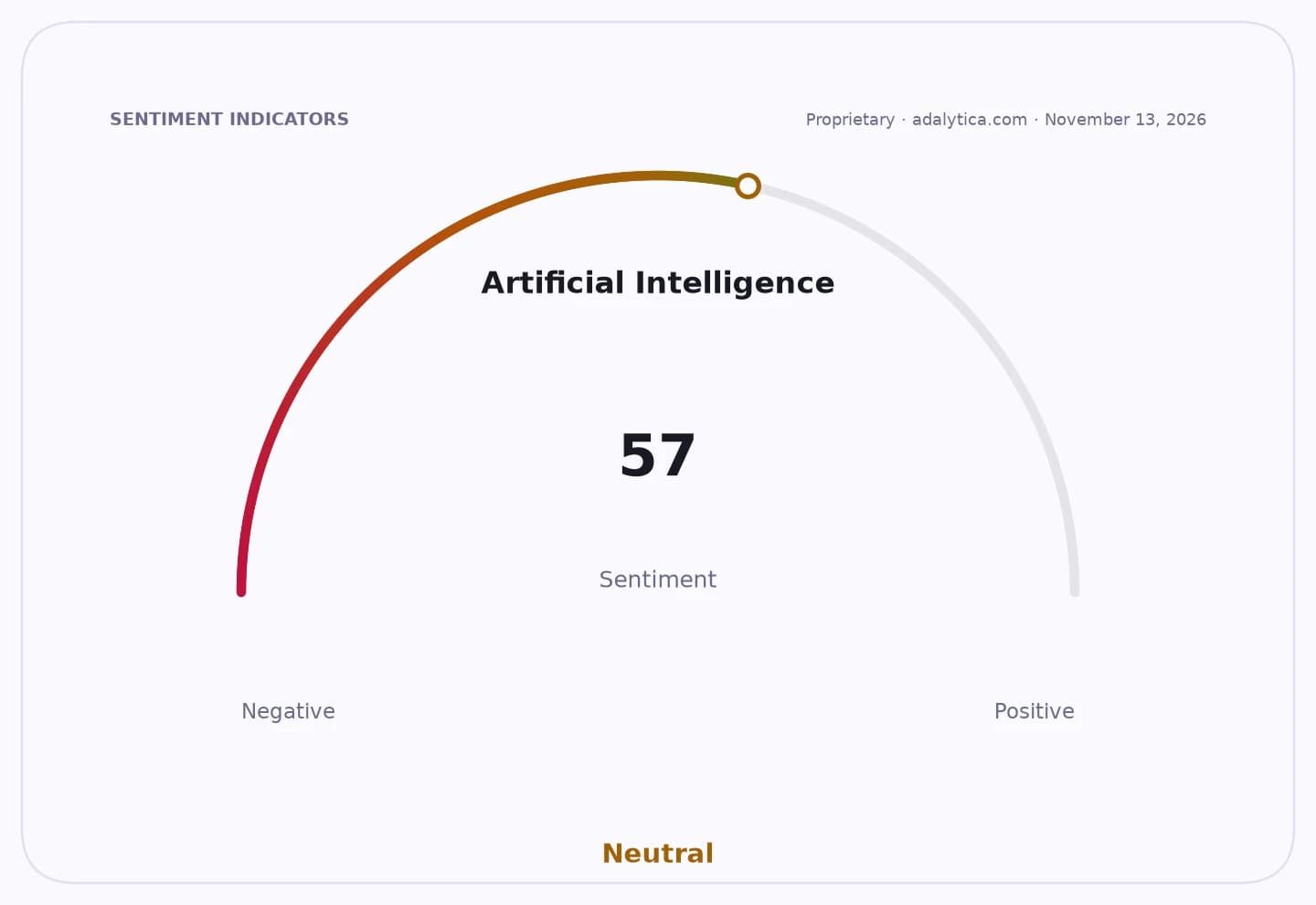
Artificial Intelligence — 30-day sentimentadalytica.com
Explore this data interactively — full history, time series and cross-market comparisons.
Investors should see this as a labor-market signal as well as a software-adoption trend. If AI lifts productivity in marketing, it can support revenue growth without proportionate hiring, improving margins for ad platforms, software vendors and consumer internet groups. Alphabet and Amazon both continue to lean on advertising as a growth engine, and their latest filings show how closely ad revenue remains tied to changes in clicks, impressions and pricing. As AI tools become embedded in marketing operations, demand may shift toward platforms that help automate, target and measure campaigns rather than manual production services.
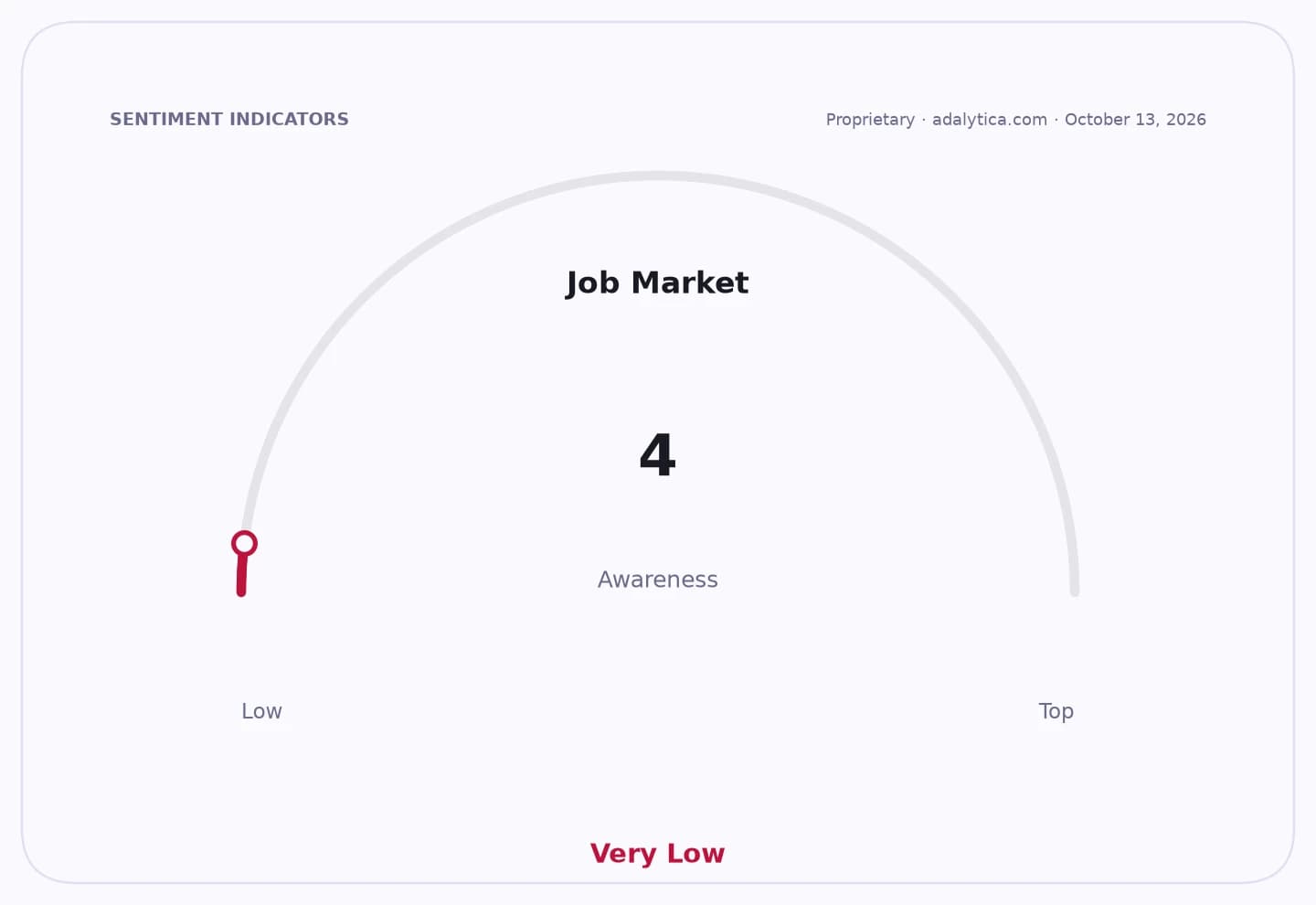
The equity backdrop reinforces that transition. Meta shares have been volatile but remain well above their 50-day moving average, while Alphabet has fallen below its 50-day and 200-day averages after a sharp selloff, suggesting investors are still debating how AI investment and AI monetization will balance out. Amazon has held firmer, with its shares trading above both moving averages, helped by resilient ad growth. The broader AI sentiment gauge from Adalytica has cooled to neutral, while awareness remains extremely low, underscoring how quickly the market’s enthusiasm can swing even as corporate adoption keeps expanding.
The narrative for marketing careers is therefore less about replacement than adaptation. AI is raising the bar for entry and accelerating the reward for people who can combine technical tool use, commercial judgment and cross-functional execution. Those who treat AI as a partner in distribution, automation and analytics are likely to gain leverage; those who remain confined to traditional creative output risk being left behind as marketing becomes a more automated, data-intensive discipline.
| Entity | Gains | Losses |
|---|---|---|
| AI-savvy marketers | ▲Higher productivity and leverage | ▼Less value from narrow skills |
| Employers | ▲Lower unit labor costs | ▼Greater training burden |
| Ad platforms and martech vendors | ▲More automation demand | ▼Legacy manual services |
| Traditional marketers | ▲Opportunity to upskill | ▼Risk of displacement |