The biggest risk for the internet may not be that AI replaces creators, but that it floods the web with cheap, repetitive content that makes the web less valuable to read, search and advertise against. For investors in Alphabet, Meta Platforms and Microsoft, that is the real story behind the “AI slop” debate: the digital economy’s core business models are being pushed toward a tougher mix of lower-quality content, heavier AI costs and more competition for user attention.
Alphabet, Meta, Microsoft and the AI slop risk

That matters because the modern internet runs on discovery. Search engines, social networks and productivity tools all depend on high-quality content to keep users engaged and advertisers paying premium rates. If the web becomes overloaded with machine-made filler, the value of clicks falls, the quality of recommendations weakens and the economics of online advertising can get messier. In other words, the threat is not just cultural. It is financial.
Sentiment Indicators

Alphabet is the cleanest example. Its business still leans heavily on search and ad pricing, and the stock has been volatile even as it trades around $295 after sliding from above $320 in January. The share price has also sat below its 200-day moving average, a reminder that investors are still debating whether AI strengthens Google’s dominance or undermines the traffic model that made it so profitable. If users get answers without clicking through to publishers, and publishers get buried under AI-generated sludge, Alphabet can face both opportunity and risk at once: more AI use on one hand, but more pressure on the open web that feeds its search ecosystem on the other.
Meta Platforms sits on the other side of the same trend. Its ad machine depends on enormous engagement, and it has shown it can monetize whatever people are willing to scroll. But if AI-generated posts, images and video continue to multiply, the question becomes whether content abundance translates into better ads or just noisier feeds. Meta’s shares have already been bruised from their highs near $780 and now trade around $642, well below their recent peaks. For long-term investors, the issue is not whether Meta can keep growing; it is whether growth remains as efficient if the underlying digital feed becomes saturated with low-value material.
Artificial Intelligence — 30-day sentimentadalytica.com
Explore this data interactively — full history, time series and cross-market comparisons.

Microsoft’s angle is more indirect but just as important. The company is less exposed to the consumer internet’s content swamp than Alphabet or Meta, yet it is spending heavily to build and support AI across cloud, software and enterprise tools. Its stock has held up better than many tech peers, at roughly $524, but it, too, has pulled back from earlier highs. That makes the company’s long-term challenge one of return on capital: if AI usage expands everywhere while the web becomes harder to trust, Microsoft can benefit from enterprise demand, but it also has to prove that the infrastructure bill and model investments still produce durable margins.
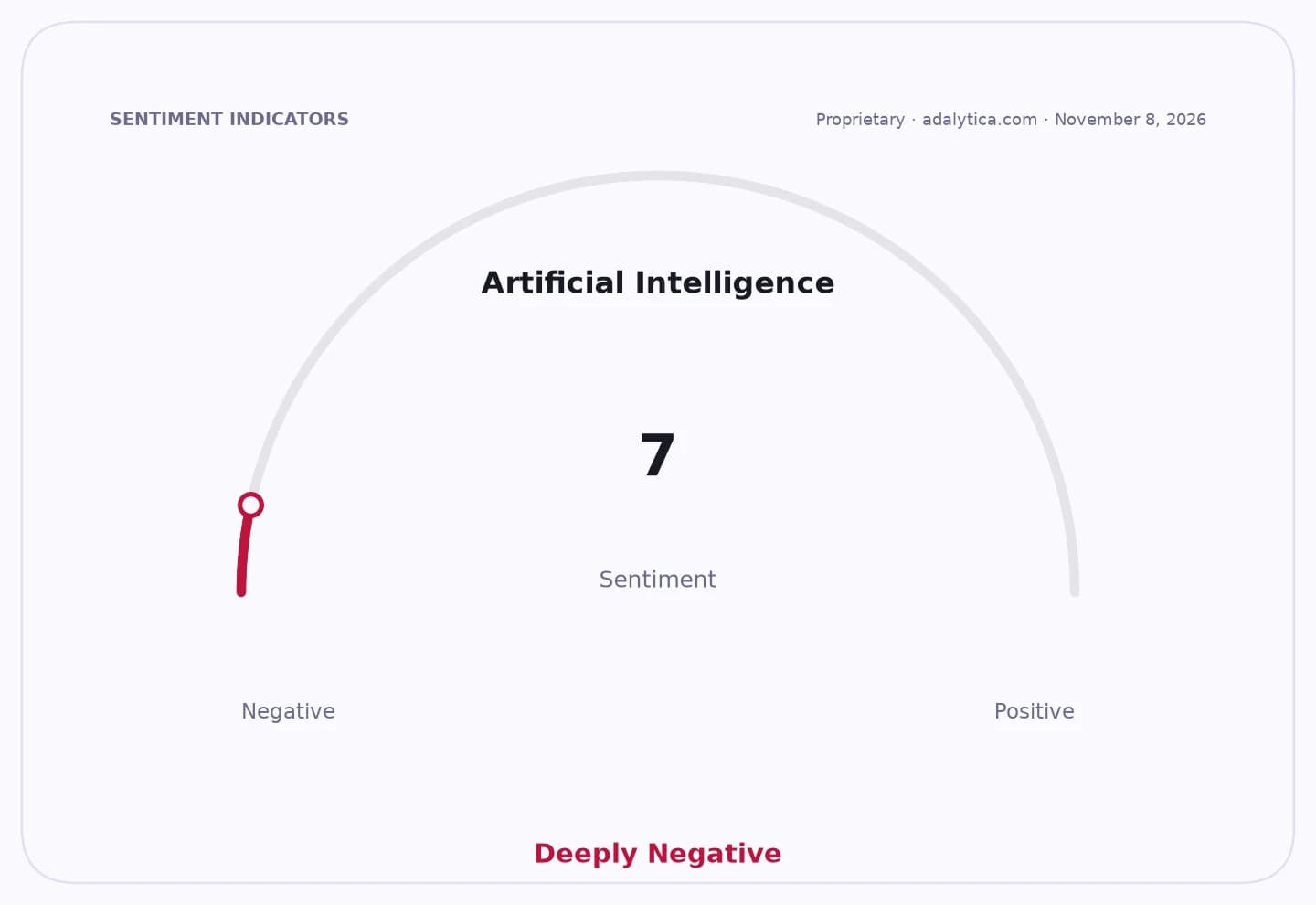
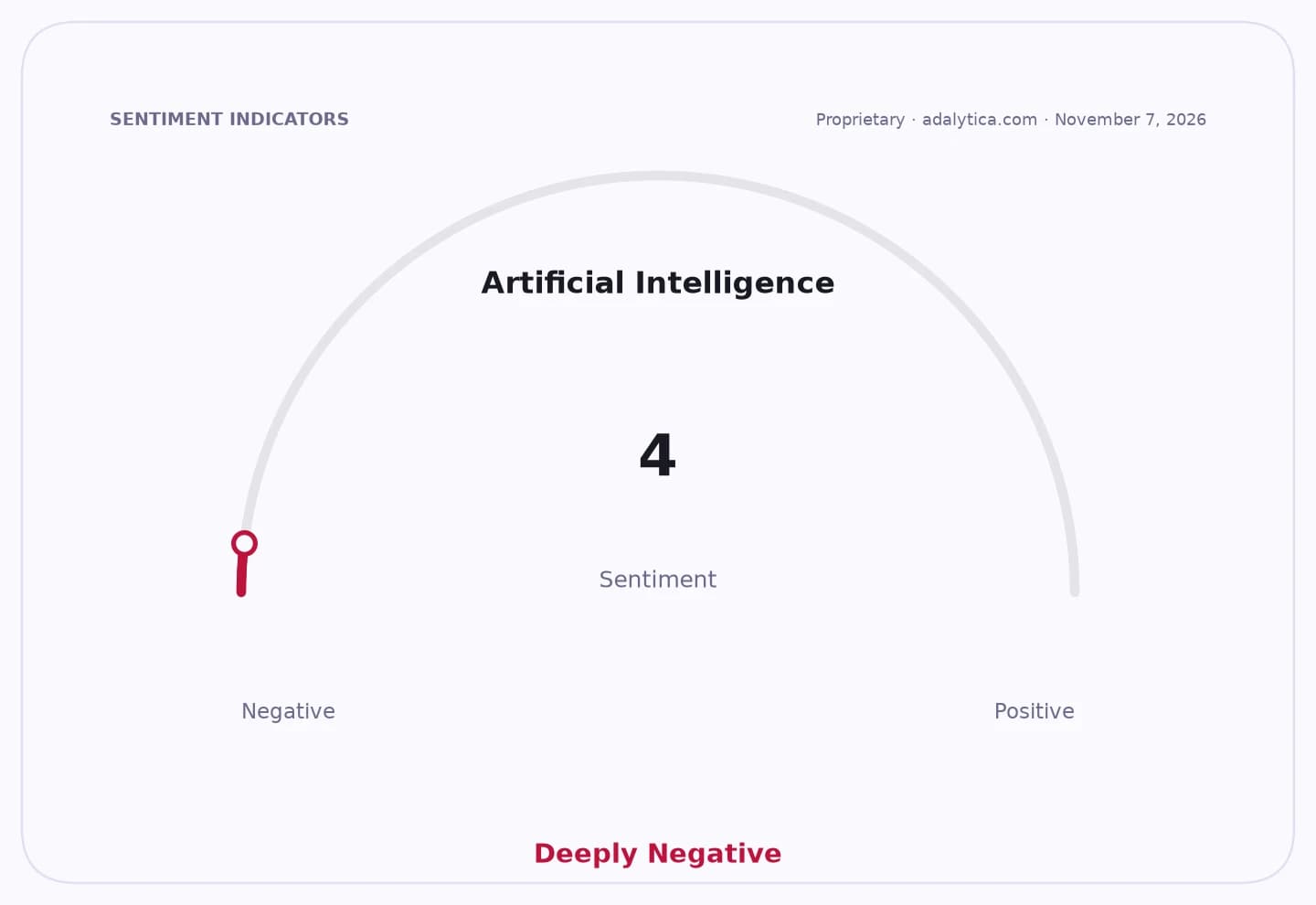
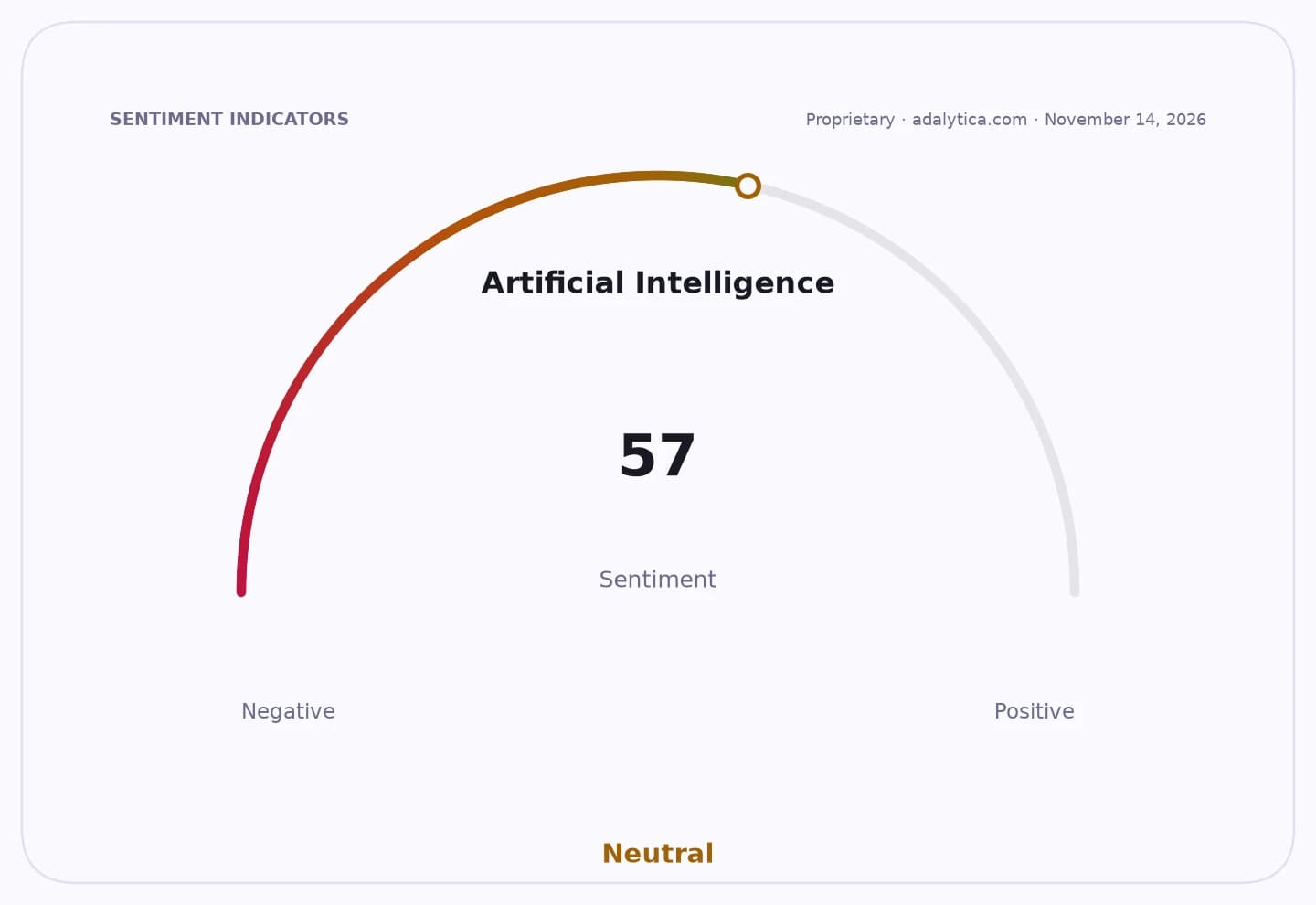
The broader narrative is that AI is making content cheaper to produce faster than the internet can separate quality from noise. Adalytica’s AI snapshot shows sentiment has recovered to 64 from 4 in January, but awareness remains at an “Extreme Fear” level of 4, which fits the market mood: excitement about AI’s promise is rising, while anxiety about its side effects is not going away. That split is exactly why the sector remains investable for patient shareholders, but only selectively.
For investors, the lesson is not to run from AI. It is to own the companies that can survive a more polluted internet and still extract value from it. Alphabet, Meta and Microsoft all have scale, cash flow and competitive moats that smaller rivals lack. But the next few years may reward businesses that can filter, verify and monetize information better than those that merely generate more of it. The internet is not likely to die by the end of the decade, but it could become much harder to navigate — and that is where the real investment test begins. Worth watching, and best owned with a long horizon.
| Entity | Gains | Losses |
|---|---|---|
| Alphabet | ▲AI search demand | ▼Open-web click quality |
| Meta Platforms | ▲Engagement volume | ▼Feed trust and signal quality |
| Microsoft | ▲Enterprise AI adoption | ▼Margins from heavier AI spending |
| Publishers/creators | ▲None | ▼Traffic and ad value |