Big Tech should be forced to give back part of the money it extracts from publishers as artificial intelligence and digital platforms drain ad revenue from news, radio and television, Antonio Marano said, putting a growing policy fight over media economics at the center of Europe’s debate over AI and online power.
Alphabet, Meta face Europe AI media payment push

The Confindustria Radio Televisioni president said platforms and AI firms are concentrating advertising, data and audience attention while traditional media bear the cost of producing content. He argued the model is becoming more acute as generative AI moves from sending users to publishers to answering queries directly, what he called a “zero-click” shift that could bypass news organizations altogether.
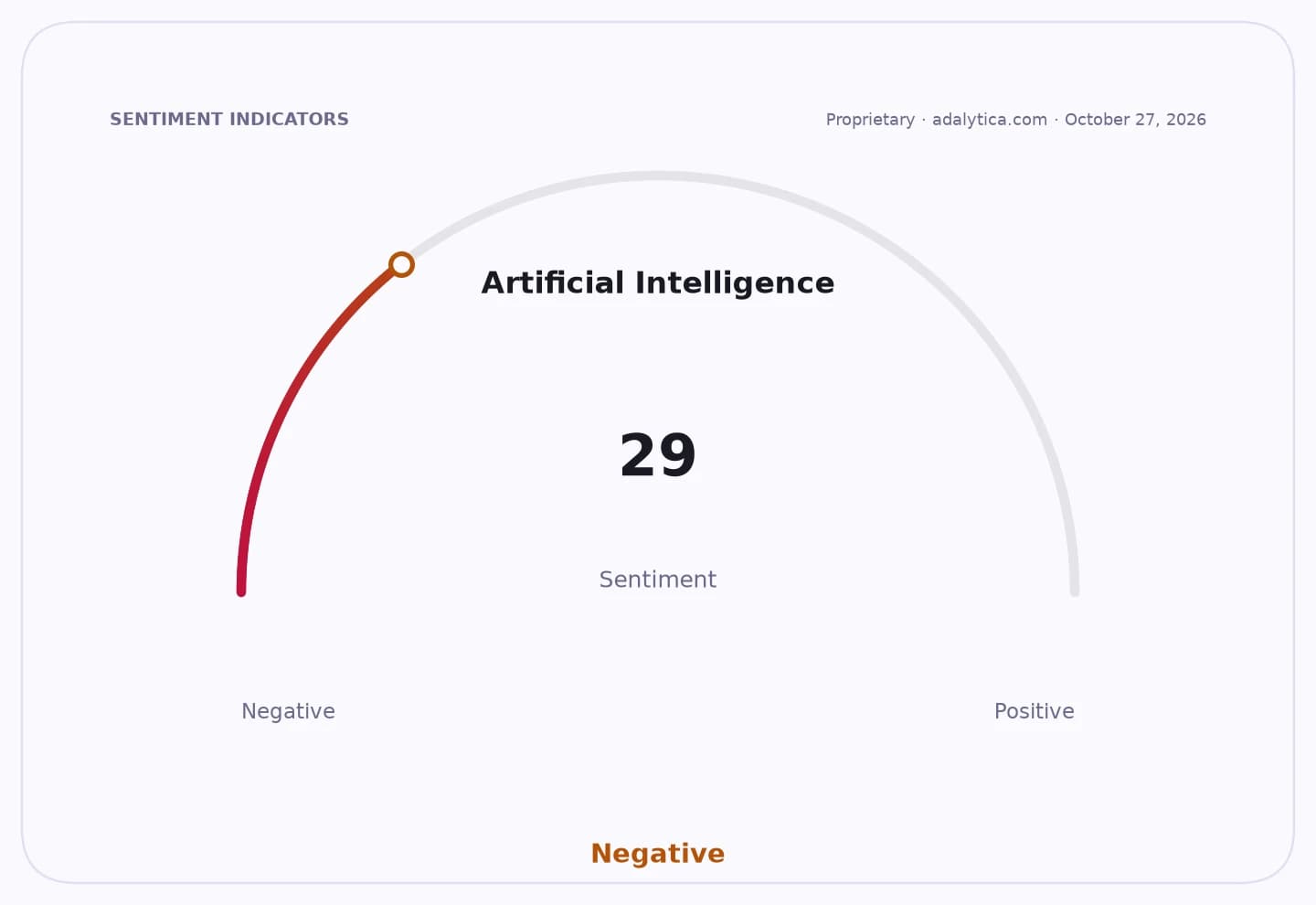
Sentiment IndicatorsⓘProprietary · adalytica.com · October 27, 2026
This is a snapshot — live sentiment, awareness and momentum for 130+ markets update continuously in the dashboard.Open AlphaPulse
That matters because the economics of the media sector are already under strain. Marano pointed to data showing internet now absorbs about three-quarters of advertising spending in Europe’s five biggest markets, while Italy’s radio-TV market has shrunk to about 7.5 billion euros in 2025 from nearly 9.7 billion euros in 2011, according to Agcom.
For investors, the issue is not just a philosophical dispute over fair use. Alphabet’s Google and Meta both depend heavily on advertising for revenue, and their shares have been under pressure in recent sessions, with Google parent Alphabet closing at $316.80 on Oct. 26 and Meta at $630.56, both below their 50-day moving averages. Alphabet’s relative strength index was 23.3 and Meta’s 23.3, readings that signal deeply oversold conditions by conventional technical measures.
Marano’s prescription is to shift the burden onto AI developers and platforms before they use content, not after. He wants what he called prior consent and an inversion of the burden of proof, backed by Confindustria Cultura Italia and Fieg, so that those monetizing content must show they have the right to use it.
The broader message is that Europe’s publishers and broadcasters are seeking a bigger share of the digital advertising and AI value chain just as regulators are weighing how to police platform dominance. If that effort gains traction, it could increase compliance and licensing costs for Big Tech while offering a potential revenue floor for media owners that have seen their bargaining power eroded for more than a decade.
Investors will be watching whether the debate translates into harder rules on AI training, content licensing and platform compensation, especially in Italy and Brussels, where any move toward mandatory payment could ripple through ad budgets, content deals and Big Tech margins.
| Entity | Gains | Losses |
|---|---|---|
| Publishers and broadcasters | ▲Higher licensing power | ▼Less platform-dependent revenue |
| Alphabet and Meta | ▲Continued ad dominance if rules stall | ▼Higher content and compliance costs |
| AI developers | ▲Clearer legal access if agreements are struck | ▼Forced prior consent requirements |
| Regulators and policymakers | ▲More leverage over platform power | ▼Pressure to deliver enforceable rules |