India’s next big tech battle is not about banning speech — it is about forcing the world’s largest platforms to stop engineering outrage, and that matters because the business model behind endless feeds is now colliding with public health, social stability and regulation.
India Pushes Social Feed Algorithm Transparency

The case for intervention is straightforward. The modern feed has been built to keep users scrolling by rewarding moral panic, not calm attention. In a country like India, where hundreds of millions came online through cheap mobile data and where social diversity can turn online fury into real-world tension quickly, that design is no longer just a product choice. It is a macro issue, a political issue and increasingly an investable one.
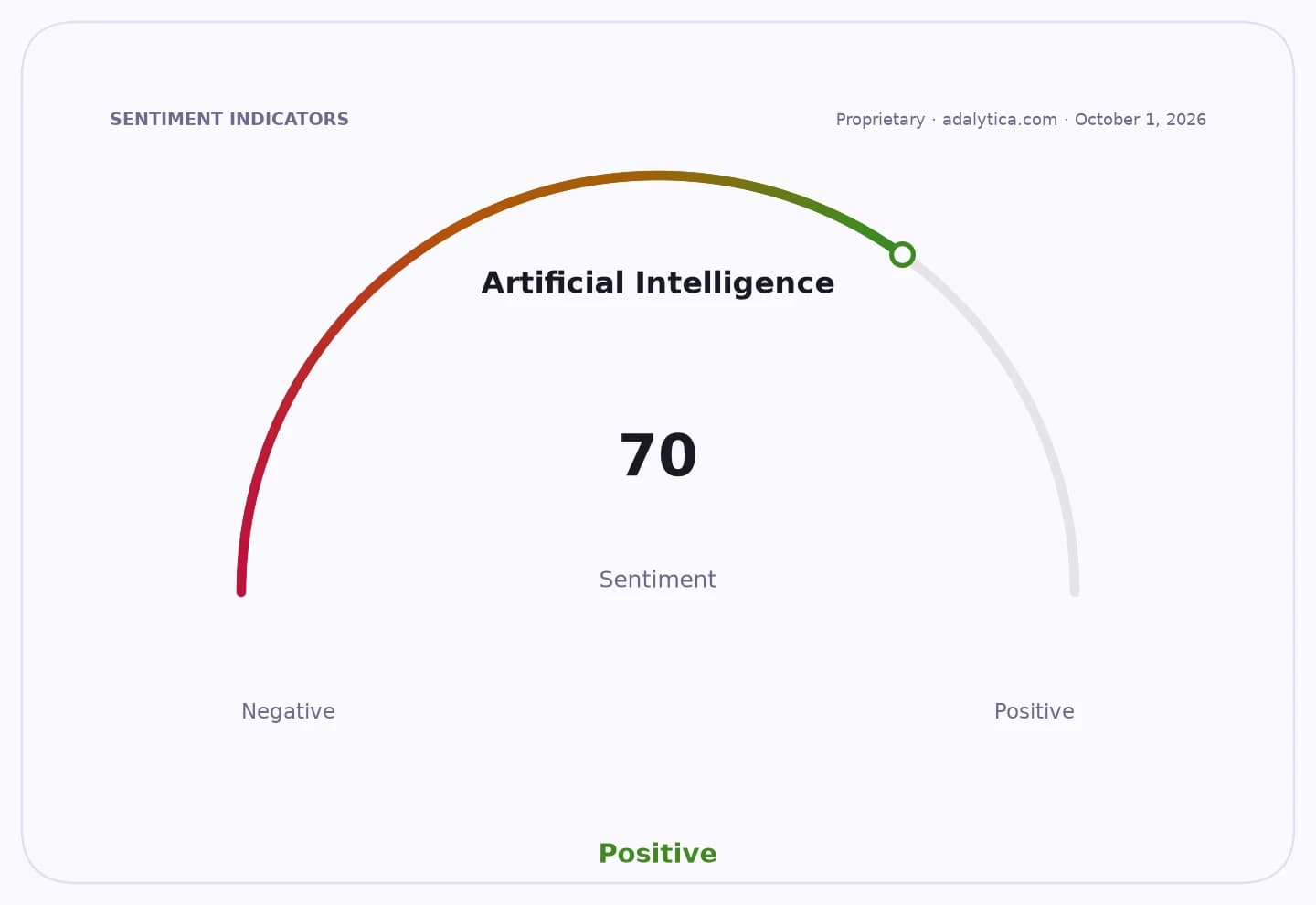
Sentiment IndicatorsⓘProprietary · adalytica.com · October 7, 2026
This is a snapshot — live sentiment, awareness and momentum for 130+ markets update continuously in the dashboard.Open AlphaPulse
That is why the seed headline resonates so strongly. What began as a conversation about misinformation has become a question of platform accountability. The article’s core argument is that India should follow the direction already set in Europe and Australia: require algorithmic transparency, give users a genuine choice to switch off recommendation engines, and restore a chronological feed with an ending. That is a much more durable fix than asking people to simply use their phones less.
For investors, this matters because the biggest beneficiaries of engagement-driven design — Alphabet, Meta and, more broadly, the ad-supported digital ecosystem — are facing a change in the rules of the road. If regulators decide that the feed itself is the product that needs policing, then the cost of growth rises. Engagement can still expand, but the easiest form of engagement, the outrage loop, becomes harder to monetize unchecked.
The economics here are bigger than social media. Infinite scrolling, algorithmic recommendations and the constant reshuffling of emotionally charged content are not side features; they are central to time spent, ad inventory and pricing power. Anything that weakens that machine can affect user retention, advertising efficiency and the long-term return on the enormous capital being poured into digital infrastructure. The theme also reaches beyond consumer apps, because the same policy climate that scrutinizes feeds is part of the wider regulatory pressure facing the tech sector on data, transparency and AI governance.
That is why the market should pay attention to the stock reaction and valuation backdrop. Alphabet has been trading near $347.68, above its 50-day moving average of $345.20 and 200-day average of $339.00, while its RSI has climbed to 54.2 and MACD has turned positive. Meta is around $738.88, well above both its 50-day average of $630.52 and 200-day average of $628.27, with RSI at 62.4. Microsoft is near $529.30, also above its 50-day average of $493.09 and 200-day average of $432.00, with RSI at 76.3. In other words, these are not beaten-down names priced for easy disappointment; investors are still paying up for continued platform dominance and AI-driven growth, which makes any regulatory clampdown on engagement mechanics more relevant to returns.
That does not mean India is about to blow up the sector. It does mean the market has to start pricing in a world where platforms can no longer assume that the most addictive design is also the safest business design. Europe has already moved toward feed transparency and Australia has pushed further, including a switchable non-algorithmic feed under its “My Feed, My Way” framework. India, with its scale and social complexity, may eventually be more consequential than either.
The long-term investing lesson is simple: regulation rarely destroys great businesses on its own, but it can change how those businesses grow. Alphabet, Meta and Microsoft remain formidable franchises with enormous competitive advantages. Still, investors should watch whether India’s lawmakers move from concern to action, because a rule requiring more user control over algorithms would mark a meaningful shift in how Big Tech captures attention in one of the world’s biggest digital markets. Worth watching closely — and worth holding for the long term, but with a clearer eye on regulatory risk.
| Entity | Gains | Losses |
|---|---|---|
| Indian users | ▲More control, less outrage | ▼Less algorithmic curation |
| Indian regulators | ▲More platform accountability | ▼Less self-regulation |
| Alphabet, Meta, Microsoft | ▲Clearer rules if adapted early | ▼Engagement-driven growth pressure |
| Chronological feeds | ▲More user choice | ▼Recommendation-engine dominance |