GoDaddy Chief Executive Aman Bhutani is drawing a hard line on workplace AI use, saying he will not read emails or documents he believes were written by artificial intelligence, even as the web-hosting and domain-services company leans into generative and agentic AI across its own products and operations.
GoDaddy CEO Rejects AI-Written Emails
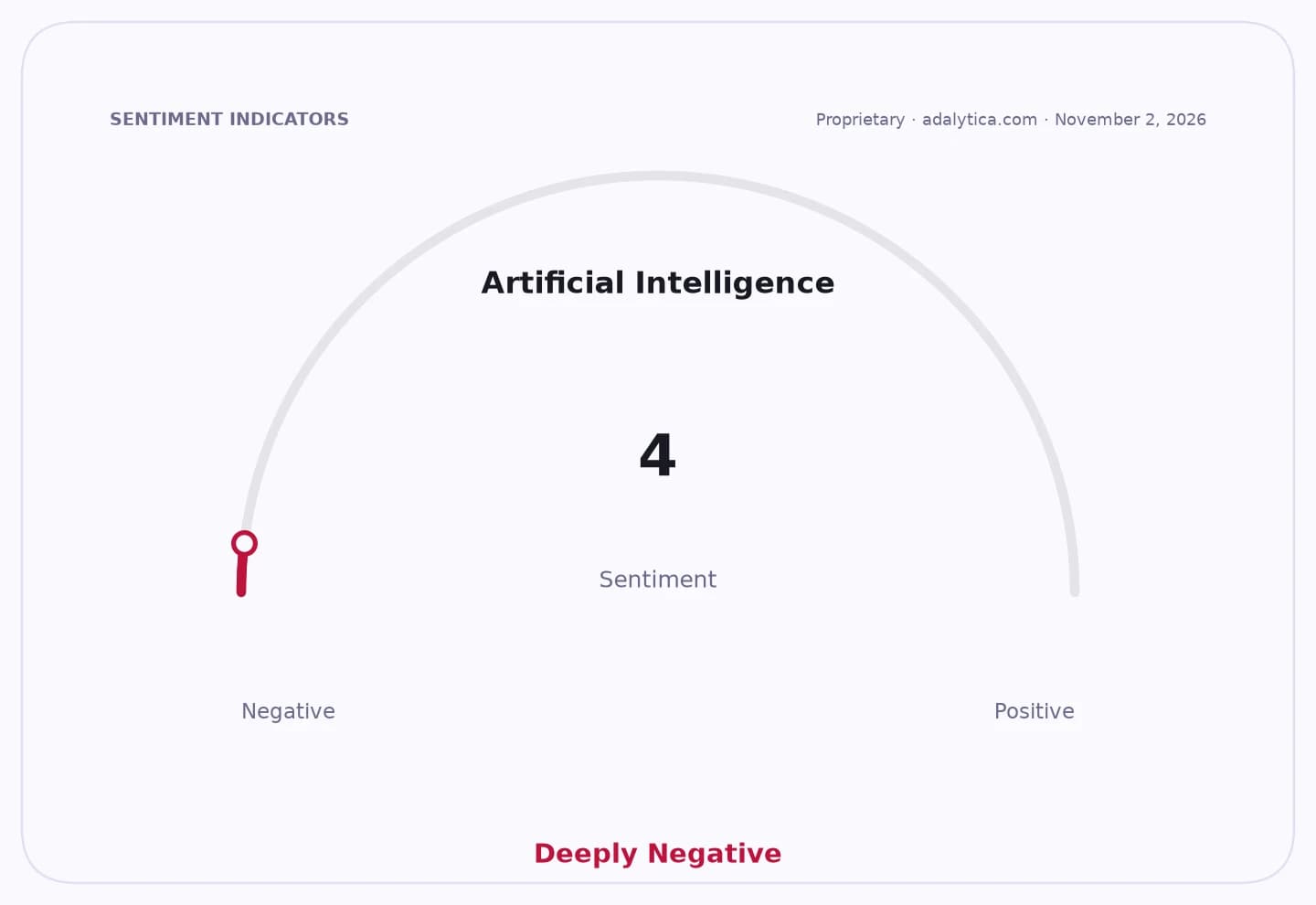
Artificial Intelligence
The stance matters because it captures a growing tension inside corporate America: companies want AI to speed research, drafting and customer support, but executives are increasingly worried about the flood of polished, low-signal output that can dilute accountability, slow decision-making and weaken customer trust. For investors, that tension is central to whether AI adoption improves margins without damaging product quality or brand equity.
Sentiment Indicators
Bhutani said he is not banning AI outright. Employees can use it to look up unfamiliar terms or research information, but if they are turning an idea into a memo, email or proposal, he wants it written in their own words. He said AI-generated writing is easy to spot because it tends to be overly long, excessively polished and lacking in sharp thinking.
The comments come as GoDaddy tells investors in its latest 10-Q that it continues to deploy “generative and agentic AI” to build new tools, add features and improve internal operations, while also warning that AI adoption carries significant development, regulatory and reputational risks. The company said changes in AI laws and rules could hurt its ability to develop, deploy and maintain these tools or expose it to legal liability.
That makes the issue more than a style preference. GoDaddy’s business depends on customer-facing communication and support, and its filing says a failure to maintain high-quality customer care across its communication platforms, including AI-native support features, could materially harm its reputation and financial results. A CEO publicly rejecting AI-written messages underscores how much premium still sits on human judgment, especially in services businesses where trust is part of the product.
GoDaddy shares fell to $114.38 on Nov. 6 after reaching $120.12 a day earlier, though the stock remains well above its 50-day and 200-day moving averages. Microsoft and Salesforce, two of the bigger enterprise AI players watching the same adoption curve, have also moved sharply this year as investors weigh AI-driven growth against execution risk and valuation.
The broader message for investors is that AI adoption is no longer just about automation gains. The next phase will likely favor companies that can prove they are using AI to augment human work rather than replace discernment, especially as regulators scrutinize AI use and customers become more sensitive to authenticity. The key test now is whether enterprises can extract productivity without letting machine-generated noise overwhelm the human voice.
| Entity | Gains | Losses |
|---|---|---|
| GoDaddy | ▲human-led trust | ▼AI-written noise |
| Employees | ▲clearer communication standards | ▼easy AI shortcuts |
| Investors | ▲disciplined AI adoption | ▼reputational risk |
| Microsoft, Salesforce | ▲enterprise AI demand | ▼scrutiny on productivity payoff |