Xavier Nueno’s warning is bigger than a book launch: the AI boom, he argues, is accelerating a transfer of public knowledge into private hands, with investors and users likely to pay more later if today’s model of cheap access proves unsustainable.
AI Training Data Copyright Costs and Big Tech
Artificial Intelligence
That matters because the dispute goes to the heart of how the next generation of AI will be financed, regulated and monetized. If courts or lawmakers force companies such as OpenAI, Google and Microsoft to open their training catalogs and pay for the material they ingest, the economics of generative AI could shift from an arms race subsidized by venture capital to a more expensive, licensed utility. For investors, that is not just an ethics question. It is a margin question.
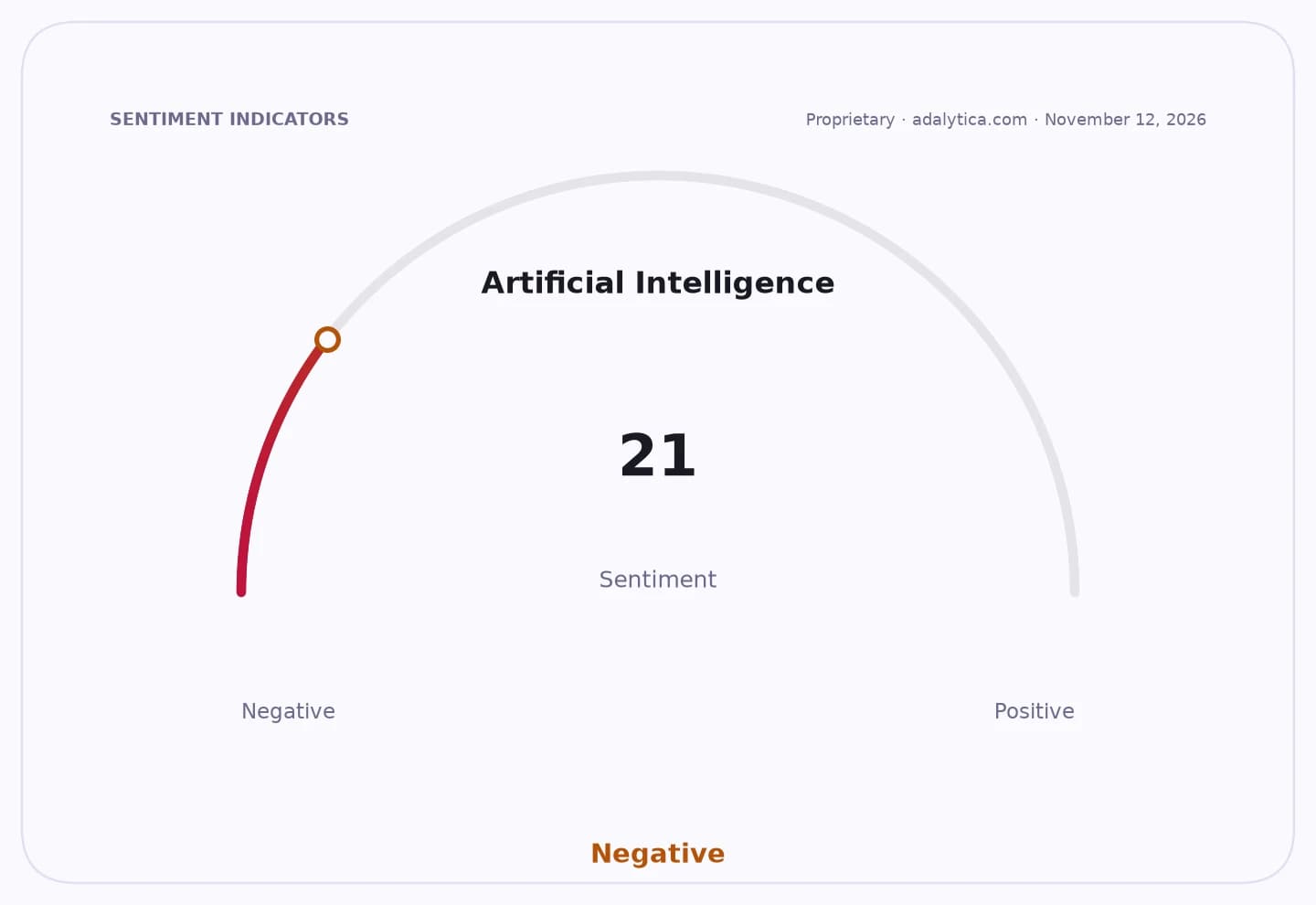
Sentiment Indicators
Nueno’s thesis, which won Spain’s Anagrama essay prize, is that the technology industry has built on what he calls a culture of looting: downloading “ghost libraries,” enclosing open information inside data centers and then reselling it through search, subscriptions and chatbot answers. He says the same logic now extends to everyday use, where AI summaries can keep readers from ever reaching the original source. In his telling, the issue is less whether these systems are “intelligent” than whether they are legally repackaging prior work without paying for it.
That framing arrives as litigation over AI training and outputs continues to build in the U.S. and Europe, even if much of it remains out of public view. Publishers, authors and media groups are challenging whether chatbot responses and model outputs infringe copyright. Those cases could take years to resolve, but they already hang over a sector that has become central to equity-market leadership. The Nasdaq-heavy QQQ has been volatile, yet it remains far above its March lows, while big technology shares continue to dominate index performance even as investors debate whether the AI buildout can justify the capital spending.
The market has every reason to pay attention. AI infrastructure is soaking up enormous sums for chips, power, networking and data centers, but the business model is still unsettled. If the industry is forced to pay more for content, or if governments require much greater transparency over training data, the winners may be the firms with the deepest balance sheets and the clearest distribution advantages. The losers could include smaller AI challengers that rely on cheap access to public and third-party material to scale quickly.
There is also a broader economic issue hiding inside the cultural argument. Nueno says public institutions are financing libraries, universities, archives and research, only for that knowledge to be privatized immediately after publication. That is a reminder that AI is not just software; it is an industrial policy story about who controls information, who captures the rent and who bears the external costs. The same concerns are showing up in debates about data-center power use, local water demand and the concentration of digital infrastructure in a handful of companies.
For long-term investors, the takeaway is simple: AI remains a powerful secular trend, but its profit pool is still being fought over. Companies with durable moats, transparent rights to data and the ability to absorb legal and regulatory costs are better positioned than hype-driven competitors. The rest may discover that the real cost of “cheap” AI is only starting to show up. Worth watching closely.
| Entity | Gains | Losses |
|---|---|---|
| Big Tech platforms | ▲More monetization leverage | ▼Higher legal/regulatory costs |
| Publishers and authors | ▲Licensing leverage | ▼Loss of traffic and control |
| Investors in AI leaders | ▲Durable moats | ▼Margin uncertainty |
| Smaller AI rivals | ▲— | ▼Harder access to data |