Brussels is preparing to rewrite key digital rules in 2027, including a review of copyright law as artificial intelligence increasingly scrapes, trains on and generates content across Europe’s creative economy.
EU plans 2027 copyright review for AI rules

The European Commission said the reform is meant to modernize the bloc’s framework for the AI era, cut administrative burdens for companies and strengthen protection for authors and rightsholders. It is one of the clearest signs yet that the EU is moving from setting broad AI principles to tackling the commercial and legal frictions that AI is creating for publishers, studios, music labels and software firms.
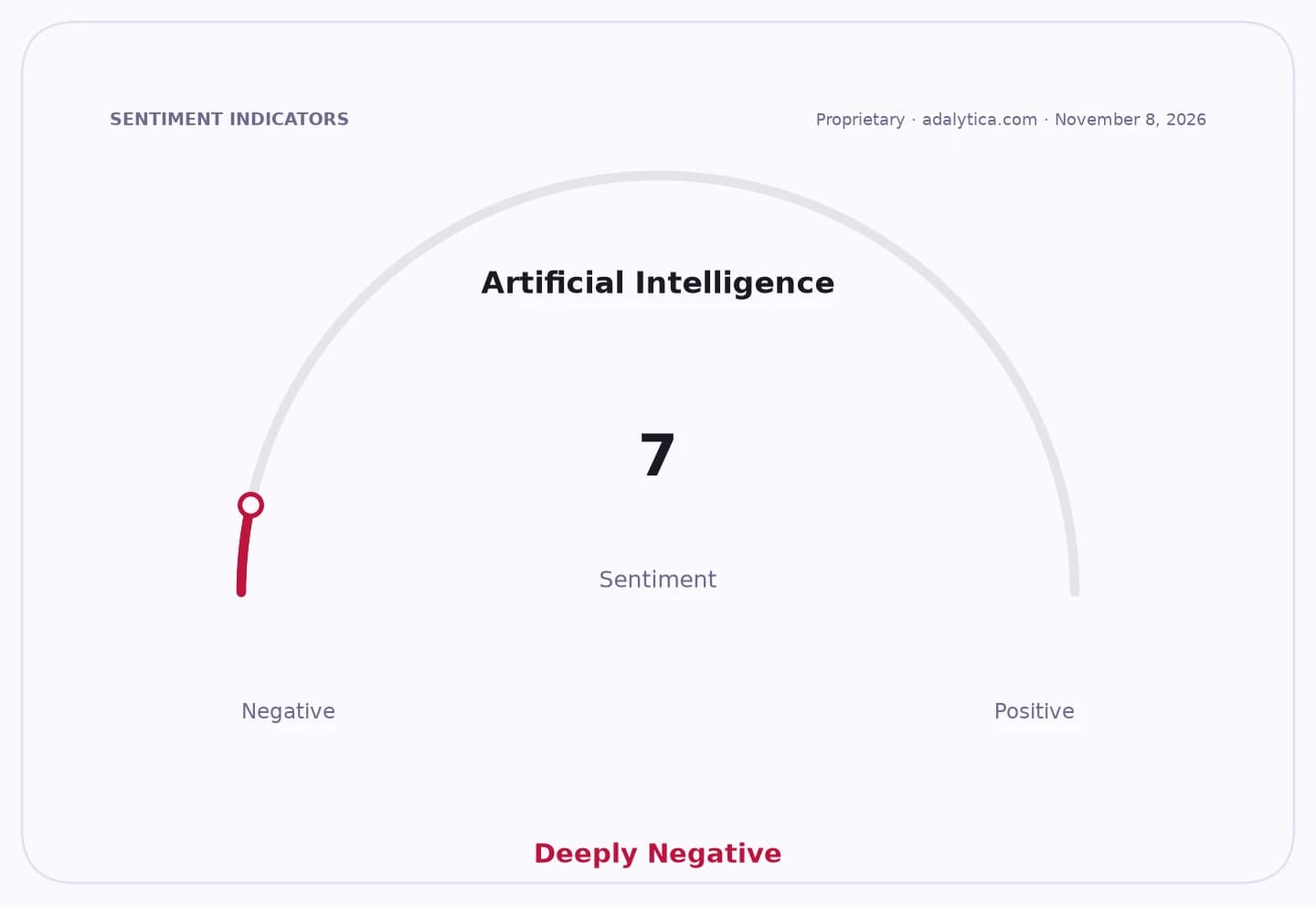
Sentiment Indicators
Artificial Intelligence
For investors, the timing matters because Europe is becoming one of the world’s most active regulators of artificial intelligence just as the technology is being embedded in search, cloud computing, advertising and productivity software. Any change to copyright rules could alter how AI developers train models, what data they can use and how much they may need to pay content owners, with direct implications for margins at companies such as Microsoft, Alphabet, Nvidia and Adobe.
The Commission did not spell out which provisions it wants to change, but the work programme points to a wider policy shift. Alongside the copyright review, Brussels plans to push AI into five strategic sectors — healthcare, transport, agriculture and food, advanced manufacturing, defense and space — while also trying to expand Europe’s own AI stack from chips and data to computing power and financing.
That combination shows the EU is trying to balance two competing goals: supporting domestic adoption of AI to improve productivity and competitiveness, while tightening rules around creators’ rights and ethical use. The bloc is also reviewing its Digital Decade targets for 2030, signaling that its technology roadmap is being reset around faster-moving AI capabilities.
The policy backdrop has already weighed on market sentiment around AI names. Microsoft shares have swung sharply in recent months, while Nvidia and Alphabet have also been volatile, reflecting concern that regulation, export controls and copyright disputes could raise compliance costs or slow monetization in Europe. Adalytica’s AI sentiment gauge is in “Extreme Fear,” underscoring how quickly investor enthusiasm can turn when policy risk rises.
The broader economic stakes are sizable. Europe wants to reduce dependence on external suppliers, deepen its own chip, data and cloud capacity, and channel more capital into AI infrastructure. But the copyright overhaul suggests Brussels is also preparing to draw harder lines over who benefits from the content economy that feeds generative AI.
Investors will be watching for the Commission’s second-quarter proposal and for any sign that Brussels is moving toward mandatory licensing, opt-out rules or tougher disclosure requirements for model training data. The shape of that proposal will determine whether the EU becomes a template for balanced AI regulation or another cost center for global technology firms.
| Entity | Gains | Losses |
|---|---|---|
| EU creators and publishers | ▲stronger copyright protection | ▼less unlicensed AI training |
| AI developers | ▲clearer rules over time | ▼higher compliance costs |
| Microsoft, Alphabet, Adobe | ▲more legal certainty if rules are uniform | ▼possible licensing expenses |
| EU tech policy makers | ▲greater control over AI rollout | ▼slower adoption if rules tighten |