Nvidia is moving to cement itself as Europe’s main backer of artificial intelligence infrastructure and startups, offering a version of “sovereignty” built around its chips, software and financing rather than homegrown rivals. That matters because the company is not only selling hardware in one of the world’s most strategic technology markets, but also helping shape how Europe funds and deploys AI at a time when policymakers want more control over the sector.
Nvidia backs French AI startups in Europe

Chief Executive Jensen Huang said Nvidia is putting fresh capital behind four French startups — Doctolib, Pigment, Genesis AI and Entalpic — as part of a broader $2 billion investment drive across Europe. The company is also backing computing infrastructure, including projects in France, in a bid to embed its platform deeper into the continent’s AI stack.
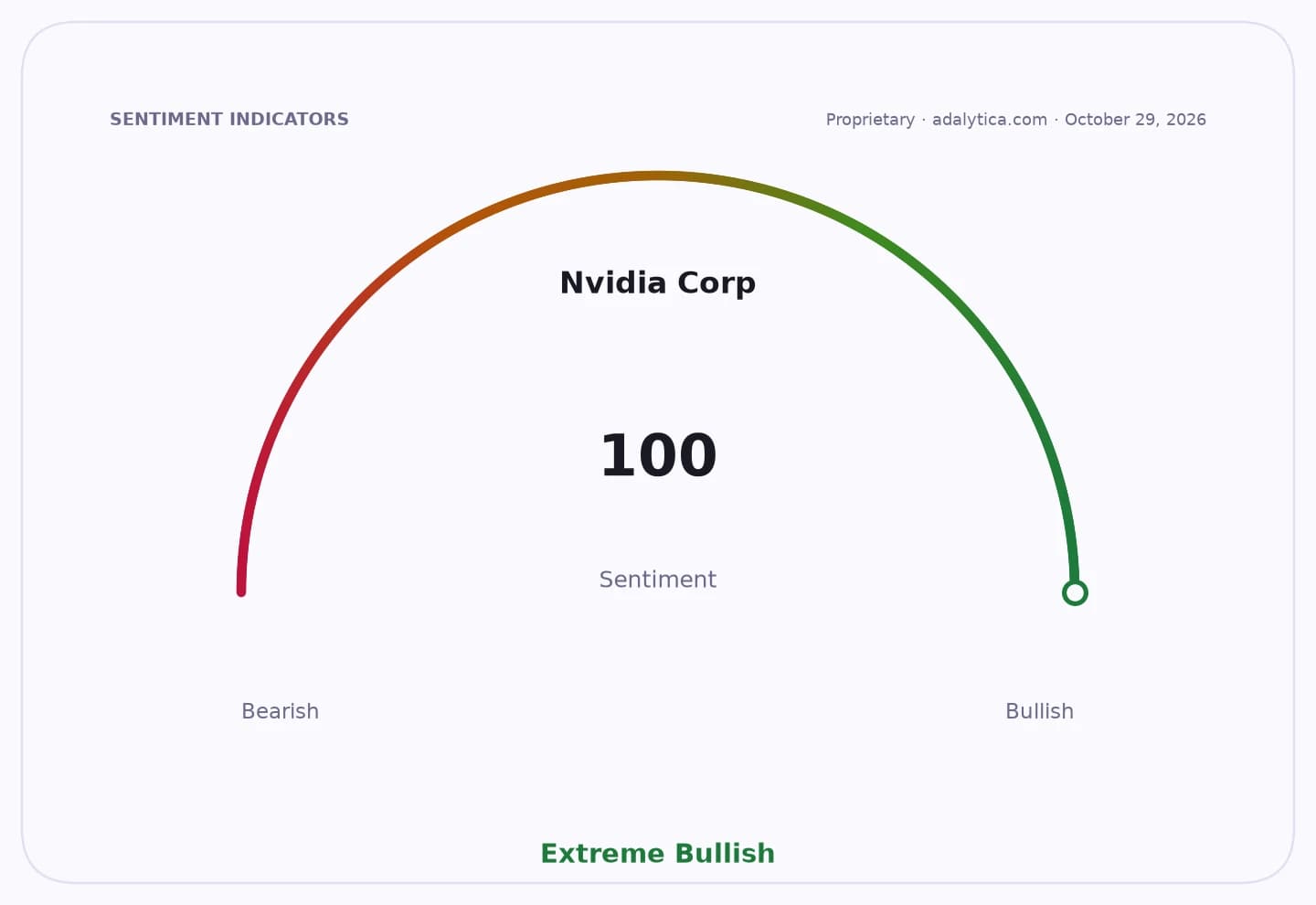
Sentiment Indicators

The pitch is straightforward: Europe does not need to build every layer of AI from scratch if it can secure access to the tools, chips and data-center capacity needed to compete. That framing is politically useful for Nvidia, which is seeking to turn European sovereignty concerns into demand for its products and services, while positioning itself as a partner rather than a dependency.
For investors, the message is that Nvidia’s growth story is no longer tied only to U.S. cloud giants or hyperscaler capex cycles. By leaning into Europe’s AI ambitions, the company is broadening its addressable market and deepening customer relationships in sectors ranging from health care to enterprise software and robotics.
The timing also matters. Nvidia shares have been volatile, with the stock closing at $186.64 on Friday after a steep pullback from recent highs, while technical indicators showed the shares below their 50-day moving average and with a weak relative strength reading. Adalytica’s earnings sentiment gauge for Nvidia was in “Extreme Fear,” underscoring how much investors are watching for evidence that demand can keep outpacing the market’s high expectations.
Europe, meanwhile, remains keen to avoid falling further behind the U.S. and China in AI, but its push for digital sovereignty is increasingly running into the practical reality that the region still depends on American compute, chips and capital. Nvidia’s expansion suggests that dependence may become a feature of Europe’s AI buildout, not a bug.
The next test will come in how quickly these investments translate into deployed infrastructure, government backing and commercial contracts, especially as Europe weighs stricter rules around data centers, energy use and AI governance. If Nvidia can keep converting sovereignty rhetoric into real spending, it will strengthen both its competitive moat and its influence over Europe’s AI future.
| Entity | Gains | Losses |
|---|---|---|
| Nvidia | ▲More European demand | ▼Less pricing power risk |
| European startups | ▲Capital and compute access | ▼Greater platform dependence |
| EU policymakers | ▲Faster AI buildout | ▼Weaker local control |
| U.S. rivals | ▲Expanded market pressure | ▼Harder entry for challengers |