NVIDIA is trying to redefine the personal computer by moving artificial intelligence from the cloud onto the desktop, a shift that could reshape who buys the hardware, what they pay for, and which chipmakers capture the value.
NVIDIA RTX Spark Brings AI to PCs

The company unveiled its RTX Spark platform in Seoul, pairing its Blackwell RTX graphics processor with a Grace CPU to run local AI agents, reduce reliance on remote data centers and keep more processing on the device itself. For users and businesses, that matters because it can cut latency, improve privacy and reduce some cloud-computing costs when models and tasks are handled locally rather than sent to servers.
Sentiment Indicators
The bet is bigger than one product launch. NVIDIA is already the dominant supplier of AI GPUs, but RTX Spark pushes it deeper into the personal-computing stack and closer to the traditional turf of Intel, AMD and PC makers such as Microsoft’s Windows ecosystem partners. If AI capability becomes a core reason to upgrade a laptop or desktop, then memory, software compatibility and on-device inference could matter as much as raw CPU speed.
That creates a new commercial model as well. The pitch is no longer just a faster PC, but a machine that can analyze documents, generate content and automate workflows without constant cloud access. That could support higher-end hardware pricing and, eventually, subscription-style bundles that mix devices, software and AI services.
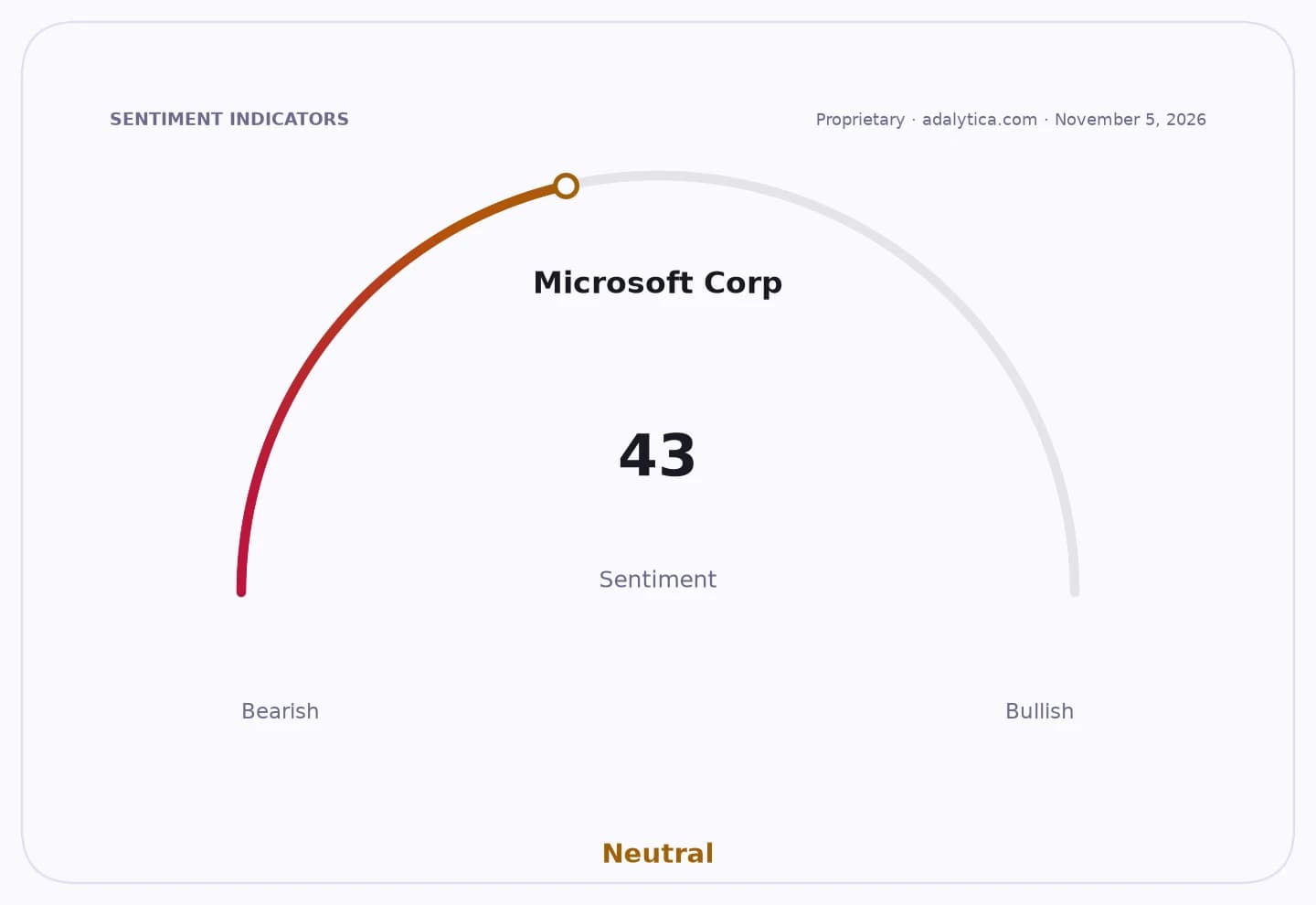
Investors are watching because the strategy extends NVIDIA’s AI moat beyond data centers into a broader installed base of PCs and gaming machines. The stock has been volatile, with shares falling to $186.64 on Nov. 6 from $227.73 on Aug. 27, while standard technical indicators such as the 50-day moving average and RSI readings show the recent pullback has left the name oversold by market terms. Adalytica’s proprietary NVIDIA Earnings Sentiment gauge is also at 4.0, labeled “Extreme Fear,” underscoring how quickly enthusiasm has cooled.
The launch does not eliminate the cloud — large models will still need massive server farms — but it could shift the balance toward hybrid computing, with more tasks performed on-device and fewer tied to centralized infrastructure. The key question now is whether app developers, corporate buyers and consumers see enough value in local AI to justify a new PC upgrade cycle.
| Entity | Gains | Losses |
|---|---|---|
| NVIDIA | ▲Deeper PC platform control | ▼Pure cloud-only AI exposure |
| PC buyers/businesses | ▲Faster local AI, better privacy | ▼Higher upfront hardware costs |
| Intel and AMD | ▲More demand if AI PCs grow | ▼Share of traditional CPU-centric value |
| Cloud AI providers | ▲Hybrid demand remains | ▼Some inference workloads shift local |