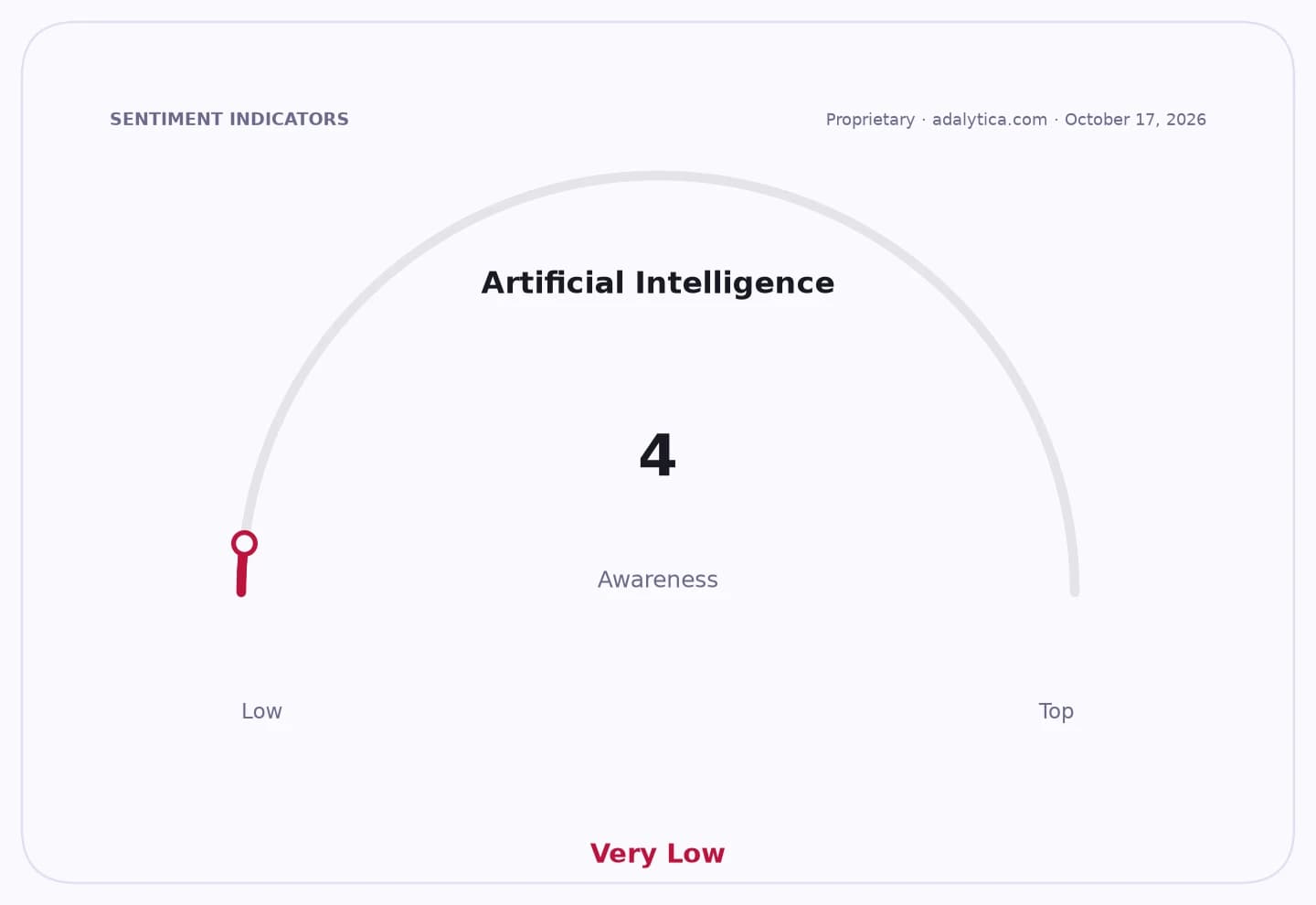
Europe is at risk of missing one of the biggest wealth-creating shifts of the decade, and that matters because AI is increasingly deciding where capital, earnings growth and market leadership concentrate. BlackRock’s warning that the region is lagging behind in artificial intelligence is not just a technology comment; it is a statement about future productivity, corporate competitiveness and the gap between the companies building the tools and the ones still waiting to deploy them.
Europe Lags in AI Adoption, BlackRock Warns

For investors, the key point is simple: AI is no longer an abstract theme, it is a capital cycle. The winners are already getting rewarded. Microsoft shares have climbed to about $521, while Nvidia trades around $213, both still far above their 200-day moving averages even after recent pullbacks. That tells you global money continues to favor the companies supplying compute, cloud and software infrastructure, not the regions moving too slowly to absorb it.
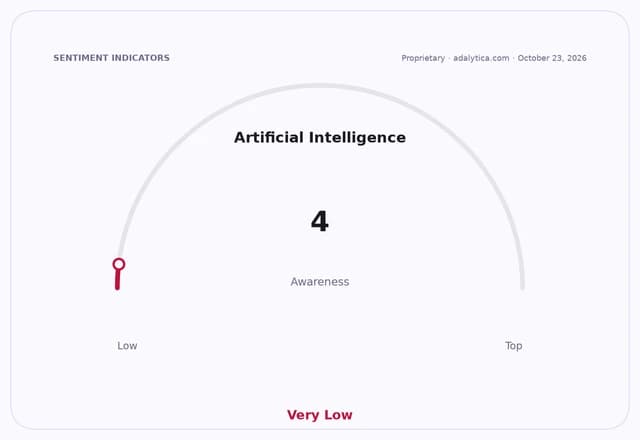
Sentiment IndicatorsⓘProprietary · adalytica.com · October 23, 2026
This is a snapshot — live sentiment, awareness and momentum for 130+ markets update continuously in the dashboard.Open AlphaPulse

The contrast with Europe is stark. When adoption lags, so do the economic benefits that come from faster automation, lower operating costs and better decision-making. Over time, that can weigh on productivity, margins and ultimately equity returns. Europe’s problem is not that AI is unimportant there; it is that the region risks becoming a buyer of imported technology rather than an owner of the platforms, chips and clouds that capture the highest returns.
That dynamic also helps explain why U.S. megacap technology remains so resilient. Microsoft’s stock is still up meaningfully from its lows this year, and its technical backdrop remains stronger than Nvidia’s, even after Nvidia’s sharp rally and subsequent cooling. The broader message is that investors still see AI spending flowing through American balance sheets first, with the most obvious beneficiaries concentrated in a handful of dominant franchises.
BlackRock’s warning should also be read in the context of regulation, capital intensity and speed. Europe has been quicker to regulate AI than to scale it, and that can create a widening gap: firms facing heavier compliance burdens and slower deployment tend to spend more time managing risk than compounding advantage. In a market where AI demand is still expanding, delay can be expensive.
None of this means Europe cannot participate. It can, especially through industrial automation, semiconductors, and enterprise software. But long-term investors should be realistic: the biggest AI profits are likely to accrue to the companies and markets that control the infrastructure, data and distribution layers. Right now, that looks more like the U.S. than Europe.
For investors with a multiyear horizon, the lesson is not to chase headlines, but to own the picks-and-shovels of AI and stay diversified. Europe’s lag is a reminder that technological leadership can become market leadership — and that missing the buildout can be just as costly as missing the next rally. Worth watching, but the evidence still argues for the innovators, not the laggards.
| Entity | Gains | Losses |
|---|---|---|
| U.S. AI leaders | ▲More capital inflows | ▼Less competition for leadership |
| Europe’s equity market | ▲Catch-up upside if adoption accelerates | ▼Productivity gap and lower returns |
| Nvidia | ▲Ongoing AI infrastructure demand | ▼Slower spending from lagging regions |
| Microsoft | ▲Cloud and AI monetization | ▼Slower enterprise AI rollout in Europe |