The European Union is shifting its AI strategy away from trying to beat the U.S. and China at frontier language models and toward becoming the place where artificial intelligence is actually deployed across the economy.
EU AI Strategy Shifts to Deployment

That is the economically important break. Europe is admitting that the highest-value prize may not be inventing the biggest model first, but embedding existing AI into healthcare, farming, transport, defense, manufacturing and public services — the kind of adoption that can lift productivity, lower costs and create demand for compute, chips, cloud and systems integration even if the models themselves come from abroad.
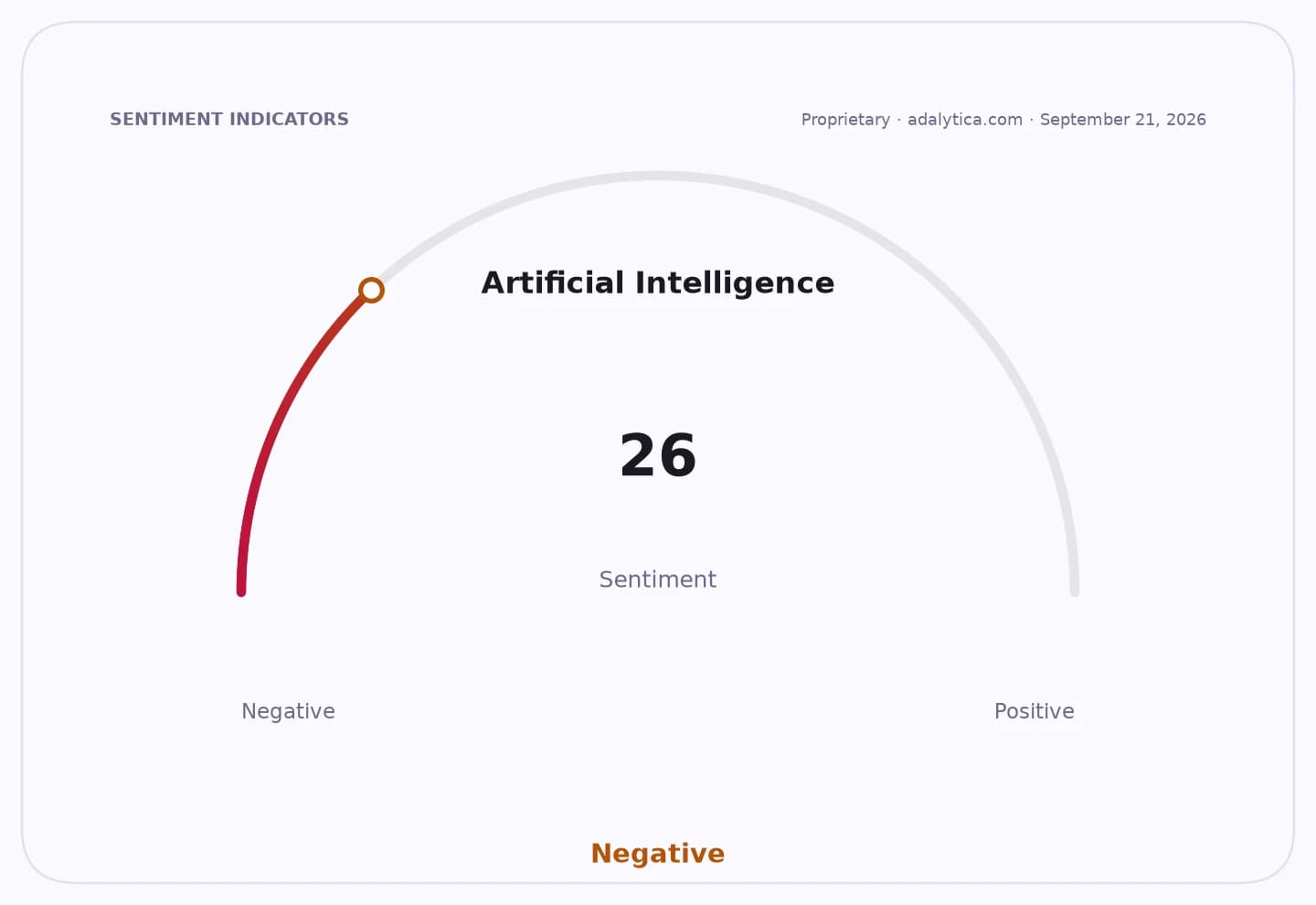
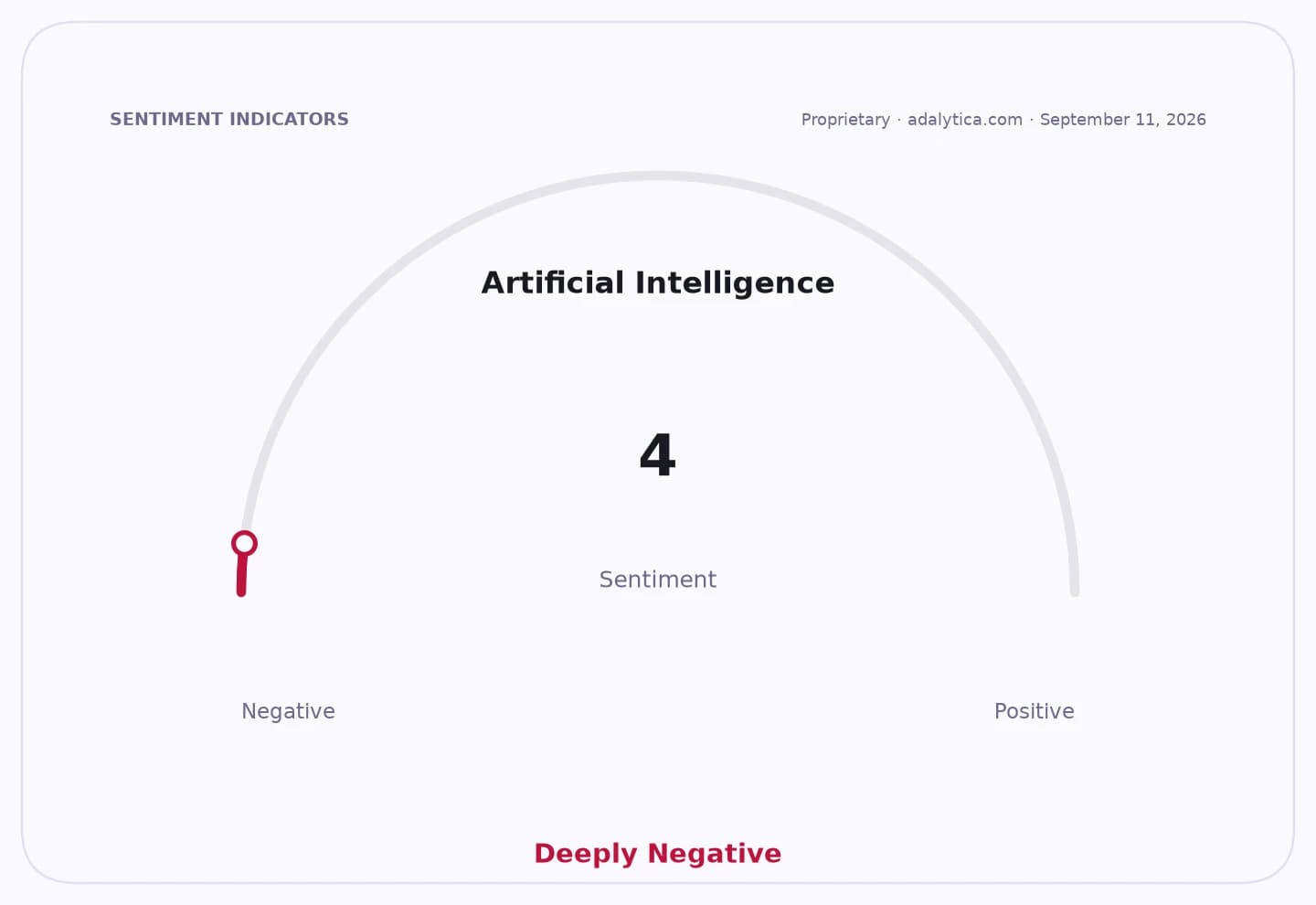
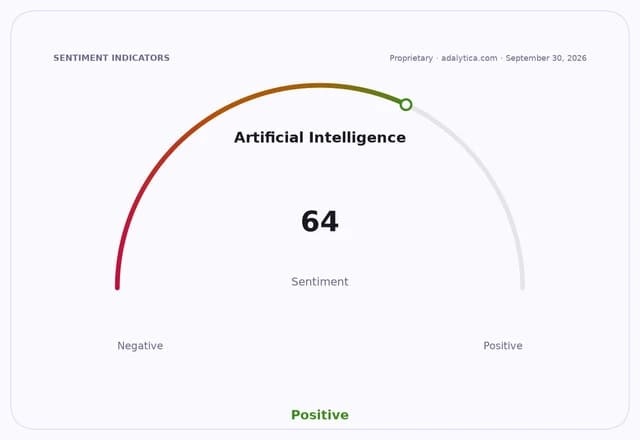
Sentiment IndicatorsⓘProprietary · adalytica.com · September 30, 2026
This is a snapshot — live sentiment, awareness and momentum for 130+ markets update continuously in the dashboard.Open AlphaPulse

This matters because Europe has been losing ground in the part of the AI stack that captures the most headlines: model training and the infrastructure arms race behind it. The closed-door consultations described by Politico suggest Brussels is recalibrating around a more realistic, and potentially more investable, thesis: the region can still win in applied AI by turning regulation, industrial depth and a large end market into an execution advantage.
That is a significant policy signal for investors. It points to a second-order AI boom in Europe — not a Silicon Valley-style winner-take-all model race, but a multi-year spending cycle in vertical software, industrial automation, defense technology, digital health, data infrastructure and compliant cloud services. If the EU follows through, the demand curve for AI tools in Europe could widen materially even without a homegrown model champion.
The strategy is still in formation. Jim Hagemann Snabe, the EU’s special representative for industrial AI, laid out the approach to all 27 European commissioners on Sept. 4, arguing that AI can speed growth in healthcare, agriculture, transport, defense and industry. A separate closed seminar on Aug. 28 reportedly urged officials to stop framing the issue around who builds the most advanced models and instead focus on where existing AI can do work faster and cheaper.
The examples under discussion are telling. Officials floated easier testing for autonomous vehicles, secure data sharing for personalized medicine and a digital assistant for farmers using field and remote-monitoring data. Those are not flashy consumer products; they are deployment-heavy use cases where Europe’s industrial base, public-sector footprint and regulatory muscle could matter more than raw model scale.
Brussels is also thinking about the dependencies this creates. Participants warned that Europe could become reliant on a handful of foreign technology suppliers, even if it gives up the race to train the biggest models. That is where the investable opportunity becomes more nuanced: the EU may not build the frontier model layer, but it still needs chips, networking, cloud capacity, data centers, integration software and sector-specific applications to make applied AI work.
That is why the market should focus on the picks-and-shovels beneficiaries. Nvidia, Microsoft and Alphabet already sit inside the European AI supply chain through chips, cloud and platform distribution, and their shares reflect how dominant those layers have become. Nvidia recently traded around $228, far above its 200-day average near $200, while Microsoft was around $513 and Alphabet near $344, both still supported by powerful AI demand despite periodic volatility. The message is clear: even a Europe that does not lead in models can still be a large buyer of the infrastructure those models require.
For investors, the more asymmetric trade may be in the European enablers rather than the model builders. Industrial software, automation, defense electronics, healthcare IT and enterprise integration names stand to benefit if Brussels turns this policy shift into pilot projects and procurement. The EU’s own timeline — studying promising applications through December, then shaping more detailed proposals in 2027 — suggests this is not a one-quarter story but a multi-year capital allocation shift.
| Entity | Gains | Losses |
|---|---|---|
| EU industrial software and integrators | ▲New deployment demand | ▼Pure model-race hype |
| Nvidia, cloud and chip suppliers | ▲More infrastructure orders | ▼Margin pressure from regulation |
| European healthcare, farming, defense sectors | ▲Productivity gains | ▼Legacy workflows |
| U.S. and Chinese frontier-model leaders | ▲Larger downstream market | ▼Some strategic exclusivity |