The real economic question in artificial intelligence is no longer how much companies spend on tokens, but whether that spending produces measurable gains in output, quality and profit.
AI token spending and productivity gains
That is the core of the debate Enrique Dans has sharpened in his criticism of tokenmaxxing, the idea that employees should be rewarded for using more AI regardless of whether the extra consumption improves the work. His point is simple and powerful: tokens measure activity, not value. For investors, that distinction matters because AI is moving from a novelty story to a cost discipline story, where the winners will be the firms that turn model usage into durable efficiency, not just larger cloud bills.
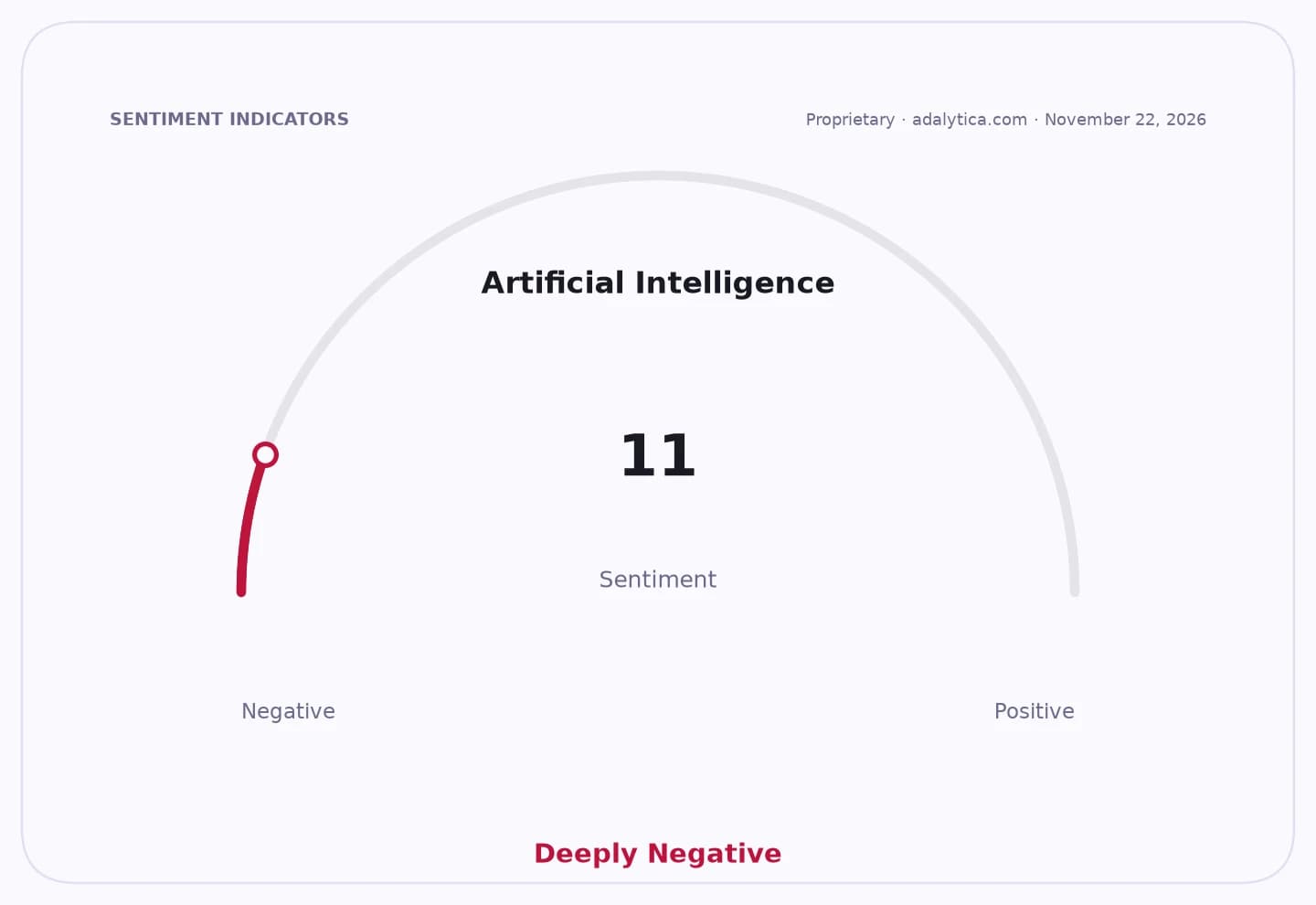
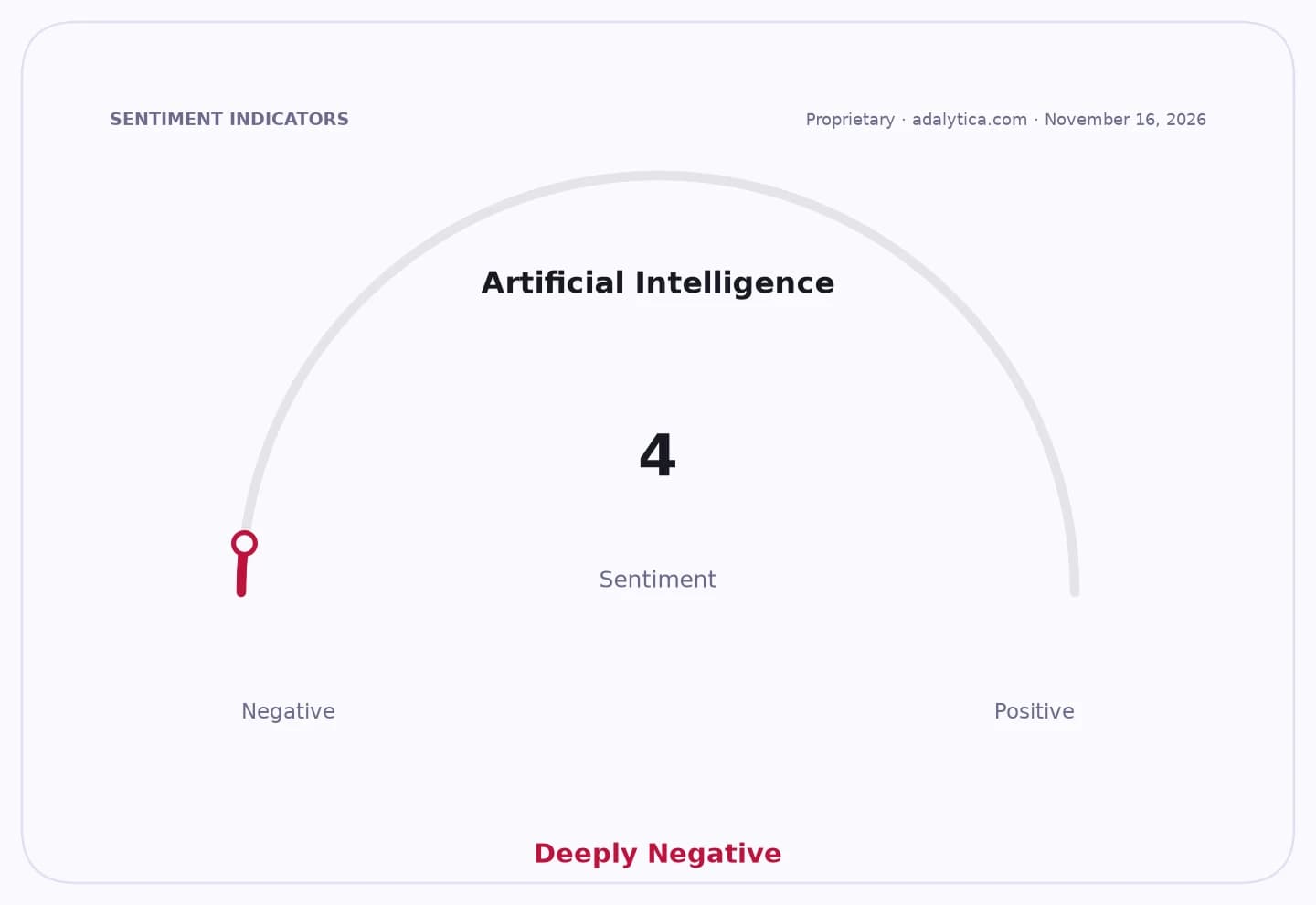
Sentiment Indicators
Amazon’s engineering leadership appears to agree with the basic caution. In internal guidance cited in the source material, the company says it still looks at consumption metrics but prefers to judge results over the long run, warning that turning activity measures into targets can raise costs and complexity. That is an important shift for a sector that has spent much of the past two years celebrating every increase in AI usage as evidence of adoption. The more serious question is whether those extra tokens shorten cycle times, reduce errors or improve customer outcomes enough to justify the expense.
That distinction is especially relevant across the megacap AI trade. Microsoft, Alphabet and Nvidia have all benefited from the market’s assumption that higher AI usage eventually translates into more revenue and stronger earnings power. But the stock market does not pay for raw consumption forever. It pays for margins, cash flow and sustained competitive advantage. If enterprises begin to see tokens the way Dans describes them — as gasoline burned rather than distance traveled — then the companies selling AI infrastructure will have to prove that their products create measurable business value, not just bigger invoices.
The broader economic backdrop reinforces why this matters now. AI investment has become a genuine growth engine, with the UK economy’s 0.7% third-quarter expansion helped by spending tied to the technology’s rapid rollout. That is a reminder that AI is not just a software story; it is now shaping capital allocation, cloud demand and even national growth rates. But the same dynamic also increases the risk of waste. When a technology becomes central to growth, every mispriced incentive gets amplified.
Investors should also notice the warning embedded in the operational debate. More context does not automatically mean better answers, and more usage does not automatically mean better productivity. Anthropic’s engineering guidance, and GitHub’s remarks on the cost of repeated iterations, both point to the same conclusion: the right metric is the cost per useful result, not the volume of activity. That is a far more durable framework for evaluating AI adoption than any token counter.
For long-term investors, the takeaway is not to shun AI spending. It is to separate disciplined adoption from vanity usage. The companies that will compound value over the next decade are the ones that use AI to remove friction, improve decision-making and lower unit costs. The ones that merely celebrate consumption may end up funding someone else’s growth. That is why this debate is worth watching closely, and why investors should keep their eye on real productivity, not token volume.
| Entity | Gains | Losses |
|---|---|---|
| Amazon | ▲More disciplined AI spending | ▼Token-driven cost creep |
| Microsoft, Alphabet, Nvidia | ▲Durable AI demand if ROI proves out | ▼Hype without productivity |
| Enterprise buyers | ▲Better output per dollar | ▼Paying for idle usage |
| Employees | ▲Clearer productivity goals | ▼Incentives to game metrics |