Singapore’s media and communications panellists are pushing for AI guardrails and a fake-news monitoring unit as concern grows that generative tools could erode public trust, a risk that carries real economic costs for platforms, advertisers and the broader digital economy.
AI Trust Rules May Lift Big Tech Compliance Costs
The proposals, raised at the Singapore Media and Communication Conference, underscore how misinformation has moved from a civic issue to a market one. As AI-generated text, images and video become cheaper and harder to distinguish from authentic reporting, the cost of policing content rises for publishers and technology companies while the downside for brands includes reputational damage, lower engagement and tougher regulation.
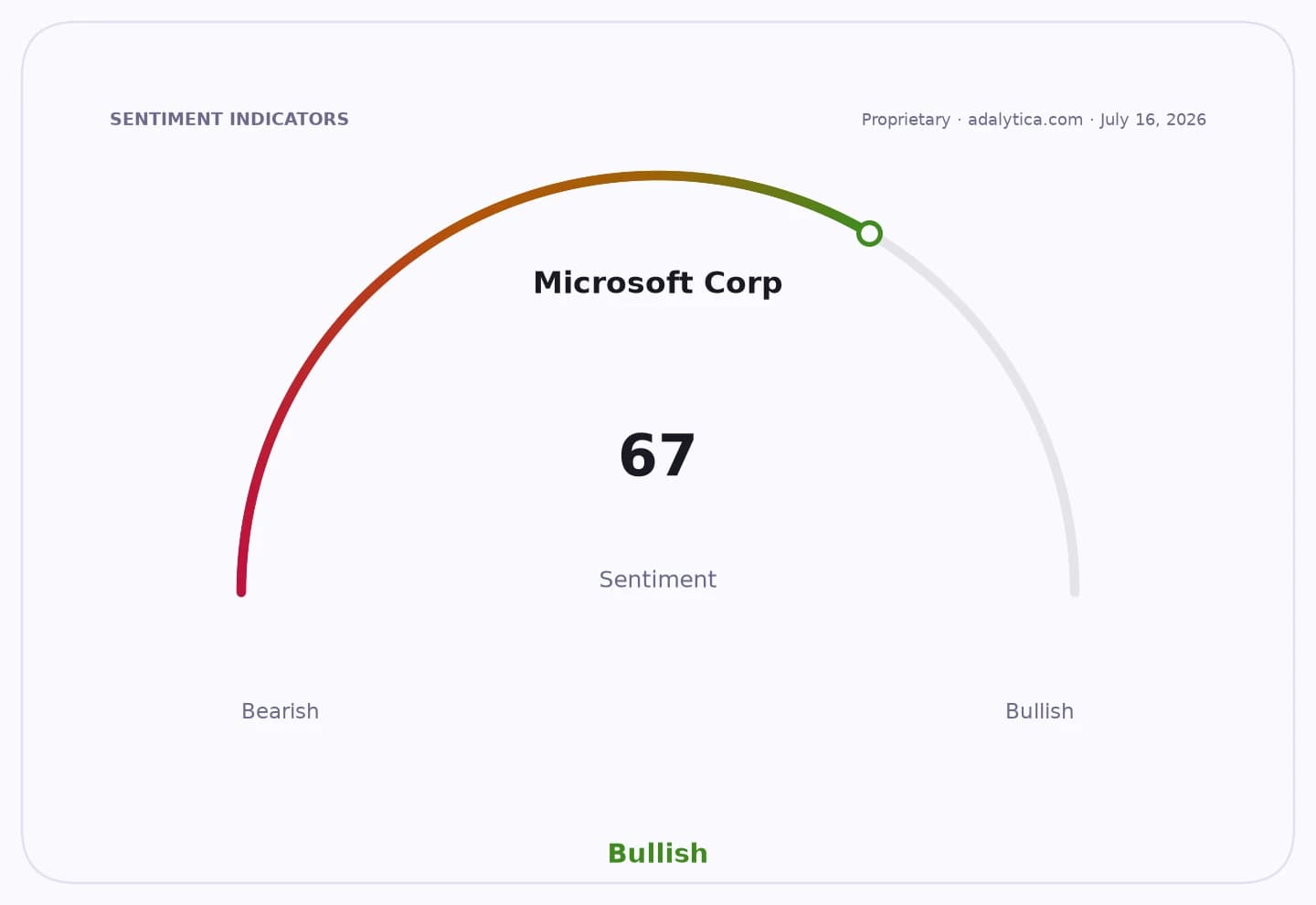
Sentiment IndicatorsⓘProprietary · adalytica.com · July 16, 2026
This is a snapshot — live sentiment, awareness and momentum for 130+ markets update continuously in the dashboard.Open AlphaPulse
The backdrop is a wider scramble by governments and institutions to keep up with AI misuse. Recent reports of cheating in academic exams with AI tools have sharpened fears that the technology is outpacing rules designed for the pre-generative era, reinforcing calls for clearer standards on disclosure, verification and accountability. For investors, that matters because the same tools that are driving ad targeting, search and productivity gains are also increasing legal, compliance and moderation risks.
Alphabet, Meta and Microsoft remain central to that debate because they sit at the intersection of AI development, distribution and monetization. Google parent Alphabet’s shares have climbed to $370.92 from $337.39 in late June, while Meta has rallied to $681.31 and Microsoft to $395.63, even as each faces the prospect of heavier scrutiny over content quality, model safeguards and the reliability of AI-assisted products.
Technical indicators suggest the recent moves remain robust but stretched in places. Alphabet’s RSI reading is 67.5, Meta’s is 73.5 and Microsoft’s is 65.9, while all three have prices near or above their 50-day moving averages, signaling momentum that could be vulnerable if regulators or platforms move more aggressively on AI safety and misinformation controls.
The policy direction is also important for Singapore’s positioning as a regional digital hub. A formal monitoring unit would likely mean more investment in detection systems, fact-checking workflows and platform coordination, but it could also help preserve confidence in online information and advertising inventory, which matters for media economics and cross-border business activity.
For investors, the near-term catalyst is whether trust-safeguarding proposals turn into concrete rules or remain advisory. Any move toward stricter disclosure requirements, liability standards or automated content monitoring would increase compliance costs, but it could also benefit companies that already have the scale and infrastructure to police AI-driven misinformation more effectively than smaller rivals.
| Entity | Gains | Losses |
|---|---|---|
| Regulators and media watchdogs | ▲Stronger oversight tools | ▼Higher enforcement burden |
| Large tech platforms | ▲Better trust if they comply early | ▼Higher moderation and compliance costs |
| Advertisers and brands | ▲Safer ad environment | ▼More risk if misinformation spreads |
| Smaller publishers and startups | ▲Clearer rules over time | ▼Greater cost to build guardrails |