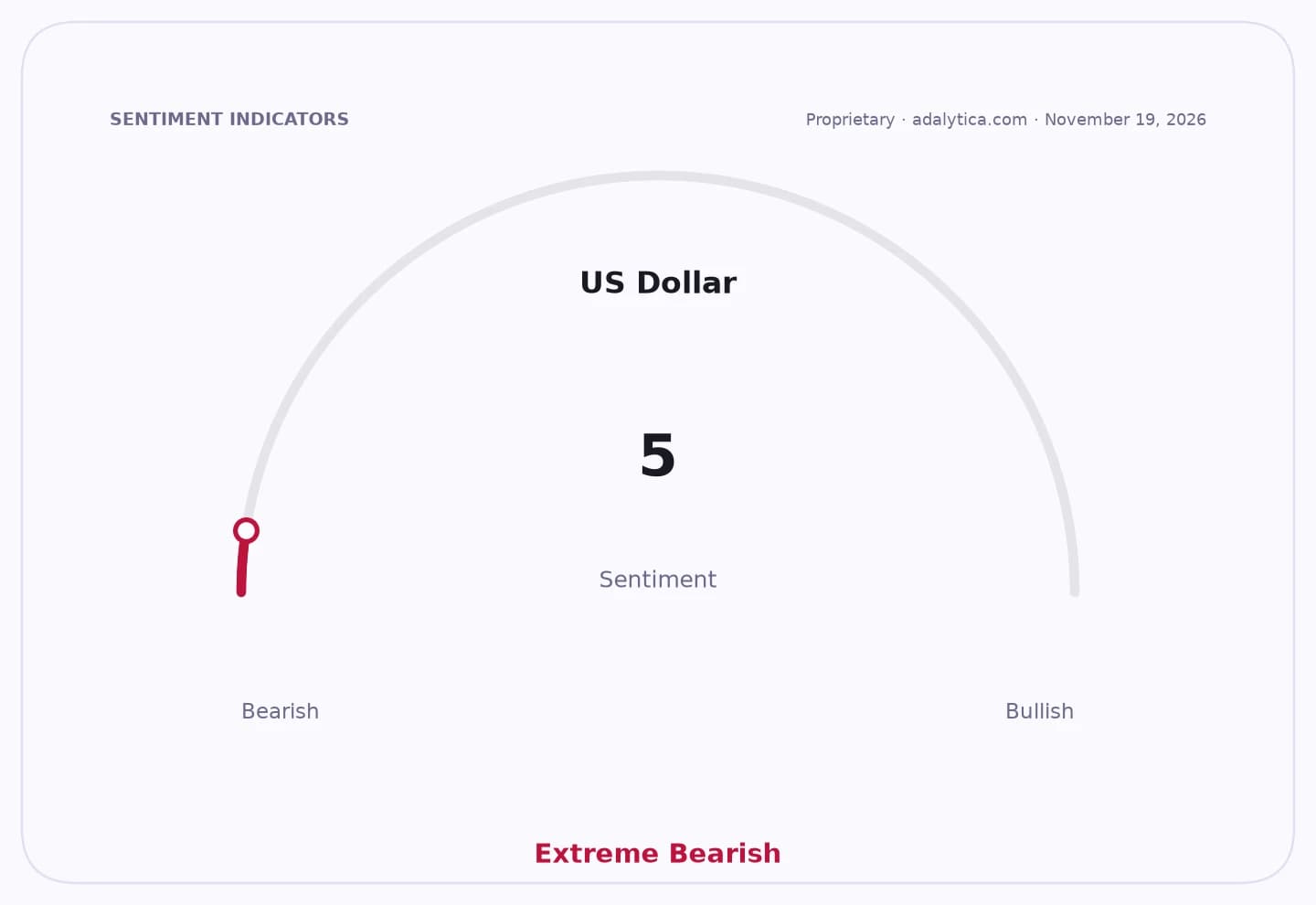
The U.S. dollar has surged to a historic high in Algeria, underscoring how pressure on the dinar is rippling through both the informal market and the country’s official exchange rate system.
Algeria dollar hits record on black market
That matters because a weaker currency feeds directly into import costs, household purchasing power and inflation expectations in an economy that still relies heavily on foreign goods. When the dollar pushes to a record while the euro sits still, it is a sign that Algeria’s foreign-exchange market is not just volatile — it is pricing in deeper strain on hard-currency availability.
Sentiment Indicators
On the black market in Algiers’ Square Port-Saïd, the dollar climbed to 245.50 dinars on Monday, up from 243.50 dinars a week earlier and 244.50 dinars on Sunday, marking a fresh yearly peak. The euro, by contrast, held at 276 dinars, unchanged from a week earlier and stuck below 280 dinars for much of this year. The split matters: it shows demand for dollars is accelerating faster than for the single currency, a pattern often associated with trade payments, savings behavior and precautionary hoarding.
The move is not confined to unofficial trading. At the Bank of Algeria, the dollar was quoted at 136.09 dinars for sale, a record above the 136-dinar threshold and higher than the sub-135 level seen at the end of October. The euro was also firmer officially at 152.15 dinars, up from 150.61 dinars on Oct. 27, but the real market story is the dollar’s pace.
For investors, the message is simple: currency weakness is not a side issue in Algeria, it is part of the investment backdrop. A stronger dollar can raise the local cost of imports, squeeze margins for businesses exposed to external supplies and complicate planning for companies with dinar revenues but foreign-currency obligations. It also reinforces the case for inflation protection, pricing power and balance-sheet resilience.
The broader risk is that persistent currency pressure becomes self-reinforcing. If households and traders expect the dinar to keep weakening, they may continue to seek dollars, tightening the squeeze on the local currency. Algeria’s policymakers have been trying to address economic practices that hurt purchasing power, but exchange-rate pressure suggests the market still sees limited relief ahead.
For long-term investors, that makes Algeria’s currency move worth watching well beyond the day-to-day quote. In markets where hard currency is scarce, exchange rates can become an early warning signal for inflation, consumption stress and policy pressure. The dollar’s record in Algeria is not just a trading headline — it is a reminder that foreign-exchange stability remains central to the country’s economic outlook.
| Entity | Gains | Losses |
|---|---|---|
| Dollar holders | ▲Higher dinar value | ▼Algerian buyers |
| Importers | ▲None | ▼Higher input costs |
| Euro holders | ▲Stable local pricing | ▼Relative strength vs. dollar fades |
| Algerian households | ▲None | ▼Lower purchasing power |