Alibaba shares slid more than 3% in premarket trading after the company doubled down on a costly global buildout for cloud and artificial intelligence infrastructure, renewing investor concern that heavy spending could pressure profits before it pays off.
Alibaba Shares Fall on Cloud and AI Spending
That is the tension at the center of the move: Alibaba is growing into one of the most important AI infrastructure companies in China and beyond, but the market is increasingly asking how much of today’s cash will be consumed to get there. The stock reaction suggests investors are valuing near-term earnings discipline over long-dated platform ambition, especially after Alibaba’s latest quarter showed net income plunging 75% from a year earlier.
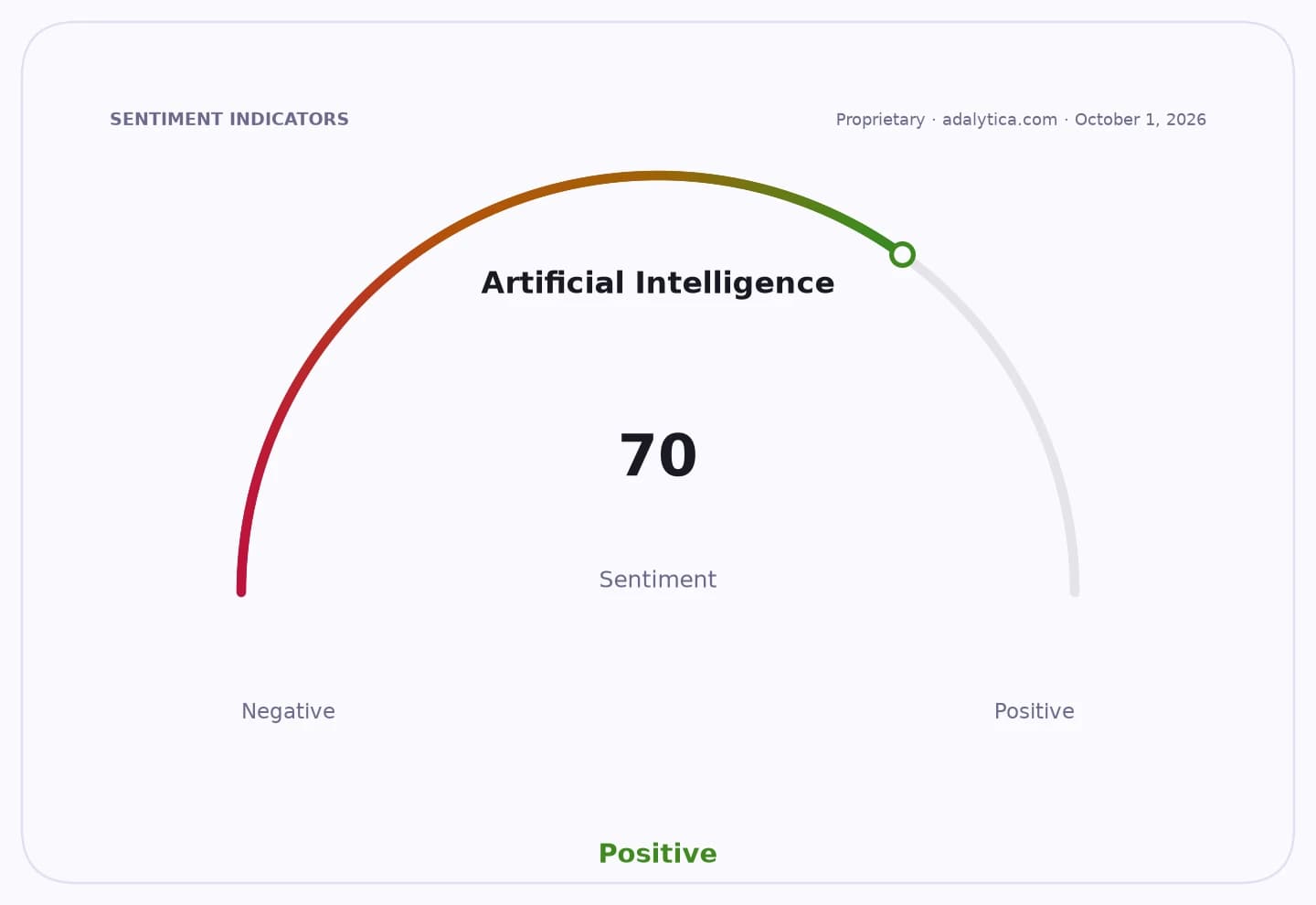
Sentiment IndicatorsⓘProprietary · adalytica.com · September 28, 2026
This is a snapshot — live sentiment, awareness and momentum for 130+ markets update continuously in the dashboard.Open AlphaPulse
The company said it plans to open new cloud regions in Turkey, Finland and the Netherlands over the next 12 months, while also building data centers in Malaysia, Germany, the UAE, France and Hong Kong. Alibaba says the expansion is part of a plan to build more than 20 gigawatts of data-center capacity worldwide by 2032. In plain English, it wants more computing power closer to customers so it can sell more AI services, but that also means a much bigger bill before revenues fully catch up.
There is a good long-term case for the strategy. Revenue from Alibaba’s AI and cloud computing services rose 45% year over year to 48.4 billion yuan in the quarter ended June 30, and annual recurring revenue from model and application services reached 20 billion yuan. That is the kind of growth investors want to see from a business trying to become a durable AI platform, not just a cyclical e-commerce company.
Still, the market is clearly uneasy about execution. Alibaba also unveiled its Zhenwu V900 AI chip a day earlier, saying it would begin rolling it out in the first quarter of 2027. The company is simultaneously developing a larger Qwen AI model that could reach 10 trillion parameters, up from its current Qwen 3.8 Max model at 2.4 trillion parameters. Those are impressive product milestones, but they also reinforce the scale of the investment cycle now underway.
For investors, the question is not whether Alibaba has an AI story. It does. The question is whether that story can compound earnings over time without excessive dilution to margins and returns on capital. The answer will matter far beyond one premarket session, because this is the sort of company that can reshape its valuation over years if its cloud and AI infrastructure starts throwing off real cash flow.
That is why today’s drop may be less about fear of the business and more about the market demanding proof. Alibaba remains a stock to watch for long-term investors who can tolerate volatility, but the next leg higher will likely depend on management showing that its massive buildout can grow revenue faster than it consumes profits.
| Entity | Gains | Losses |
|---|---|---|
| Alibaba Cloud | ▲More global reach | ▼Higher capital spending |
| AI customers and partners | ▲More local capacity | ▼Near-term earnings pressure |
| Long-term investors | ▲Potential platform growth | ▼Short-term valuation risk |
| Short-term traders | ▲Volatility to trade | ▼Momentum reversal |