Big Tech’s race to build AI infrastructure is set to become one of the largest capital cycles in modern market history, and Goldman Sachs says spending by the five biggest US technology groups could top $1.2 trillion in 2027.
Big Tech AI capex to top $1.2 trillion in 2027
That scale matters because it turns artificial intelligence from a story about model launches and software pricing into a far bigger question: whether Amazon, Microsoft, Alphabet, Oracle and Meta can convert unprecedented capex into enough recurring revenue to justify the buildout. Goldman’s strategists estimate the companies will need about $300 billion of annual AI-related revenue in coming years just to offset the cost of the investment wave, a hurdle that helps explain why investors are increasingly focused on monetisation rather than engineering progress.
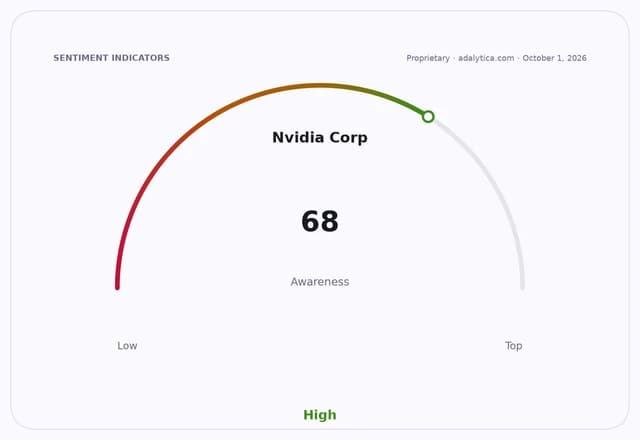
Sentiment IndicatorsⓘProprietary · adalytica.com · October 1, 2026
This is a snapshot — live sentiment, awareness and momentum for 130+ markets update continuously in the dashboard.Open AlphaPulse
The bank’s forecast is more aggressive than Wall Street’s consensus estimate of $1.1 trillion in capex for 2027 and implies a spending intensity that, by its measure, would exceed any technology investment boom since the late-19th-century railway expansion as a share of GDP. Goldman expects the five hyperscalers to spend about $800 billion in 2026 and then keep lifting outlays into 2027, when total capex would still rise to roughly $1.2 trillion even as the growth rate starts to slow.
The implication for the broader economy is straightforward: AI infrastructure is becoming a material driver of US investment, data-centre construction, electrical demand and semiconductor orders. That supports suppliers from Nvidia to power equipment and memory vendors, but it also creates bottlenecks. Goldman flagged shortages of energy, specialist labour and chips, along with delays in new data-centre construction, as constraints that could slow deployment even if demand stays strong.
The financing picture is becoming harder as well. Goldman said cloud giants’ investment is now outpacing operating cash flow, increasing the likelihood they will lean more heavily on debt and equity markets to fund the buildout. That is an important shift for investors because it means the AI boom is no longer just a margin story for mega-cap tech; it is beginning to look like a capital-intensive industrial cycle with funding needs, delivery risk and payback uncertainty.
There are signs the top line is still expanding fast enough to keep the market engaged. Cloud revenue at Amazon, Alphabet, Microsoft and Oracle rose 48% in the second quarter, up from 25% in 2024, while Amazon, Alphabet and Microsoft have disclosed a combined cloud backlog of $1.7 trillion. Those figures suggest corporate demand for compute remains strong, even if today’s AI application revenues are still below the level needed to fully absorb hyperscaler spending.
Still, the market is asking tougher questions. Goldman said the average AI infrastructure stock now trades at about 22 times forward earnings, down from 32 times in April, while the large-cap tech names have also lost some of their valuation premium to the S&P 500. In other words, investors are no longer paying any price for AI exposure; they are starting to price in execution risk, financing strain and the possibility that revenue growth lags the buildout.
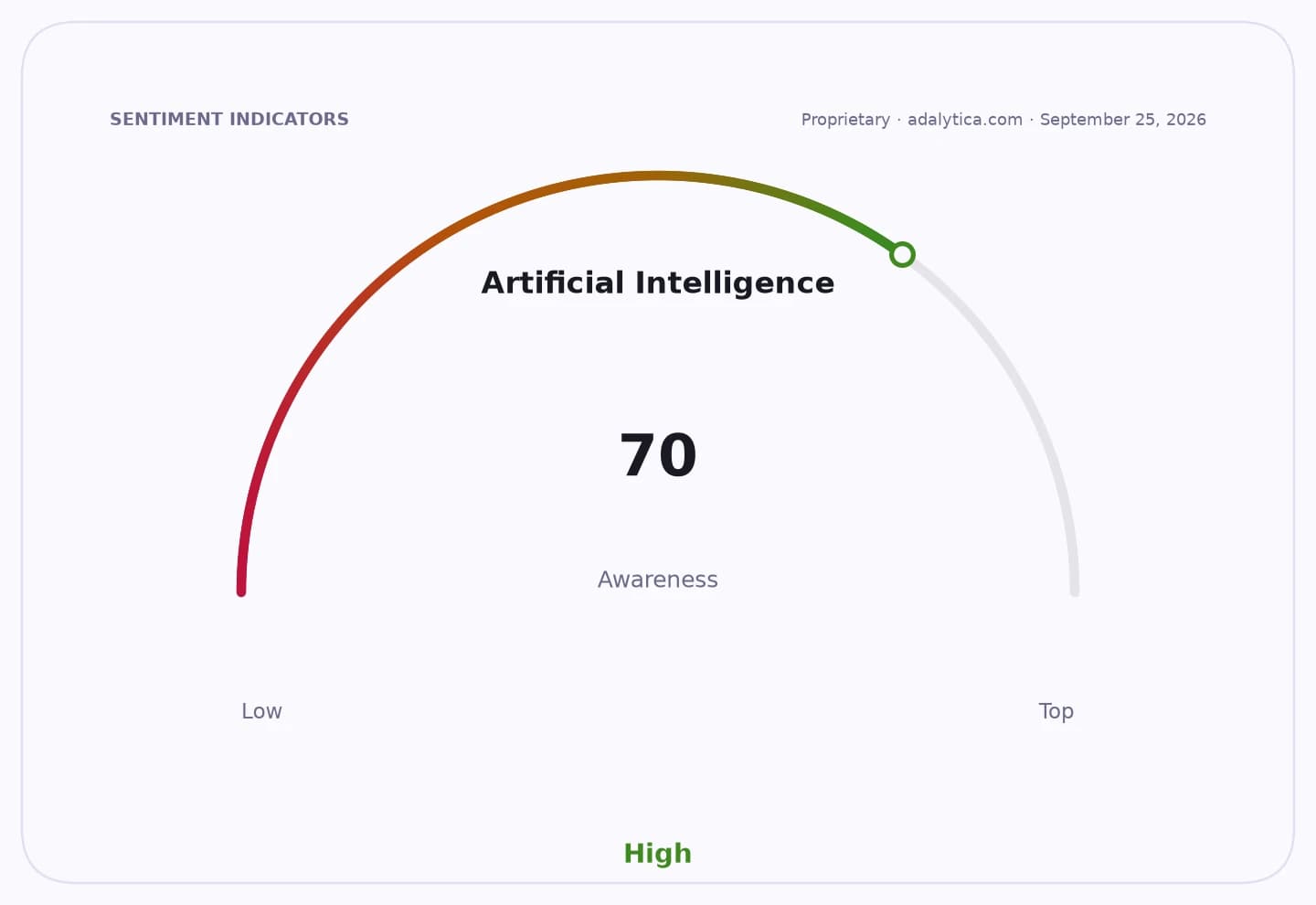
Nvidia’s shares, Microsoft and Alphabet all remain central to that debate because they sit on different sides of the same equation. Chipmakers benefit first from the capex surge, while cloud platforms and software vendors must prove that customers will ultimately spend enough on AI services to deliver acceptable returns. Adalytica’s sentiment gauges show the market remains broadly neutral on the sector even after months of heavy narrative momentum, underscoring that enthusiasm has become more selective.
The next phase of the AI trade is therefore less about who can spend the most and more about who can turn that spending into durable cash generation. If AI applications scale toward Goldman’s implied revenue need of roughly $1 trillion annually, the current capex wave may look prescient. If not, the spending boom could face the same constraint that has challenged many infrastructure cycles before it: too much capital deployed ahead of monetisation.
| Entity | Gains | Losses |
|---|---|---|
| Nvidia | ▲More chip demand | ▼Margin pressure if growth slows |
| Hyperscalers | ▲AI capacity leadership | ▼Free cash flow strain |
| AI software vendors | ▲Bigger addressable market | ▼Higher compute costs |
| Equity investors | ▲Exposure to secular growth | ▼Valuation compression risk |