Alibaba’s Qwen unit has launched a real-time translation model that cuts latency and broadens the company’s push into enterprise AI services, a move that could deepen monetization of its cloud stack while putting pressure on rivals racing to own the next layer of cross-border communication tools.
Alibaba Qwen Launches Real-Time Translation Model
Qwen3.8-LiveTranslate is designed for simultaneous interpretation, listening to live speech and optionally video, then returning translated text and audio before the speaker has finished. That matters economically because translation is one of the clearest enterprise use cases for generative AI: it sits at the intersection of customer support, meetings, sales, logistics and international commerce, where even small gains in speed and accuracy can lower labor costs and widen addressable markets.
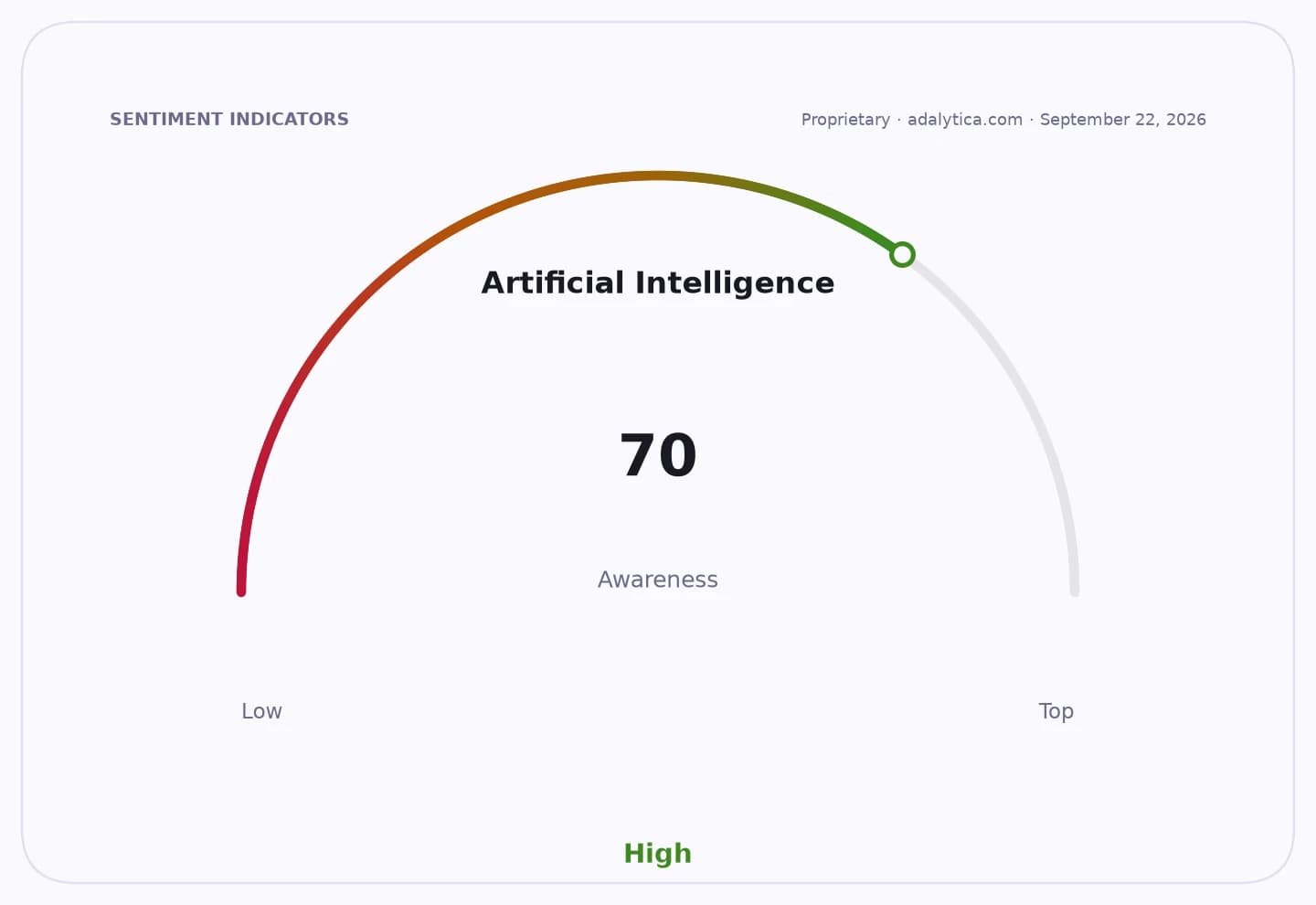
Sentiment IndicatorsⓘProprietary · adalytica.com · September 25, 2026
This is a snapshot — live sentiment, awareness and momentum for 130+ markets update continuously in the dashboard.Open AlphaPulse
According to a report cited by MarkTechPost, Alibaba has built the model on a new Interleave architecture that reduced average latency to 2.3 seconds from 2.8 seconds, roughly an 18% improvement. In a market where lag is often the difference between usable and frustrating, that kind of reduction is commercially important. Live interpretation is especially sensitive to delay, and tighter latency can make AI a substitute for outsourced interpreters in lower-stakes settings or a supplement in higher-stakes ones.
The model is currently available through hosted APIs on Alibaba Cloud Model Studio and QwenCloud, underscoring that this is as much a cloud monetization play as a technical release. Alibaba says the system supports 60 languages, with spoken and text output in 29 and text-only output in the remaining 31. Pricing in Singapore starts at $7.5 per million input audio tokens and $30 per million output audio tokens, or about $1.54 for a full hour of speech in and out, a level that could make the product attractive to enterprises watching translation budgets.
The feature set is aimed squarely at business workflows. Qwen says the model can identify multiple speakers in real time, preserve each speaker’s voice more consistently through cloning, display bilingual output side by side and maintain context across long conversations so names introduced early in a meeting stay consistent later on. Those capabilities matter because translation buyers generally care less about benchmark novelty than about fewer dropped names, less confusion in meetings and more usable transcripts for compliance and follow-up.
For Alibaba, the launch reinforces a broader strategy: use frontier model improvements to drive usage of its cloud and AI infrastructure after a period of intense investor scrutiny over its growth trajectory. The stock has been volatile, but technical readings on the shares now show the 50-day moving average below the current price and a positive MACD reading, suggesting some near-term stabilization after earlier weakness. That does not change the fundamental issue, which is whether AI products can translate into recurring revenue fast enough to matter for a business still competing against better-capitalized US cloud and model providers.
Investors will likely view the release through two lenses. The bullish case is that Alibaba is building practical AI products with clear commercial utility, especially for multilingual enterprise customers in Asia and beyond, where its cloud platform already has distribution. The skeptical view is that translation, while useful, is still a relatively crowded and potentially low-margin application unless Alibaba can convert usage into broader cloud lock-in.
That tension is why the launch matters beyond the feature itself. It shows Alibaba is trying to move from model announcements to deployable products that businesses can buy today. If Qwen3.8-LiveTranslate gains traction, it could become another entry point into Alibaba Cloud services and a small but meaningful proof point that Chinese AI vendors can compete not just on model scale, but on utility and pricing.
| Entity | Gains | Losses |
|---|---|---|
| Alibaba Cloud | ▲API usage, enterprise adoption | ▼Margin pressure from pricing |
| Global enterprises | ▲Cheaper real-time translation | ▼Dependence on AI accuracy |
| Human interpreters | ▲Fewer low-stakes jobs | ▼More automation risk |
| Rivals in AI translation | ▲Bigger product pressure | ▼Share loss in enterprise workflows |