Meeting software is no longer being judged on video quality alone; the real contest in 2026 is which platform can turn a call into usable work, and that shift is forcing Zoom and Google to compete on AI companions, not conferencing basics.
Zoom and Google AI meeting tools face multilingual limits
For enterprises, that matters because meeting data has become a productivity input. The company that can reliably capture notes, action items, late-joiner summaries and follow-ups gets embedded deeper into daily workflows, lowers administrative friction and raises switching costs. That is especially relevant now that both Zoom and Google are pushing AI features into products customers already use, while a growing number of teams still need a separate translation layer for cross-border work.
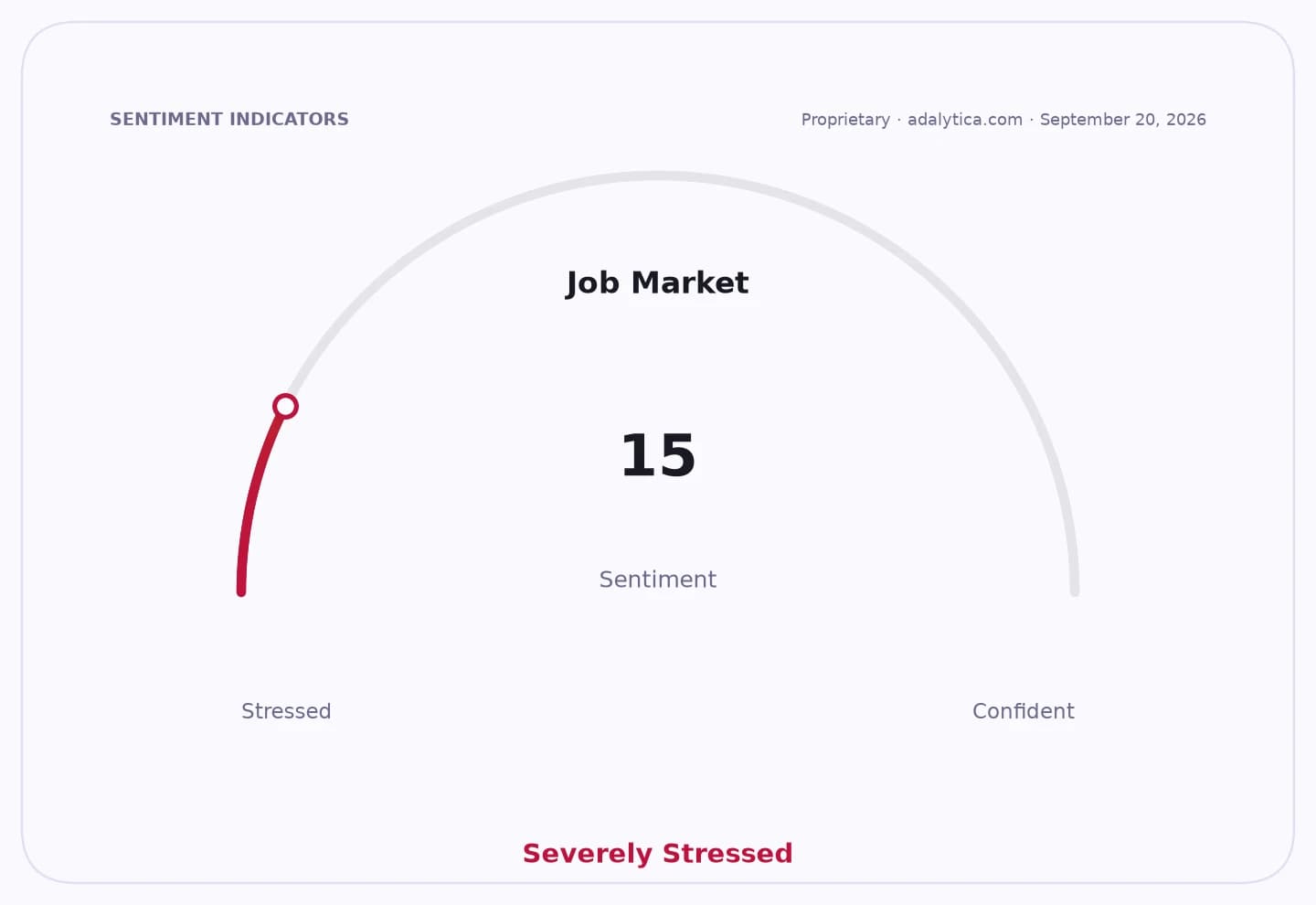
Sentiment IndicatorsⓘProprietary · adalytica.com · September 18, 2026
This is a snapshot — live sentiment, awareness and momentum for 130+ markets update continuously in the dashboard.Open AlphaPulse
Zoom’s pitch is to keep AI tightly inside its own communications stack. Its AI Companion can generate summaries and action items, while newer tools such as ZoomMate are designed to connect meetings, messages and workflows. Google is taking the broader Workspace route, wiring Gemini into Meet and pushing notes into Docs, Drive, Gmail and Calendar. In practical terms, that gives Google an advantage for firms that want a single record across meetings and documents, while Zoom remains attractive for customers already standardized on its collaboration suite.
The economic logic is straightforward: software vendors that own the post-meeting workflow can increase attachment rates and defend subscription pricing. That is why the issue matters to investors in Zoom, and to a lesser extent Microsoft and other collaboration rivals watching the same enterprise budget. If AI becomes a must-have layer rather than a nice-to-have add-on, the winner will be the platform that reduces manual work without forcing customers into fragmented tools.
But the opportunity is narrower than the marketing suggests. Both systems work well in single-language meetings, yet their limits become obvious in multilingual calls. Google’s note-taking supports eight languages, while Zoom’s Voice Translator is still in beta and limited to five spoken languages, even as its captions cover more. Neither solves the harder problem of mixed-language discussions where nuance, hesitation and indirect disagreement often determine the outcome. That gap is creating room for third-party desktop tools such as JotMe, which can sit alongside any meeting app and handle translation across far more language pairs.
That creates a second investment narrative: the built-in assistants are improving, but they may not be enough for globally distributed teams. A company joining client-hosted calls cannot always rely on the organizer’s licence, which weakens the economics of native AI features and supports demand for participant-side tools. In that sense, language coverage and ownership of the workflow may matter more than raw feature counts.
The latest price action in Zoom reflects the market’s unease and optimism in equal measure. The stock closed at $89.35 on Sept. 18, below its 50-day moving average of $97.09 and just above its 200-day average of $90.97, with a 14-day RSI of 29.9 suggesting the shares are technically oversold. Microsoft, by contrast, closed at $495.33, comfortably above its 200-day average of $430.08, though its RSI at 39.6 shows some recent softness as investors reassess AI spending and competition.
Adalytica’s Microsoft earnings sentiment gauge was neutral at 46, but awareness sat at an “extreme fear” reading of 4, underscoring how quickly investor attention can swing when AI expectations outrun visible monetization. Zoom’s filings also show management leaning harder into AI products, warning that new AI-driven features may require longer customer evaluation cycles and could attract negative attention if adoption lags. That is the bull-and-bear case in one line: AI can deepen platform lock-in, but it can also slow sales cycles and raise execution risk.
For investors, the key question is whether AI companions become a durable subscription lever or just a defensive feature race. Zoom has the cleaner product story inside its own platform, while Google has the stronger distribution story through Workspace. The bear case is that both are commoditizing meeting notes as AI becomes table stakes, leaving pricing power limited. The bull case is that the winner captures not just meetings, but the documents, messages and calendar workflows that follow.
What to watch next is less about another feature launch than adoption in multilingual and cross-company settings. If built-in assistants remain strongest only in English-centric, internally hosted meetings, the market may continue to reward niche translation vendors and keep the AI companion battle from becoming a clear winner-take-all story.
| Entity | Gains | Losses |
|---|---|---|
| Zoom | ▲Deeper workflow lock-in | ▼Standalone note-taking rivals |
| Google Workspace | ▲Stronger docs-to-meetings integration | ▼Users needing cross-language support |
| Enterprise buyers | ▲Lower admin burden | ▼Added license complexity |
| Third-party tools like JotMe | ▲Demand for multilingual coverage | ▼Native AI companion features |