Google parent Alphabet is cutting about 80 jobs tied to its cloud and Google Meet operations, another sign that Big Tech is trimming teams that were built for faster pandemic-era growth and now face tighter cost discipline.
Alphabet cuts about 80 cloud and Google Meet jobs
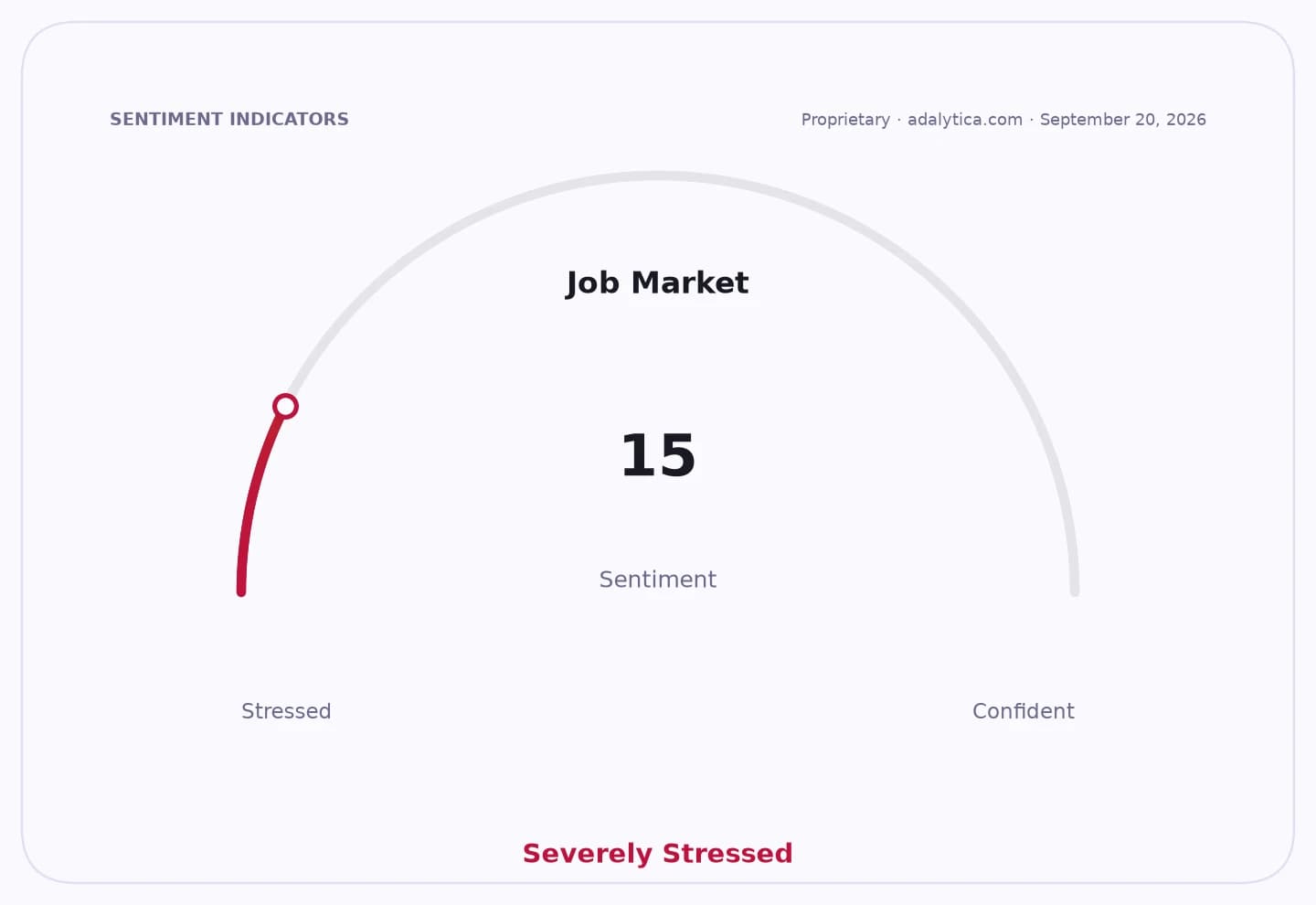
The layoffs are economically meaningful because they show that even companies with strong cash generation are still leaning on headcount reductions to protect margins as spending shifts toward AI, infrastructure and higher-value product work. The move also fits a broader pattern in tech, where employers are cutting selectively despite a labor market that remains historically firm, with U.S. jobless claims recently falling to 196,000, the lowest since mid-July.
Sentiment IndicatorsⓘProprietary · adalytica.com · September 20, 2026
This is a snapshot — live sentiment, awareness and momentum for 130+ markets update continuously in the dashboard.Open AlphaPulse
Alphabet’s shares closed at 349.54 on Sept. 18, holding above their 50-day moving average of 345.40 and well above the 200-day average of 337.09. The stock has been volatile but remained in an uptrend in recent weeks, suggesting investors are still rewarding cost control and AI-related capital allocation even as the company pares back slower-growth functions.
The cuts come in a part of the business that helped define remote work, including Google Meet, but one that now faces heavier competition from Microsoft Teams and Zoom Workplace as enterprises consolidate communications spending. Microsoft shares finished at 493.78, while Zoom rival Workday and collaboration peers remain under pressure to prove they can defend margins and growth in a more selective customer environment.
For investors, the key question is whether this is a one-off cleanup or the start of a wider reshaping of Alphabet’s workforce as it balances AI investment against operating leverage. The next test will be whether the company can keep margins intact without slowing product development or ceding ground in cloud collaboration and enterprise software.
| Entity | Gains | Losses |
|---|---|---|
| Alphabet/Google | ▲Lower payroll costs | ▼Disrupted teams |
| Shareholders | ▲Margin support | ▼Execution risk |
| Microsoft and Zoom | ▲Potentially steady enterprise demand | ▼Notable, but indirect competitive pressure |
| Remote-work staff | ▲— | ▼Job losses |