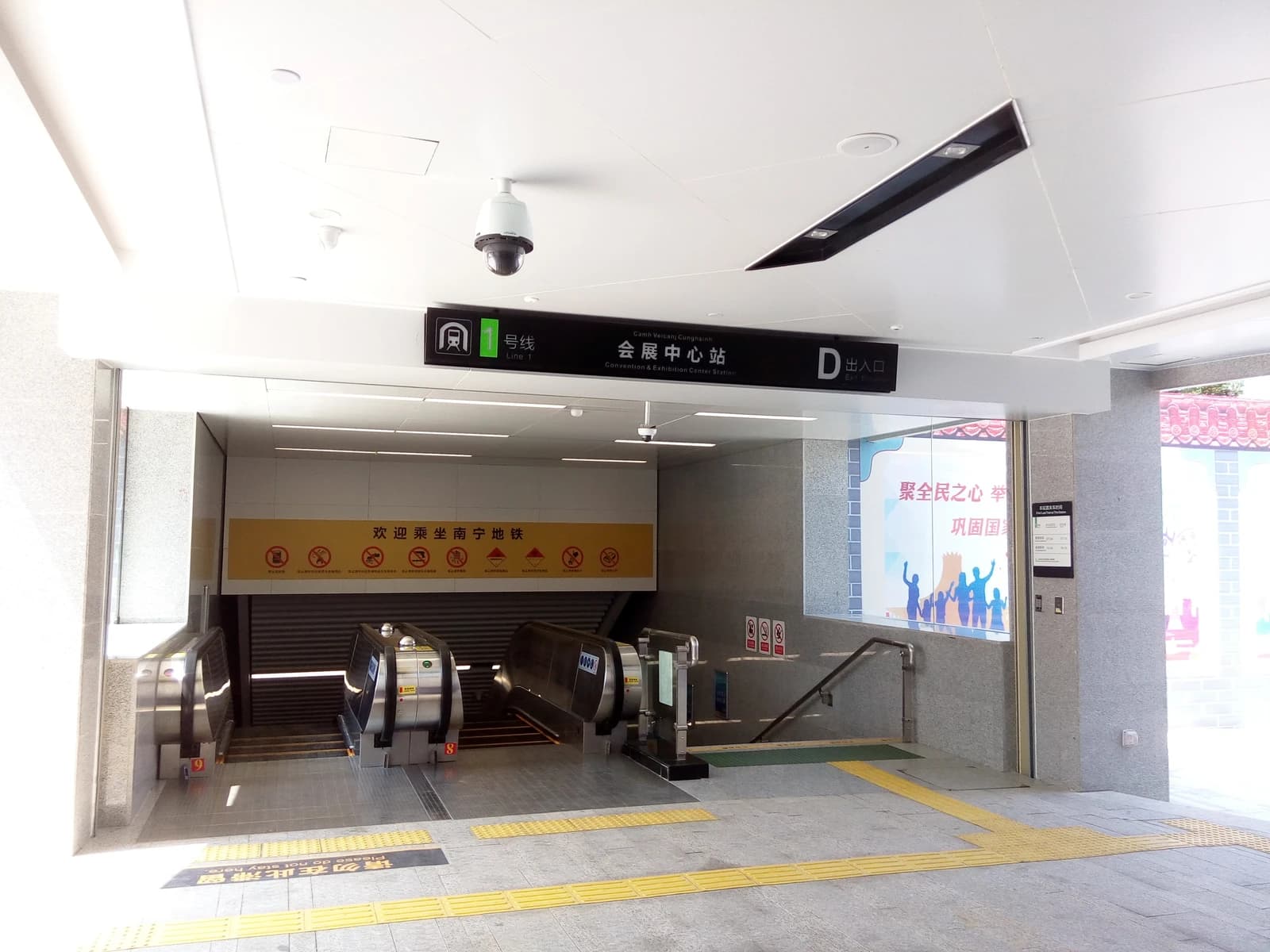
AI is emerging as a commercial bridge between China and Southeast Asia, with the China-ASEAN Expo in Nanning shifting from showcasing futuristic gadgets to closing real deals across trade, logistics, agriculture and public services.
China-ASEAN Expo Turns AI Displays Into Sales
That matters because the expo is no longer just a policy and branding exercise for one of the world’s busiest regional trade blocs. Organizers say this year’s “AI marketplace” includes about 500 products from more than 70 companies, while a China-ASEAN AI application cooperation center has already cataloged more than 1,000 potential use cases and backed over 30 cross-border projects. For investors, that points to a deeper change: AI demand is moving beyond model training and big-tech capex into enterprise deployment, where monetization can broaden across hardware, software, systems integration and local services.
Sentiment IndicatorsⓘProprietary · adalytica.com · September 22, 2026
This is a snapshot — live sentiment, awareness and momentum for 130+ markets update continuously in the dashboard.Open AlphaPulse
At the expo, smart glasses offering real-time translation in more than 40 languages, embodied robots, exoskeleton medical equipment and AI-enabled wearables drew the crowds, but the more important signal is commercial adoption. Wang Jicai, secretary-general of the China-ASEAN Expo Secretariat, said bluntly that “last year, AI was mostly for show. This year, it is driving sales.” That distinction matters for the regional growth outlook. If AI is being purchased for translation, agriculture, logistics, healthcare and manufacturing rather than merely demonstrated in pavilions, it becomes a productivity tool that can raise output, lower labor costs and improve cross-border coordination in economies still trying to digitize supply chains.
The China-ASEAN relationship gives the story extra weight. Bilateral trade between China and ASEAN has already topped $1 trillion, making the region one of the largest and most consequential trade corridors in the world. AI applications that reduce friction in shipping, customs, farming, finance and industrial operations could improve trade efficiency just as both sides seek to deepen cooperation under the China-ASEAN Free Trade Area 3.0 framework. The case studies released at a summit alongside the expo, covering 31 practical AI projects across all 11 ASEAN members, suggest the push is spreading from pilot programs into a broader commercial ecosystem.
For companies, that creates a more diversified revenue opportunity than the current debate around large language models alone. Chinese hardware and software vendors can sell into Southeast Asian markets where demand for translation, precision agriculture, smart logistics and urban management is more immediate than frontier AI research. ASEAN governments and businesses, meanwhile, gain access to cheaper deployment tools and a way to leapfrog some legacy infrastructure. The upside case for investors is a faster-than-expected conversion of AI interest into industrial procurement, especially for firms positioned in edge devices, robotics, cloud services and vertical software.
The bear case is regulatory fragmentation and execution risk. ASEAN Secretary-General Kao Kim Hourn said AI should be supported by adequate rules and regulations but warned against stifling innovation. That balance will be crucial. Cross-border AI deployments raise questions over data governance, interoperability, language accuracy, cybersecurity and national security, particularly at a time when US-China tensions over AI governance remain high. Any regulatory slowdown or political pushback would limit the scalability of these projects.
For now, though, the expo suggests the center of gravity is shifting. In a region where economic cooperation has long been anchored by goods trade and infrastructure, AI is increasingly being sold as a practical enabler of commerce. That makes Nanning less a showcase of novelty than a test case for how China and ASEAN intend to industrialize AI — and how quickly that transition can translate into revenue, efficiency gains and competitive advantage.
| Entity | Gains | Losses |
|---|---|---|
| China AI vendors | ▲New export demand | ▼Pricing pressure if adoption slows |
| ASEAN businesses | ▲Cheaper productivity tools | ▼Integration and compliance costs |
| China-ASEAN trade bloc | ▲More efficient cross-border commerce | ▼Regulatory complexity |
| US-China AI rivalry | ▲— | ▼Less room for unilateral tech dominance |